
Originally Published: February 17, 2026
Evidence-based practice is certainly no longer confined to medicine or academic research, but rather steadily reshaping how organizations operate at every level. Decisions that once leaned heavily on seniority, intuition, or tradition are increasingly grounded in data, behavioral science, and measurable outcomes. In many workplaces, the shift feels subtle at first. A hiring manager consults structured assessment data instead of relying on a resume alone. A marketing lead tests messaging variations rather than trusting creative preference. A team leader reviews engagement analytics before adjusting workflows. Over time, these small adjustments compound into a profound cultural change.
Roles are becoming less about authority and more about interpretation. The question is no longer “What do you think?” but “What does the evidence suggest, and how should we respond?”
Leadership Is Becoming More Analytical And More Human
Modern leaders are expected to navigate complexity like we’ve never seen before, with just the right balance of rigor and empathy. This is where data clarifies patterns, but it also exposes blind spots. Leaders who once relied on anecdotal feedback now see the full spectrum of employee sentiment, productivity signals, and customer behavior.
Interestingly, greater reliance on evidence is pushing leaders to strengthen interpersonal skills. Numbers highlight issues, yet people still drive solutions. Leaders must translate insights into narratives that motivate and inspire their teams. They must ask better questions. They must remain curious rather than defensive when data challenges assumptions.
HR And Talent Functions Are Being Reimagined
Few areas illustrate the transformation more clearly than human resources. Recruitment, performance evaluation, and learning strategies are increasingly shaped by validated research rather than trends or buzzwords.
Structured interviews outperform unstructured conversations. Skills-based assessments often predict job success better than pedigree. Continuous feedback systems yield richer performance data than annual reviews. These are not theories. They are patterns supported by decades of organizational psychology.
Evidence-based HR also improves fairness. Bias becomes easier to detect. Development opportunities become easier to personalize. Career paths become less political and more transparent.
Customer Experience: Where Evidence Meets Emotion
Customer-facing roles are undergoing a similar evolution. Analytics tools reveal how users interact with products, services, and support channels. Yet evidence-based practice does not equate to blind automation. In fact, it frequently argues for preserving the human touch. According to this survey of 2,000 managers on AI and customer experience, 68% of managers warn that too much automation with no human interaction risks long-term customer loyalty.
This tension is reshaping responsibilities. Service teams are using data to anticipate needs while focusing their human energy on moments that require empathy, creativity, and trust building. Marketing professionals are blending behavioral data with storytelling. Product designers are validating ideas through user testing before large-scale launches. Evidence guides the direction. Human understanding shapes the experience.
Everyday Roles Are Becoming Decision Roles
Evidence-based practice is not just for executives or analysts anymore. It is permeating everyday work. Sales representatives analyze pipeline probabilities. Operations teams monitor real-time performance metrics. Finance professionals model scenarios with increasing precision. Even creative roles rely on testing frameworks, audience feedback, and engagement data.
This democratization of insight changes expectations. Employees are no longer valued solely for execution. They are valued for judgment. The ability to interpret information, challenge assumptions, and adapt quickly is becoming a core competency across functions. Work feels less static. Learning feels continuous.
Why This Change Is Largely Positive
Some people fear that a data-driven culture reduces autonomy or creativity. However, in practice, the opposite often occurs. Evidence-based environments tend to reward experimentation, reflection, and improvement. Ideas are tested rather than dismissed. Failures generate learning instead of blame.
Clarity reduces wasted effort. Transparency reduces politics. Better predictions reduce costly mistakes. Most importantly, organizations become more responsive to reality instead of trapped by habit.
Evidence-based practice does not eliminate uncertainty. It equips people to navigate it with greater confidence. And that is ultimately the story of this transformation. Not colder workplaces. Smarter ones. Not rigid systems. More adaptive ones. Not fewer human contributions. Better informed human contributions.
Want More Info? How about a Free 30-minute Consult with Ascend?
Schedule Your Free Consultation Now!
Special thanks to the following source(s) for the image(s) used in this article:
- Via Pexels
Enjoy a Great Podcast? ?
Check out this Remarkable episode to continue the conversation and help you grow!
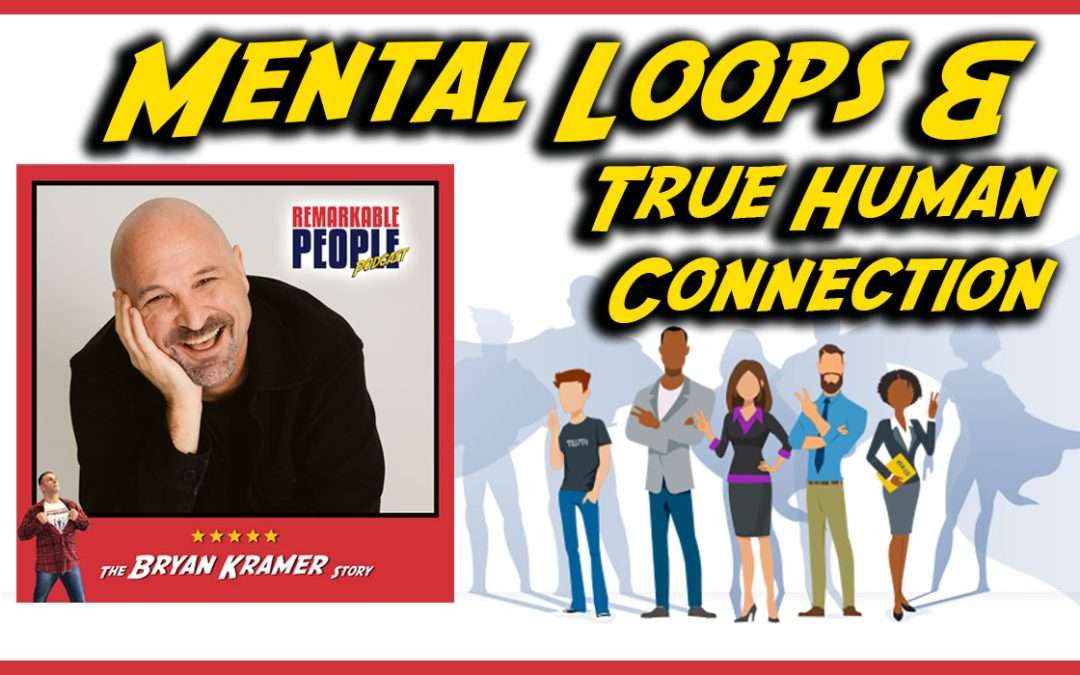
Human-to-Human: Breaking Mental Loops and Achieving True Connection with Bryan Kramer
"Structure, systems, and people. If you get those three dialed in, you have a straight line to where you want to go." ~ Bryan KramerWATCH THE PODCAST Click the play button ▶️ above 👆 to watch now! Please Note: You can skip any ads after 5-seconds by clicking, "Skip Ad" in the bottom-right corner of the video window. These are not ads we control, or necessarily endorse. They are delivered by the video hosting company, YouTube or...
 Listen Now!
THANKS FOR LISTENING TO THE REMARKABLE PEOPLE PODCAST! ?
Click Here for More Remarkable Episodes on Almost Any Topic You Can Imagine.?
DISCLAIMER: This is an affiliate article. We post affiliate articles with the intent of helping you grow. They are not written, researched, or necessarily endorsed by our team. They are simply content submitted to us by what appears to be respectable affiliate sources, people, and organizations, which upon initial review, seem solid and helpful to our community, so we post them. It is up to you to personally verify the facts, links, organizations mentioned, the validity of the information presented, and any/all claims made in the article(s). To report an issue with any of the information, links, or organizations mentioned in this, or any content posted on our website, or if you simply have a question or need something we can help you with, please contact us now.