“Never quit. A steady drop makes a hole in the rock.”
~ Salvatore Forcina
WATCH THE PODCAST
Click the play button ▶️ above 👆 to watch now!
Please Note: You can skip any ads after 5-seconds by clicking, "Skip Ad" in the bottom-right corner of the video window. These are not ads we control, or necessarily endorse. They are delivered by the video hosting company, YouTube or Rumble. Thank you for understanding.
LISTEN TO THE PODCAST
Episode Proudly Sponsored by:
Save 30% to 80% on EVERYTHING you order at MyPillow.com, PLUS Free Shipping with the best MyPillow promo code, “REMARKABLE” now!
Salvatore Fortina’s Inspiring Journey from War-Torn Italy to American Success
In this episode of The Remarkable People Podcast, host David Pasqualone talks with Salvatore Fortina, an Italian-born American whose family endured extreme poverty during World War II and multiple relocations before finally settling in the United States. Sal shares his incredible journey of overcoming numerous obstacles, from escaping war-torn Italy and moving to Argentina, where his family lost everything during a revolution, to becoming a successful doctor in America. Sal emphasizes the importance of faith, hard work, and never giving up. His story is filled with poignant moments, wisdom, and inspiration that listeners can apply to their lives. Tune in to hear how Sal persevered through hardship and found success by following his passion and maintaining an unwavering focus on his goals.
Key Points (Timestamps & Titles):
- 00:00 Introduction to Salvatore Fortina’s Remarkable Journey
- 00:18 Salvatore’s Early Life in War-Torn Italy
- 04:28 Struggles and Resilience in Argentina
- 09:20 Overcoming Adversity and Pursuing Education
- 18:37 Challenges and Triumphs in Medical School
- 31:11 The Decision to Move to the United States
- 35:16 Meeting My Future Wife’s Family
- 40:52 Starting My Medical Practice
- \42:45 Challenges and Discrimination in the Medical Field
- 43:22 Building a Reputation Through Quality Care
- 46:16 Reflections on Changes in Medical Practice
- 52:38 Encouragement and Advice for Overcoming Challenges
- 01:00:29 Writing My Life Story
- 01:07:21 Final Thoughts and Gratitude
REMARKABLE SPECIAL OFFER(S):
 REMARKABLE OFFER 1: Save 30% to 80% on EVERYTHING you order at MyPillow.com with Free Promo Code, “REMARKABLE“. Yes, that’s right! Use the best My Pillow promo code out there to save a TON of money on all 200+ quality, comfortable, cozy home goods at MyPillow.com/Remarkable, or by calling 1-800-644-6612. From sheets, to blankets, to pillows, to mattress toppers, be ready to sleep better and live more comfortably than you ever have before!
- REMARKABLE OFFER 2: Your Exclusive Offer: Save Big on Your Console Vault In-Vehicle Safe. With our exclusive promo code, “REMARKABLE“, you will Save 10% or more on all Console Vault anti-theft vehicle safes you order. And sometimes, you’ll receive Free Shipping too! Just make sure to use the free Console Vault discount code, “REMARKABLE” at checkout.
For more Remarkable Episodes, Inspiration, and Motivation, please visit https://davidpasqualone.com/remarkable-people-podcast/ now!
Full Episode Transcript
Salvatore Forcina: The American Doctor | Living Persistence, Grit, & Determination
David Pasqualone: [00:00:00] Hello, friend. Welcome to this week’s episode of The Remarkable People Podcast with your new friend and mine, Salvatore Forcina. This week you’re going to hear from an Italian born American who was in poverty in Italy during World War ii. His family moved him to Argentina. Where they were also in poverty.
The family saved a ton of money and lost it all during the revolution. How he came to being a doctor, moved to America, built a practice, how nothing was easy, but he teaches you and me. How we have to have faith, how we never quit, how we stay focused and inspired and really do what we love the right way and how the benefits and the growth will eventually happen.
So Sal’s story is inspiring. It hit close to home ’cause there was so [00:01:00] many similarities in my family background and his, and I don’t care who you are, if you listen to Sal, there is wisdom, there is inspiration that you can apply to your life and share with your friends and family to help theirs as well.
So Sal is a Remarkable human and you’re about to get to see that right now.
Welcome to the Remarkable People Podcast!: The Remarkable People Podcast, check it out,
the Remarkable People Podcast. Listen, do Repeat for Life,
the Remarkable People Podcast.
David Pasqualone: Hey Sal, how are you today? Good morning. Good morning. Nice to meet you. How are you? [00:02:00] Oh, it’s excellent to meet you. I just told our listeners around the world a little bit about you and what to expect, and before we get started, we’re, I know we’re gonna go through your life. There’s so much that you’ve done and we’re gonna be able to learn from and laugh and enjoy and connect with you.
But if there was one message that you promise our listeners that they’re gonna learn from this, that they can take and apply to their lives to have even more prosperity and blessings and joy, what would that be? Sal, never give up.
Salvatore Forcina: Believe it. Believe in something if you are convinced yourself to believe in the goal.
You work hard and you are going to succeed because you are in the right place. This country is the fertile ground for success, but you have to work hard. [00:03:00]
David Pasqualone: I agree completely. And ladies and gentlemen Salvato for Chin is gonna be with us for the next few minutes. We’re gonna go through his life. So grab a cup of coffee, your favorite beverage, a pen and paper, so you can not just take notes on this episode, but when it’s over, you can go back and apply it to your life as well.
We’re gonna have a short affiliate break, and then we’re back with our friend Sal.
Mike Lindell, Founder & CEO MyPillow: Hello everyone. I’m excited to announce the next generation of energy drinks Rev seven. It has no sugar and no caffeine. Instead, rev seven uses go BHB go. BHB is one of the body’s primary ketones, and it provides the most efficient and clean fuel that your body needs. It also helps you stay energized all day with no crashes.
Not only that, it produces three times more brain energy than sugar, which helps boost your memory focus and mental sharpness. It also helps reduce stress and helps balance [00:04:00] your mood. Rev seven does all that while being the best tasting energy drink ever. So go to mypillow.com or call the number on your screen.
Use your promo code to save 20% today. I’m so sure you’re gonna love Rev seven. For a limited time, you get our introductory three pack absolutely free. I drink Rev seven every day and I absolutely love it and so will you.
David Pasqualone: All right, Sal, welcome back. So thank you. You had a life like all of us that had a start. We’re born into a family, good, bad, or ugly, and we have a location. So where did your life start? Where did your journey begin?
Salvatore Forcina: I was born in 1941 during World War II in Italy, in a place called Scry. It is a, a town between Roman Naples and the sea. And that area [00:05:00] was where the front gas stall for more than six months. The, and the al front were the German and the South. They were the allies. Troop tried to advance to a Rome and there was a famous Abbey or Monte Casino and the top of the mountain where the Germans, where the cannon and the tanks were stolen.
The ge, the allied troop for advancing, they were, many casualty, more than 100,000 people soldier die there, plus the civilians. Plus what happened was that the German, in order to prevent the advance or the alive troop, they have planted mines all over. So imagine the civilian people, they were running from one place to another.
How many people lost their limb, lost their life and family were destroyed. [00:06:00] So a terror, misery.
David Pasqualone: Yes. And then when you were growing up, at that time, Mussolini was in power, correct?
Salvatore Forcina: Yes. Yes. He was douched. Yeah, he was in power and he. Created all this mess. One of the guys clear all this mess.
David Pasqualone: Yeah. And I know that even to this day, some people, when I went to visit Italy a few years back some people still worship him as a great leader, right?
Yeah,
Salvatore Forcina: yeah. And then there’s other people
David Pasqualone: who can’t stand him. They see the trouble he calls. So growing up in your area, was your family and your neighborhood kind of like Mussolini’s great or Mussolini’s evil?
Salvatore Forcina: Well, what happened was, like any, any dictatorship system, first of all, you are indoctrinated since you were in school, small child.
And you were forced to join the group [00:07:00] if you want to have a job or whatever. And you don’t want to be outcast. You have to join the group. And as a matter of fact, it was an episode in which. There was they in the party, they were the leaders and they were the people. They have the f fism. So one time my parents, they were poor.
They were so, and you, to join the party, you had to have uniform and you had to buy two uniform, fascist uniform. And so my father couldn’t afford that. So he say he, he knew about somebody that have got the two uniform for free. So my father, not too smart, went in front of everybody and said, listen, I’m willing to buy one, [00:08:00] but I want the other one to give me, to be giving to me for free.
Well, he got the, this guy got my father. By the neck and by the back of his pants and throw him in middle of the street, humiliating him in front of everybody. So that, that was the system.
David Pasqualone: Yeah. And then you talked about how join this group and you know, they’ll help you, but if you don’t join this group, you’re an enemy.
Salvatore Forcina: Yes.
David Pasqualone: There’s so many, we don’t need to get into politics, but every country, yes, every nation, every age of history has had this same prom to a very, yes.
Salvatore Forcina: Yeah. You are a cast outcast. You are a cast. And of course you, you, you are suspected and and and if you have a a job, there is a chance that you’re going to [00:09:00] lose that job.
And there were not too many job to come by, you know?
David Pasqualone: Yeah.
Salvatore Forcina: So there is a back situation, you know, it’s a. The dealership. Unfortunately, that’s what happened.
David Pasqualone: Yep. It’s terrible. It’s terrible. Yeah. So, go on. So now you’re, you’re young, you’re seeing this unfold. Where does your life go from there, Salvatore?
Salvatore Forcina: Well, what happened was that the this was during the war, everything was destroyed. And my fa my father there was a soldier during the war, and his family, his brother got killed. The brother-in-law got killed. My grandfather Salvatore, he was prisoner of war under the German. And for many months my and the family didn’t know where he was.
Okay. Because a lot of people were, were, became prisoner and sent to Germany to work in the factory in Germany. So anyhow, my father have a [00:10:00] post-traumatic syndrome and so he was, he want to leave the country where to go to a, go, to a place where there was a future for me and my brother. We were small and and for the family to bring up the family in a peaceful way for the fu to have a future.
And so he decide to go to Argentina because the factory where he was working, he was a, a worker went to Germany, to Argentina, to open a new factory, a ceramic factory. They make brick tiles and this and all. So he went there and eventually we joined him there in Argentina. And of course when we went to Argentina at that time, 1949, we were at the battle.
We were immigrant, but we were at the battle of the, the scale. I mean, we did so and we grew up. My father used to [00:11:00] talk to me. He used to talk to me because, you know, he went to maybe second grade school because the, the family were numerous member of the family. They were poor. They had to work with the activity of the, to survive.
He had to very early age. And so there were different times. So he couldn’t go to school, but he read all his life and he used to talk to me and try to instill in me the desire to succeed to become somebody because he knew his life was limited. And so, and he used to explain to me how they had to go through during the war and how they lost everything.
And then, and so, and he, little by little, this was like a drop of water, steady drop of water that within [00:12:00] one day, one week, one month, nothing happened. But with the years, the steady drop is going to make a hole in the rock. And that’s the idea that he used to talk to me, that had to study, had to become somebody, and this and that.
But of course I was young when we went to Argentina. I was eight years old. And at that, at that time, I just feel like any other kids that just want to be. Being in the street, in the street kicking the ball. I mean, I didn’t want to study. So that was the, the beginning of the, my life in Argentina.
David Pasqualone: Yeah. And what’s really interesting is I grew up in New England. I’m first generation American, but my whole family, like we discussed on the pre-interview call is from Italy. Yeah. And you’re very close where you grew up to where, you know, southern Italy.
Salvatore Forcina: Yeah.
David Pasqualone: And then my father, I didn’t grow up with him, but he [00:13:00] left Italy.
He’s about the same age and he went to Argentina. Yeah. So during that time, there was definitely this connection between Italy and Argentina. And
Salvatore Forcina: because that was the only open country United States was not open for immigrant. Yes. At that time for us,
David Pasqualone: yes. Yeah. And in hearing my family’s stories and your story, Salvatore, it’s, I’ve always, I don’t, I just grew up thinking there’s one race to human race, but there’s tons of cultures.
There’s, there’s different nations. Oh yeah. There’s subcultures. But everybody I knew growing up had like your attitude and the attitude I have, it was, there’s bigotry. It’s wrong, but it’s life. So you adapt and overcome
Salvatore Forcina: what,
David Pasqualone: right, right off the bat you said never quit. Right. Like you knew they were being bigoting.
You knew they were being wrong. You knew it hurt, but you didn’t give up. [00:14:00] You said, I’m gonna find a way. Yeah. So, so talk about that. Like, but
Salvatore Forcina: because you see what have, you are a minority. You are a minority. You are, you are coming from a country where there was dictatorship. You were afraid to be arrested for opening your mouth or expressing your feeling.
You couldn’t say anything against the regime. So with that attitude, you move to another country now, and these are the country, you don’t speak the language. You don’t, you don’t have any family. You are alone. You are like in middle of the desert. So what do you do? You just try to do the best you can. You don’t trust people because you are afraid.
You never know how you going to answer a question, that eventually that question can backfire on you and so [00:15:00] on. So they, they have a difficult situation and so you, you grew up in that environment and of course for you, you see for me, I didn’t have nobody. That really guide me. Nobody thought here in this country, you go to school, you have books, you have your guidance, you know you can formulate a plan for your future.
Over there, I couldn’t do anything of that because at that time, with the mentality of that time, if I express my feeling that I want to become a doctor, that was a joke. They will laugh at you. They will mock you because you say, look at that, the gringo you want to be. You understand what I’m saying?
David Pasqualone: A hundred percent.
Salvatore Forcina: So you are against all the ads. So you have to keep everything [00:16:00] for yourself inside yourself. It’s very sad. It’s very sad, but that was the time. That’s the way you have to go through.
David Pasqualone: Yeah, and that’s what I’m saying that but you, because of it. It pushed you to greatness. And there’s so many others who were pushed to greatness and throughout history, it just seems like the people who were treated the worst, when they stopped making excuses, they were pushed to greatness.
And I guess I’m just thankful and fortunate that that’s the mindset I grew up around. But to the people listening who are broken, Sal. They just, they’ve given up, they’ve let the, the communists, they’ve let the marxists, they’ve let the socialists mess with their brain. People in America, you know, right now, depending on what country you’re from, in America, we have supposedly 20% of the population on a welfare system means they’re, they’re tied to the [00:17:00] government to survive.
Speaker 4: Yes.
David Pasqualone: That’s unacceptable, right? Yes. We want to help people. Yes. But when 20% of your population is begging for food, there’s a huge problem. Yes. Now we have a lot of illegals and you know, again, there’s one race, the human race. My family was an immigrant. Salvatore’s family was immigrant. But the thing is, illegal is different.
You don’t feed illegals, right? Yeah. It’s insanity. But what I’m saying is, Sal, to the people who’ve been broken to, the people who’ve been discouraged to the people who are being told basically, you’re our slave. You work, I feed you. You don’t support us, we cut you off. What advice do you have for them?
Salvatore Forcina: Well, first of all, I want to add that you see what happened. I live by the grow up by the sample of my penis. I saw them struggling how in the foreign land, working night and day and, and, and I grew up with the mentality. So what happened? That’s what motivated me [00:18:00] to, to study, to succeed because it was the example that my parents gave me.
And I felt that even when I was in university, I had my friends, they were having good time. I could, first of all, I couldn’t have a, a, a, I couldn’t have a good time because I didn’t have any money. And second, I had to, I didn’t have any books to study with. I had to borrow their books. When they used to go on weekend, they used to go to Buenos Aires to have a good time.
That was the time I was alone. And study with their books. So what with the, now going back to your answer you know, is the important thing is that you had, I’m convinced you had to be motivated. You had to be believe in something. You cannot despair. You had to work hard, you had to work hard, and you had [00:19:00] to if you had children, you have parents or whatever you had to give the best from, from the child because he is, they need the knowledge.
They had to make a decision, and the decision had to be the right decision because at a teenage age, if you make the wrong decision, you can pay the consequences for the rest of your life.
David Pasqualone: Yeah. And that’s just it. Today, everybody’s being taught. Nothing matters. There is no God and they’re being filled with all these lies. So people are just becoming empty shells. But there is a bigger purpose and this life is only temporary.
Speaker 4: Cool.
David Pasqualone: So when we’re living, this is just one small phase and the rest of eternity, it’s like a grain sand to the oceans of the universe.
Yeah. So now let’s go back to your story. So you take this opportunity [00:20:00] and you go to Argentina and it’s super easy, right? Comfortable life. You’re living in a penthouse, or what’s life look like in Argentina?
Salvatore Forcina: Well, let me tell you, life was tough.
David Pasqualone: Yeah.
Salvatore Forcina: First of all, after the war, you don’t have the comfort you have today.
Okay? So we went to Argentina. Like I said, my father was a worker and we went live, rent a, a, a room. In the outskirts of the city. The, the, the street. There were no asalt on the sidewalk, were no pave. And and there was really not too much for us. They just leave day by day, day by day. And hoping for the, some solo mirror going to happen.
But you have to work. And this, when my [00:21:00] parents did, they work day by day with the, with the struggling. And you know, they work for 30 years. Look at the irony of life in Italy when they were young, they were before they got married. They accumulate a few things. They have a, a house and this and that. They working and they lost everything in in Argentina they work for 30 years and they save 30 year, 30 years of work.
They save because for the future, for the well. So what happened was, the irony was that the, the, the country was, was very unstable. The revolution came, the military revolution came, the coup came, the [00:22:00] inflation went astronom high and overnight they lost all the money. Whatever work they have done in 30 years, they, they have put the saving or 30 years overnight became nothing.
And so that’s the. Things that they have to go through.
David Pasqualone: Yeah. And that’s what’s so interesting. People work and they have something happen and they quit.
Speaker 4: Yeah.
David Pasqualone: But your parents, they lost it all. They built it back. They lost it all.
Salvatore Forcina: Yeah. They never give up.
David Pasqualone: Yeah, exactly. So,
Salvatore Forcina: and I learned from that DNA, I learned to be stubborn. I say I, my life, I am inside is, my life was like a being in a hole, in a big hole, [00:23:00] deep hole that I saw.
I look up, I saw a light, and I say, but I want to get outta this hole. How do I do that? And you try to climb the wall and. You try many time, maybe don’t succeed until you are exhausted. And finally you get out and try to improve your life. That’s what have been my life.
David Pasqualone: Yeah, that’s, that’s so amazing. And I, I hear, I hear so many stories of people who lost everything.
I, I know, like I said, I didn’t grow up with my father, but he, he was the same thing. He left Italy with a trash. I think he had two trash bags full of clothes. Yes. Not a suitcase. They were poor. Yeah, they were poor. Two trash bags moved to Argentina. It
Salvatore Forcina: not, it is, it was not. It is the system. The system. It was a, you know, the, the, the middle age [00:24:00] mentality, the guy that have possess everything and the people, they were slave working on the the land for pennies.
How did to survive.
David Pasqualone: Yeah. And I find it interesting too, you use that word slave because most people in America, it’s such a bigoted word. Yeah. Where every culture, every nation, every time, every age, every generation has had slaves.
Speaker 4: Yes. Not,
David Pasqualone: it doesn’t mean you’re black or you’re white or you’re purple. Yeah.
It means you are a slave to that culture. Yes. Yeah.
Speaker 4: And there’s
David Pasqualone: slaves in India, there’s slaves in Italy. Oh yeah, yeah, yeah. Slaves in, in freaking Antarctica. If there was a population, and by, you know,
Salvatore Forcina: the Bible Abraham have the slave.
David Pasqualone: Yep. Yeah. And the, and to today, the Bible says the borrower is servant to the lender.
Speaker 4: Yeah.
David Pasqualone: And that, and form a slavery, right? Mm-hmm. And look at the debt. So many people are in debt that whether they know it or not, they’re [00:25:00] slaves to the system. Yes. In a different way. Obviously that’s different. Yeah, sure. Of
Salvatore Forcina: course. Of course. Yeah. Yeah. But go
David Pasqualone: on. So now you. Your parents, they just, your, and plus just being in a revolution is scary.
Going through the chaos of not knowing are you safe? What’s gonna happen?
Speaker 4: Yeah.
David Pasqualone: Are you gonna have to choose sides and someone’s gonna harm you for the sides you choose? Where does your life go from there, Salvatore?
Salvatore Forcina: Well, what happened was, like I say, I was, my father was had been in the military soldier.
He was very straight with me. And it happened not too far away from my parents’ house. There was a church. And one day some missionary people came to preach in this church. And while I was being around, I spoke, I spoke with one of the priests and he was showing me picture of the, this place in Buenos Aires.
Where they [00:26:00] have a, the kids, they have a horse. They were playing soccer, they were swimming in the pool. And of course all this for me, I was maybe 10 years old at that time. All this was fascinating because I never saw anything of that before. And so I told my father that I want to go to this place.
And of course, my father was very gladly be agree with that because he want for me to study. So of course for me, with my mentality at that time was that they are going to go there and have a good time. Well, you know this, I went to this place, I was 11 years old. This was in Buenos Aires, was 300 mile kilometer away from my parents.
I saw my parents once a year. At the age 11 years old, I suffer mentally, psychologically, and physically. I suffer a lot [00:27:00] because the separation anxiety from my parents, from my mother and they, those priests, they were called of ies, they were very strict and you were, you had to study and you had to pray.
And by the, the study constantly, many hours study. I was not used to that and I was punished for that, but in some way, for better or for worse, that helped me to open up my, as I get older, I get, I learn and little by little I start to read study and I start to open up and that’s why I eventually became desire.
Decided to, to become a doctor
David Pasqualone: and talk about that from, from that journey. You know, you leave your family [00:28:00] and then, you know, through today, a lot of life, a lot happened. Oh
Speaker 4: yeah.
Salvatore Forcina: So what happened was, just to give an idea, and when I left, I was with the priest for seven years. When I left the school, you know, my grade were not recognized by the state.
So to make a long story short, I had to take a special exams and I had to repeat one year. So that was traumatic very traumatic for me because, you know, I, I felt the waste of time, I had lost one more year. So what happened was eventually. When I went to the university, we were in renting in this old house with several rooms and all my colleagues, they came for family, they had [00:29:00] money, they were well off.
I was the only son or the immigrant. And at that time, son, immigrant, you are nobody, right? So now my friends, like I stated before Friday came La Plata, university of La Plata is close to Buenos Aires. And so what happened is that they, on Friday they used to go to Buenos Aires, bueno Aires, a big city like in New York.
And and they have a good time there until Monday morning or whatever. That was the time when I borrowed their books because I didn’t have books to study because my parents couldn’t afford the books for me. And once in a while I was going to the library and borrow the library books. But those books, they were stain, the PA pages were missing, and they were like a papyrus all under with the [00:30:00] marks and this and that.
It was not the best. And so that’s the environment in which I had to struggle to, to study.
David Pasqualone: Yeah. But you didn’t make excuses. You found a way.
Salvatore Forcina: Well, you know, the excuse, I couldn’t excuse it because nobody would listen to me. Who, excuse to who I cry. Of course. I, in more than one occasion, I was my niece because you know, I was, I, I was losing my face that I couldn’t lose.
So in more than one occasion, I and my niece, I say, God, please help me. Gimme another chance, gimme another chance because you know, I was just human being like anybody else. And my strength had a limit. But the important thing, because of my parents thinking about them, the sacrifice they have done that motivated me to [00:31:00] to, to continue to work hard.
David Pasqualone: Beautiful. And then where does that take you? Where, like from that experience? Well, I eventually,
Salvatore Forcina: this was medical school was seven years. After seven years. So now what happen is that the, after I finished, of course, seven years struggling. I saw that for me in Argentina, there was no future. I did decide to go to Italy and to specialize there.
But in order to do that, I had to take another four exams there. And while I was waiting in Italy I made some distant relative and they told me, sir, what are you doing here? You should come to United States. United States, you can have better future. So I have a [00:32:00] cousin, an uncle announced in and New York.
I wrote to them and they welcome me. I came here and was very impressed because when I, the first thing I saw, I say, you know, compare with the Italy and Argentina. Here I can have a future if I work very hard. Over there, there were no possibility for me. But here, if I work very. I can succeed. And I saw that for day number one, but now come a big, but what happened was I didn’t speak English.
I didn’t speak English, and I was 28 years old already, and my degree was not recognized in this country. So I was nobody again. [00:33:00] And what happened also, I was not familiar with multiple choice exams and I had to take a big exam. And if I passed that exam, I was allowed to apply to a special hospital to start my internship and resident program that lasted five years, another five years.
Being on call every other night. So that’s the way the, the way I start My America Journal. I had to do that for five years.
David Pasqualone: And you took the exam and passed or did you Oh, yeah.
Salvatore Forcina: Well, in the beginning, the first time I took the exam, I, I, like I say, I didn’t have anybody that told me how to take the exam.
What The exam, I, I never saw multiple [00:34:00] choice. As a matter of fact, the first time I went to take the exam, I was so naive that they, when the people were talking about that, the multiple choice, the answer is there. I couldn’t figure it out. I say how they, how this, the, the answer can be there. They’re stupid here, they give an answer.
So I find out very soon what they were talking about. So I was not prepared. So I had to. I, the first time I took the exam, I, I flunk.
David Pasqualone: Yeah. Which is understandable
Salvatore Forcina: and, and psychological. That affected me a lot, you know, so I had to wait another six months to take the exam. They will give twice a year and then after you take the exam, you had to wait like for three months to have the result and ev and you wait and you wait.
An talking about anxiety. Meantime, I was living with my uncle and aunt that they helped me the best that they could, [00:35:00] you know, and I was 28 years old, like I say before, and I felt guilty because I couldn’t do anything, you know, I was non nonsense. And so finally passed the exam and I had to apply for a resident program.
I did that and I worked very hard and end up graduating. Eventually and after I, I had to take more exams, the board certification, federal license flex exam, you name it. And now I got married eventually.
David Pasqualone: And then, Hey, don’t just skip over that. I met your daughter. So how did you guys meet? Did you meet at medical school?
Did you meet at a restaurant? No. How did you disconnect? Well,
Salvatore Forcina: lemme tell you this, it was very interesting. So what happened was, I, my second, second year of training, [00:36:00] I went back to Argentina because my brother got married. And the, when I came back, I, the hospital had different group of doctor and we had to go through every.
Three months or every semester you had to share a switch with different group of doctor for the training. It happened that day when I came back in January, I was with this doctor that he had operated this gentleman that he had end up end up with complications and he was in the hospital for several weeks, several months.
And one day while I was in the operating room as a resident there was a note outside the door that had to go on this [00:37:00] surgical floor to see this patient. So I went there and I remember very well there was at the, there was this gentleman sitting in a chair close to the. Bed. He was pale, big eyes, his, his arm all swollen, all black and blue.
So what happened was that then he was not, he had tubes on the nose and for the urine he had tubes all over and he was a very sick person. So what happened is that then they tried, he was not able to eat and they had to study intravenous. And the IV team tried to to get a, a vein and they couldn’t do it.
And they go the first year and they go nurses and nobody could do it. So eventually they called [00:38:00] me. I went there and for the moment I introduced myself. He was an Italian descendant. He was had been in Italy during the war. And he was Aist mu classic musician that happened to be the dean of Philadelphia performing arts.
And so, and he was friend of Toscanini. And then, so, and I, like, during my stay with the priest, I learned classic opera concerto. And so we start to talk about music and we spoke Italian and we became very, in, very short time. We few, within half an hour, we be, we, we were talking like we knew each other for many and he was so relaxed.
So [00:39:00] now, eventually reach a moment that he was, he felt with the new spirit. And so he say, okay doctor, are you going to start the IV now? Without realizing there is the destiny in life. We, it is not that I’m an expert in, in the iv. It happened that day. I was lucky enough without her realizing I have started the IV without any problem.
And from that day on is like after God, I was for him. I was second in command. And so eventually I met the daughter, the daughter Roberta, and we start to go out or whatever, and then, and end up marrying the daughter.
David Pasqualone: Oh, that’s fantastic that you met the dad first.
Salvatore Forcina: Yes.
David Pasqualone: And then the daughter and
Salvatore Forcina: the, and the [00:40:00] mother too.
The mother was a lady. Very lady that spoke seven, eight languages. Educated. I really enjoyed the family. I was alone and I was yeah. For me, there was a, and that was my environment and I, they adopted me like I was a son, and I appreciate that.
David Pasqualone: And I think that’s so important throughout history.
Those are the marriages that last
Speaker 4: Yeah.
David Pasqualone: Statistically the most the, the notion that most people have today, that you have an emotion and you fall in love and you get married and the divorce rate’s off the chart when the Yeah, yeah. No, no. But you fell in love with, you know, you g God. Well, we didn’t have nothing.
Salvatore Forcina: We didn’t have nothing. Yeah. We really, for better or for worse. Yeah, we really follow, for better, for worse, maybe for for worse, because we struggle in the beginning. Because you see what happened when I started the practice, we decided to move in [00:41:00] establish a practice in northern New Jersey, in Bergen County, in and so close to New York.
And of course I applied to different hospital. And this particular hospital, holy name, in Teaneck. I didn’t have any cases. Nobody knew me. I was young, nobody knew me. And and I was going around the hospital a nine day and once in a while I was covered in the emergency room. And because they had to cover the emergency room for surgery and a few time that a few cases, surgical cases, most of them didn’t have insurance.
So I did, I worked for nothing. And so, you know, you put yourself in my situation, you have your family, you have mortgages insurance you have to pay, and you name it. So what happened was that one day there was an emergency, the chief of surgery have an emergency, and they were looking for a doctor to assist.[00:42:00]
So I, I went to the operating room and and I offered myself to assist the doctor. And from that day on, I guess he saw me something that I was impressed. And for that day on, I was assisting him all the time. And even when he went on vacation or he was not available, I was covering his practice. And that gradually helped me and opened the, my, my career took time.
Then it happened overnight. And to make a long story short end up being chief of surgery in two hospital at the same time in Northern New Jersey.
David Pasqualone: Yeah. And, and two things I wanna make sure we have listeners from all over the world. This was during the sixties at this point, correct?
Salvatore Forcina: Yes. It was 70
David Pasqualone: seventies and then So the seventies, and you’re in New [00:43:00] Jersey.
Yes. So there are a lot of Italians, but even during that time within America, Italians were some of the most discriminated class of people. Yeah. No, no,
Salvatore Forcina: no. They, they didn’t apply. They, they know because they have Italian name. The people will not come to you. They will know if, if you don’t have the name or the reputation.
But, you know what helped me? What helped me was that when the, I was covering the emergency room. And I have patient in the hospital. When the nurses call me, I will, I was very respectful to the nurses. I will give advice if I had to go in the middle of the night, I go back to see the patient. I didn’t give the nurses hard time.
So, and then nurses saw the type of of care I was rendering. And so many eventually in that [00:44:00] are operating many nurse and nurse family because they saw the type of care and the, the, I was
involved and the, I was available all the time.
David Pasqualone: And they saw your quality care and you actually, yeah, were looking for help.
Salvatore Forcina: Another way, I have a soul. I treat them know like a number. I don’t them like human being with a soul and I was empathetic to their suffering.
David Pasqualone: Yes. Yeah. And ladies and gentlemen, if you go to the physician and don’t ask questions, Sal, you can chime in.
I mean, you go and look for reviews. If you get an oil change in your car, you look at reviews. When you go to a restaurant, why don’t you look at reviews for a physician, right? Yes. And there’s exceptional physicians like Sal, and in my [00:45:00] experience of life, this is my opinion, what I’ve seen in America. I’ve had a lot of medical issues, right?
Speaker 4: Yeah.
David Pasqualone: I think two outta 10 doctors are completely unqualified and should be out. Two out of 10 doctors are phenomenal and they love their patients and do their best. And the other six just kind of float and normally do what the, the, the hospitals and the insurance companies tell ’em for money. Like you said, they don’t have a soul.
So that’s my experience. I’m not saying every doctor’s bad. Yeah. But when you find a doctor like Sal, you want to clinging to ’em. And one thing I’ve always done is when I’m talking to a doctor and they’re like, oh, you need shoulder surgery? All right. They’ll gimme five referrals. Right. I’m like, who would you go to?
Yeah. Or better yet, who would you send your child to? Because they love their kids, right? Yeah, of course. And then they’re like, oh, then it’s a whole other, you can see the expression on their face change. Yeah. So what Sal’s saying is his. [00:46:00] His coworkers saw his love for his patients. So who do you think they went to?
So that’s the physicians we wanna find. So how did that translate into now you’re, you’re loving your people. How did that translate into building your future business and career?
Salvatore Forcina: Well, what happened was, you know, the irony, now I’m 84 years old and what happened now, at that time when I was rendering care, there was different, there was a private practice and my patients were private and I took care of them and I spent time with them.
No matter if there was a problem, if I had to stay hours there, somebody was bleeding or whatever in the emergency room, I would stay. I spend all the time needed until I solve the problem. You [00:47:00] know, the irony, now I’m a patient myself now, and the care is not the same because now the, the private practice is almost nonexistent.
David Pasqualone: Yep. Yes.
Salvatore Forcina: And you are just a number and the data are working for a big insurance company and they had, they don’t have to, I, I’m sorry to say, they don’t have, they had to produce.
David Pasqualone: Yeah. Don’t they? Isn’t there some, like when I heard the statistic, it was shocking. Like I couldn’t even talk about a computer that fast.
But people are putting their lives in hands of doctors who are given like two to four minutes. To spend with each patient. It,
Salvatore Forcina: it’s, it’s sad. It’s sad because it is this is something that I’m not used to. As a matter of fact, my wife had knee surgery [00:48:00] and I used to talk to the patient, the family, before I went to surgery.
After the surgery, before we were discharged. Now this lady, a nurse came out and say, everything is okay. I say, okay, yeah, listen, I’m not for Gina. I would like to speak with the doctor. I, no, no, he’s doing another surgery. You cannot talk to, I say my very colleague, I mean, I didn’t have, they don’t have the courtesy to, to, to talk to me.
So I didn’t know the, you know, I never saw the surgeon.
David Pasqualone: Yep.
Salvatore Forcina: It was a one, this was completely different for the way I used to practice. So the, the big changes, I don’t know, for better or for worse, I don’t know.
David Pasqualone: And well, the, the physicians, I will say the government and the insurance companies are in bed [00:49:00] together, and they are the ones driving the bus.
And then the hospitals and the physicians, they’re like, if I want to get paid, I have to do what they say. Yeah. So by compromising their standards, they’ve literally, like you said, sold their soul, so to speak, where they don’t care. They just gotta run through the process or, and, and they just gotta push numbers through.
And how many times they’re like, oh, you got this. Here’s a prescription. Here’s a prescription. Yeah. Not trying to solve the problem, but just sell pharmaceuticals. Well, what
Salvatore Forcina: happened is that they, you see the doctor, and mostly they’re the younger doctor where they going to go? So they sign a contract. For one or two year, three years, whatever.
And they, at the end, if you haven’t produced, they’re going, they’re not going to renew a contract. Meantime, you have your family and, and you’re getting older and where are you going to go? [00:50:00] So it a, it is a different situation, you know, a difficult situation.
David Pasqualone: A hundred percent. So let’s get back to your story, Sal.
So I know ladies and gentlemen, by listening to Sal again, it’s, it’s, it’s fun to listen to, but you’re also listening to challenges and how he’s not quitting. But Sal, between the point where now you’re in New Jersey, you’re working at the hospital, you’re, you’re building a positive reputation and helping people to today, bring us through there.
How did your life develop?
Salvatore Forcina: Well, it was not, like I say before, it was not easy. I had to struggle. I was covering different hospital. And most of those work I was doing, there was no remuneration. There was no compensation, so it was not easy. So I had to it took time, took time, and and was difficult for my wife too, because we [00:51:00] were young.
And then meantime, my father-in-law, you know, he have a cancer and then, and he was dying of cancer. He was in Cherry Hill and we were north New Jersey. And then and we, in many occasion, we were making plan to go to, to see them because to see my father-in-law, my mother-in-law. And so what happened was more than one occasion we were in turnpike and at that time we used to have the beeper.
We used to call being called by the hospital using the beeper. We didn’t have portable phone at the time, and so in more than one occasion we had to come back because somebody was bleeding in the emergency room and I was covering there and some poor wife had to go back to see the parents by herself.
So there were many, many situations where life was no [00:52:00] easy, but you had to, you have the choice, so you want to, you know, try the best and keep going, keep that was the philosophy at that time. So,
David Pasqualone: oh, I was just gonna say, so you saw that modeled in your parents and in a lot of your culture and the people around you, but for people listening who were discouraged.
It doesn’t matter if they’re 20. If they’re 40, or if they’re 60, they’re broken. They, they’ve just almost got to the point where they quit. Yes. What would you say to them, Sal, to encourage ’em to get back up and try again?
Salvatore Forcina: Well, the easy thing is to quit, but if you quit, where are you going to go? Life is not easy, but if you believe, first of all, you see what happened.
If you live in United States, you have the advantage. You go, you can go to school. You have guidance, you have, [00:53:00] you see the, the student compare with the rest of the world. A stu, a poor student in United States, has a roof over the head, has a phone, has a computer, maybe have an old car, had a, the room with the heat or air conditioning.
Has book, he has food. We, I didn’t have nothing of that. And the point is, if I succeeded, why should not you not succeed? But what you have to have do is to work hard. You have to believe in yourself. You have to be believe that you can climb the mountain. It is not going to be easy. You going to [00:54:00] the, the path is tortuous is not straight.
There is a chance you’re going to get lost, but you have to get up and keep going, keep pushing. Like I say, the important thing is know when you’re going to arrive is the important thing is to arrive. And that’s what happened with me.
David Pasqualone: That’s fantastic. The important thing isn’t when you arrive, it’s that year. It’s not that you arrive, it’s when you arrive.
Salvatore Forcina: Yeah. The same thing. You know, we have, if you going to cross the ocean, what difference does it make? But it’s a big difference if you going a yacht or if you are in a robot. Okay. But if you don’t have a yacht, the important is to go across and you arrive there with a robot, you know who is going to ask you The important thing is to be there to cross over.
David Pasqualone: [00:55:00] Yes, absolutely. So you are raising a family, you’re developing your practice. Growing your practice. And where does your, bring us through today, Sal? What do you, what? How, you know, any gaps? Anything you want to cover. Well, I
Salvatore Forcina: work, I work for more than 40 years. I had done thousands and thousands of surgery. I did the general surgery.
I wa I did peripheral vascular bypasses to save the limb in the extremities, improve the circulation. I did trauma the first, the first years of my life. I did trauma. And the and for more than 18 years, I did advanced laparoscopy, laparoscopy in small holes with a video. You do major [00:56:00] surgery. I, I was an expert in that.
I did usual. People used to go home the same day regardless to the trauma. I want to tell you briefly what happened. One of the cases that I remember early, I was young, early in my practice for graduation week. This day, the, the, what happened was, was, had been raining in northern New Jersey, had been raining, raining for several days, they were flooded, the street were flooded or whatever, and there were two couples, two couple that went to New York.
They, and they have a good time because they graduated and to celebrate and they way back, unfortunately, the, the [00:57:00] weather was so bad that they hit the post or whatever, and the couple in the back seat, they die. The girl in the passenger side. Arrived to emergency room, but she was in shock. She got multiple fracture, fracture, pelvic fracture, a femur, and she exe die in the emergency room.
The driver he was in coma, end up in being in the respirator, and he was in intensive care, but he was in coma. And we have all the specialists, the neurologist infection, disease surgeon, internist, you name it, pulmonologist, you name, and I member, I used to go to see making rounds, see this boy every day.
And he was connected to a respirator breathing with the machine. And I remember his [00:58:00] father was there all the time at the bedside. And so he was anxious and he was asking me that where and. You know, I have my limitation. I say, well, you know, he had, I encourage him, say, you have to have faith. Pray. Let’s hope the best.
And this, and this, and this was going on for several weeks. So one day he say, doctor, you know what, I think yesterday I saw him move with one finger. I went there, examine him. I didn’t, I didn’t notice anything. I asked the nurses, I you noticed anything about the, the same thing. You know what, with time he woke up and he was able to be [00:59:00] extubated.
And the nurse told me that because eventually he was sending home when discharge. He went to the continue college. Went to college, and he a little bit, a minor speech problem, but but he made it. And so imagine that father the,
to have a go through that, to have faith and not to give up.
David Pasqualone: Yeah. And that’s so hard when you can’t do anything for your own child. Yeah. Yeah. It’s so hard.
Salvatore Forcina: But that’s why you cannot give up.
David Pasqualone: Yeah. Never give up. Have that faith. A hundred percent. Yeah. Yeah. If we, I always think you fight till you die or you win.
Yeah. And when God wants us home, we’re done. Until then we fight. Exactly
Salvatore Forcina: right. Yeah. Right. At least you, you, [01:00:00] you, you have to do the best. Don’t give up. Do the best. And keep going.
David Pasqualone: Yep. Agreed. So during this time, you’re busy, you’re growing, you’re helping people. How does your family grow? Do you have one child?
Do you have five kids? Do you have I have one child. One child. I have one child.
Salvatore Forcina: My daughter Vanessa, she’s she’s married and she has a, I have a granddaughter, 10 years old, Lenon.
David Pasqualone: Very nice.
Salvatore Forcina: And and so, and and so what happened was that the, I wrote this book, the American Daughter, and the way that this book came about was that when we were younger with my wife and we used to occasionally go to different parties and neighbors.
And so, you know, you met different people there. Or different professional, just [01:01:00] regular people and they want to know about you. And I used to tell them I was born in Italy, the thing that I just told you and living in Argentine. And they said, and so some of them, in more than one occasion say that the fortune, that’s wonderful that you, you, you with studying without books accomplish what you have accomplished.
It is no easy. And they said, you should write about that. And of course, at that time I was struggling with the survival really within my practice. And so I never, besides I say for me to write a book, I mean, I’m not writing. I, you know, it never occurred to me, you know? So anyhow, so after almost 40 year of practice, I, when, at the [01:02:00] age of 72, I retire and I retire in Florida, I go back and forth to New Jersey to see, we go there to see my daughter, grandchild.
And so what happened is that the having more time and my life being slowing down my life in the sense, because when I was in practice, I was running night and day. My life was like a being riding a train, going 150 mile per hour. And you try to look at the, through the window, the landscape and everything looked blur.
Now my, this train is going 15 mile per hour, so I had time to admire the landscape much better because the train had slowed down. So what happened? Being here, having [01:03:00] time start to think reminiscence the past, how I accomplished things. The thing I went through and I start to little by little to write thing down and I send it to my daughter and then my daughter say, daddy, this is beautiful.
You should continue writer. So anyhow, it took time. It took several year, no, no writing every day. But to write this book, it is called The American Doctor and it is all about my life. How. I managed to come to this country. And you know, the irony is that my grandfather came to this country in the beginning 1900 and he was a worker.
I had to struggle and I have been in a [01:04:00] visiting Ellis Island and I saw his name there. And at that time I was thinking my poor grandfather war will never have imagined his grandson one day will hug, come to this country as a da become doctor chief of surgery in two places.
Speaker 4: Hmm.
Salvatore Forcina: And that’s the American dream.
David Pasqualone: Awesome. And now if someone wants to get a hold of your book, check out your website, continue to convers, continue the conversation. Yes. What’s the best way for them to reach you, Sal, and what’s the best way for ’em to purchase the book?
Salvatore Forcina: The book, it can be purchased on Amazon, is the American Data, and the people can contact me in, in Instagram, that’s Salvatore md.[01:05:00]
And they have the review there
and
David Pasqualone: everything they need is right there.
Salvatore Forcina: Yes.
David Pasqualone: Awesome. Awesome. So let’s do this. Ladies and gentlemen, we just had a great time. We were entertained, we were inspired with our friend Salvato. And if there’s a question you have, go ahead and reach out to Sal.
Speaker 4: Yes,
David Pasqualone: there’s something I can help you with, let me know.
But the bottom line is just don’t quit. Yes. Have that vision. Have that purpose God gave you. Or at least the direction you feel is right, that you know. And if it’s wrong and you’re asking God to show you, he’s gonna correct your path. Right. Have faith. Have faith. Exactly. Have
Salvatore Forcina: faith. Work hard. Don’t give up.
Life is no easy. Life is no easy. But you have to believe in yourself [01:06:00] and you have. You are in the right country. You have the with the right. Motivation you’re going to succeed, like I say, is not when you arrive, is to arrive. That’s the point.
David Pasqualone: Exactly. Yes.
Salvatore Forcina: You cross this. How do you, how you cross the ocean doesn’t matter is to arrive to the other side.
That’s what count.
David Pasqualone: Yeah. I saw one time it said whitewater rafting. It said ga, God promised a safe arrival. He didn’t promise an easy journey. Yeah,
Salvatore Forcina: sure. Yeah, yeah, yeah, yeah,
David Pasqualone: yeah. Alright, Sam, well listen.
Salvatore Forcina: Oh,
David Pasqualone: go ahead.
Salvatore Forcina: No, what I’m saying, you know when you, [01:07:00] you drive a car, listen, the fact you get a flat tire, you don’t want to abandon the car because you got a flat tire.
You know, you just try, try to fix that and keep going the same thing. You fall down, get up, keep going.
David Pasqualone: A hundred percent. And then between your birth and today, Sal, is there anything we missed in your life that you want to cover, or final words that you want to just impart to the audience?
Salvatore Forcina: Well, first of all, I want to thank you for allowing me to get in touch with your audience. Okay. And I’m very grateful to this country for, they didn’t put the red carpet for me, but they gave me the opportunity that the other country didn’t offer me.
And and I appreciate that and I hope that I was able to [01:08:00] motivate somebody. And if somebody have. A bad moment. I encourage them, them to get this book. They can read a chapter and they thing, see the thing that went through and maybe this can be a tonic stimulant that encourage them to give the strength to continue fighting and keep going.
David Pasqualone: I hope so too. Ladies and gentlemen, we love you. Thank you for being with us today. And Salvatore, thank you again so much for being here, my friend.
Salvatore Forcina: Thank you. Thank you. I appreciate it. Thank you very much. Have a good day. Thank you.
David Pasqualone: Ladies and gentlemen, we love you. Share this with your friends and family, so it inspires them too.
Reach out to Sal if you have any questions, and in the meantime, enjoy some other episodes of [01:09:00] The Remarkable People Podcast. Shop our affiliates like MyPillow and Cons Vault. Use Promocode Remarkable for tons of discount and you get great quality products and we will see you in the next episode, ciao.
David Pasqualone: Ladies and gentlemen, I sincerely hope this show has inspired you. The whole purpose of The Remarkable People Podcast is to inspire you, to motivate you into action, to help you have an even better life, to overcome things you’ve not yet been able to overcome or to grow to the next level that you never thought possible.
And all of this, not just to benefit you in this world, but to have you come to a relationship with God where it grows every day stronger. And not just this world is blessed, but your eternity is blessed. And we sincerely want to do just that, and to glorify God. And we hope with [01:10:00] this episode we accomplish that.
If we did. Please let me know. It’s great to be encouraged and to spread the word to our Remarkable guests that it helped in your life. If we didn’t, let me know. Write me an email. You can go to DavidPasqualone.com . Go to our contact us page and let me know what you think. I got tough skin. Let it rip.
Anything you can think of to make this a better podcast to help you grow and to glorify, God, I’m in. So that’s it. Thank you for listening to the podcast. Thank you for sending us feedback. If we can help you in any way, let us know. And if you can spread the word about the Remarkable People Podcast, share the episode to your friends, your family on social media.
It would be a huge honor and blessing. Again, I’m not trying to be the most famous podcast in the world for my benefit, I truly want a podcast that’s the best [01:11:00] podcast in the world to help as many people as we can to have a better life, come to know Christ, to grow in the Lord, and to have that salvation so they can be with God and peace and joy in eternity.
And right now we’re together on this earth, so let’s do everything we can to work together and help each other grow. Like the Bible says, love the Lord thy God as a first commandment. And the next command is to love thy neighbor as thyself. So let’s do it together. I’m David Pasqualone. I love you. Not as much as God loves you, but if I can help you in any way, just ask.
And again, please share this with your friends and family so we can help them too. Ciao and see you in the next episode.
Meet Our Guest:
Guest Contact Info:
- Website: https://salvatoreforcina.com/
- Instagram: https://www.instagram.com/drsalvatoreforcinamd/
Guest Bio:
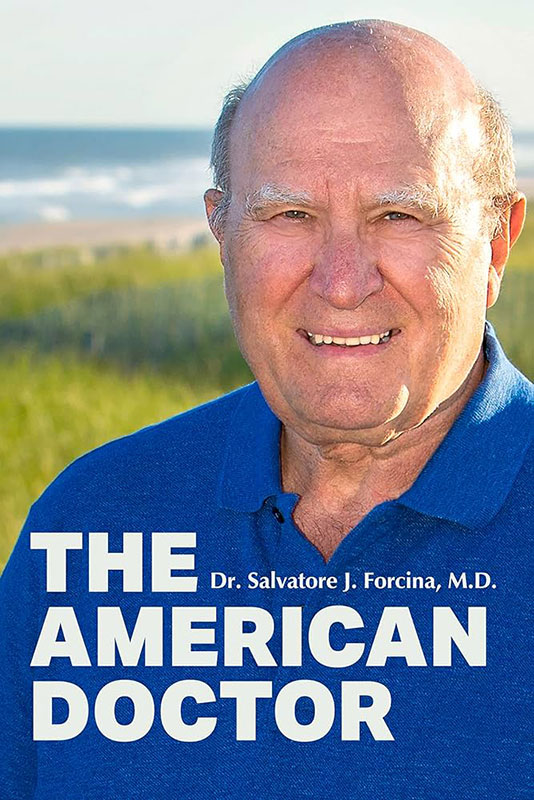
Dr. Forcina is a retired general, vascular, and trauma surgeon who served as the Chief of Surgery at two North Jersey hospitals for years and treated thousands of patients. He is also the author of The American Doctor, an inspiring memoir that chronicles his extraordinary journey from humble beginnings in war-torn Italy to becoming a highly respected doctor in the U.S.
Born amidst the chaos of World War II, poverty and hardship marked Dr. Forcina’s early years. Throughout the war, his family lived outside in the mountains with other villagers, and after it ended, they moved to Argentina when he was eight in search of a better life. At the age of 28, with only $40 in his pocket and no command of the English language, he immigrated to America, but his medical degree wasn’t recognized. Determined to practice medicine in the U.S., he worked as a hospital tech for three years, drawing blood for $16 a day while taking foreign equivalency exams to be allowed to begin medical residency.