“I was 18 years old. My dad left, the lights were off, and I had to decide: Am I a prince or am I the King? Most people never choose.”
~ Darius Ross
WATCH THE PODCAST
Click the play button ▶️ above 👆 to watch now!
Please Note: You can skip any ads after 5-seconds by clicking, "Skip Ad" in the bottom-right corner of the video window. These are not ads we control, or necessarily endorse. They are delivered by the video hosting company, YouTube or Rumble. Thank you for understanding.
LISTEN TO THE PODCAST
Key Timestamps & Moments of Gold
- 00:00:54 – The Ultimate Guarantee: What you will gain from this masterclass.
- 00:03:02 – From Chicago Streets to Global Infrastructure: The Darius Ross Story.
- 00:06:45 – The 7-Year Battle: How an 18-year-old saved his family from federal bankruptcy.
- 00:10:12 – The “King’s Mindset”: Why you must step up when leadership is vacant.
- 00:14:35 – The Samurai Code (Bushido): Applying ancient discipline to modern billion-dollar deals.
- 00:19:20 – Radical Accountability: Why blaming others is the fastest way to fail in 2026.
- 00:23:55 – Investing in the “Third World”: Why Africa and Asia are the next frontiers for infrastructure.
- 00:28:10 – The Power of Tenacity: Negotiating with creditors and federal judges before age 21.
- 00:32:45 – How to Solve Global Problems while glorifying God and helping your neighbor.
- 00:35:40 – Final Words: Your roadmap to becoming a remarkable leader today.
Episode Proudly Sponsored by:

Save 30% to 80% on EVERYTHING you order at MyPillow.com, PLUS Free Shipping with the best MyPillow promo code, “REMARKABLE” now!
Want to watch some MyPillow product review videos first? No problem! Click here to learn more and find over 2 dozen review videos now!
The King’s Mindset: Darius Ross on Radical Accountability and Global Leadership
What happens when an 18-year-old is suddenly forced to “become the King” of his household?. In this power-packed episode, Darius Ross, Managing Partner of D. Ross & Company, joins David Pasqualone to share a journey defined by tenacity, the samurai code, and a level of accountability that most people only dream of.
From Chicago Adversity to Global Infrastructure
Darius doesn’t just talk about success; he lived the struggle. Growing up in a strict Chicago military household, he learned early that there are no “second chances” when you mess up—you own it and you clean it up. We explore his incredible 7-year journey of “stalling” a bankruptcy to save his family home and how those “street lessons” translated into billion-dollar infrastructure deals in Asia, Latin America, and Africa.
The Bushido Code and Scaling Your Influence
Darius reveals his secret weapon for self-motivation: the Code of Bushido. He breaks down how the principles of the Japanese samurai apply to modern real estate and capital consulting.
-
The Choice Matrix: Why sinking or swimming is a daily decision.
-
Street Smarts vs. Corporate Wisdom: How to negotiate with creditors and federal judges before you’re even legal.
-
Global Vision: Why the “Third World” is the next frontier for infrastructure and multi-family investment.
Episode and Guest Frequently Asked Questions and Answers
Q: What is "Radical Accountability" in leadership?
A: Radical accountability is the principle of owning every decision and its outcome without excuse. Darius Ross defines it as the refusal to blame others for your situation and the commitment to “clean up” any mistakes you make immediately.
Q: How did Darius Ross save his family home?
A: At 18, after his father left, Darius impersonated his father for seven years to manage the household bankruptcy, negotiate with creditors, and prevent foreclosure while caring for his mother.
Q: What is the Code of Bushido in business?
A: Darius utilizes the Code of Bushido—the traditional samurai warrior code—as a framework for discipline, honor, and self-motivation to maintain consistency and persistence in his global business dealings.
REMARKABLE SPECIAL OFFER(S):
 REMARKABLE OFFER 1: Save 30% to 80% on EVERYTHING you order at MyPillow.com with Free Promo Code, “REMARKABLE“. Yes, that’s right! Use the best My Pillow promo code out there to save a TON of money on all 200+ quality, comfortable, cozy home goods at MyPillow.com/Remarkable, or by calling 1-800-644-6612. From sheets, to blankets, to pillows, to mattress toppers, be ready to sleep better and live more comfortably than you ever have before!
- REMARKABLE OFFER 2: Your Exclusive Offer: Save Big on Your Console Vault In-Vehicle Safe. With our exclusive promo code, “REMARKABLE“, you will Save 10% or more on all Console Vault anti-theft vehicle safes you order. And sometimes, you’ll receive Free Shipping too! Just make sure to use the free Console Vault discount code, “REMARKABLE” at checkout.
Full Episode Transcript
From Chicago Streets to Global Infrastructure: Darius Ross on Radical Accountability & Leadership | E1305
Welcome to the Remarkable People Podcast!: [00:00:00] The Remarkable People Podcast, check it out,
the Remarkable People Podcast. Listen, do Repeat for Life,
the Remarkable People Podcast.
David Pasqualone: Ladies and gentlemen, welcome to The Remarkable People Podcast. We are eight years in, 13 seasons in, and today we have with us our Remarkable Friend and soon to be yours, Darius Ross. Darius, welcome to the show.
Darius Ross: Yes sir. It’s appreciated. I forward to having a great time.
David Pasqualone: Me too. Me too. So we are going to talk about your story and what you’re passionate about, and we’re going to communicate not just what you achieved and overcame, but we’re going to [00:01:00] break it down to practical steps so our listeners can too. But for all of our listeners out there around the globe, what do you guarantee if they commit to sticking with this episode, they’re going to get, by the end?
Darius Ross: You’re going to gain accountability and strong leadership.
And what that basically means when you’re faced with adversity.
David Pasqualone: All right, so let’s do this. Accountability, I believe is huge, biblically, and through my life experience. What happened in your life, Darius? That accountability became so critical for success.
Darius Ross: I grew up in more of a military realistic household where his dad was king, and this is the way it was.
So as a result of the old school method of thinking. So every time I ever watched anybody do anything that they’d say, ah, it’s not my fault. Ah, it’s not this, it’s not that. No, no, no. It was always accountability. If you screw up, you another word ed up, you f it up. You gotta own it. So one of the things I learned was that no matter what, there were no second chances, there was no [00:02:00] concept of, well, kinda of sorter, somebody else is pushing problem.
No, you gotta deal with the problem. You gotta accept it. And then if you mess it up, you gotta clean it up. So this was all in your shoes. So one of the biggest things is watching so many people, especially in relationships, you get in relationships with male or female, and everybody wants to put the blame off on someone else other than themselves when they don’t wanna look at themselves and hold themselves accountable for the decisions in it.
David Pasqualone: Yes, I agree completely. Now, where did you grow up and what was your family like? You said military, you have brothers and sisters, only child, mom, dad, just grandma. What was your situation? I was the only child, but with a dad that was a strict disciplinarian. And when I say strict, it was strict. It was what it was.
Darius Ross: And he was the head person in charge, period. There was no, you have a say so. This is just the way it is. Deal with it. And he explained everything and every reason. Right. Gentle ing. No, no, no. There was no time out. There was time in. Exactly. [00:03:00] Exactly. Yeah. All right, so you’re growing up, you’re an only child, you’re having accountability and discipline drilled in you.
At that point in your life, were you seeing this as super valuable? I know it’s going to prosper me, or were you like, man, I hate this pressure.
Darius Ross: Oh yeah, I hated it. I hated it because every time I look around, anything that you did, it was either being called dead weight, it was this, that and the other. It was constantly something that I consider ridicule or you know, it wasn’t character building in my opinion, but as time went on, I realized the character building of it, because when he finally decided that he was going to disconnect himself from the household, one of the best things he said to me was, son, make the best of it.
You’re on your own now. And boy was I on my own. Everything went wrong, and so I had to understand. Those lessons that he taught was like, Hey, sometimes there’s nobody else to look forward to. It’s, uh, seeing this says wild, wild. You all, you got, you learn quickly.
Yeah. And how old were you when he gave you that pep talk?
Probably about 18. [00:04:00] All right. So he is like, Hey, it’s your show. I did my best. Now it’s up to you.
Darius Ross: Well, the funny part about it was I was the king trying to push him out because there was some infidelity issues. So I was a young prince trying to push him out. So he said, okay. Now you’ve pushed out the king.
Now you’ve gotta become the king. See, they say heavy is the heavy wears the crown. Believe you me, I understand now you have all the responsibility on you, including the bills, which most young people don’t understand when they turn around and talk to parents in any kind of way, they really don’t understand that what weight is really there.
This parent is going through a lot, going to these jobs that they don’t like, uh, going through all kind of aggravation, and then you become them. Then you really find out what the real deal is.
Yeah. And hindsight’s always 2020. And we love our kids and we want to teach ’em what we learned, but sometimes they choose the same broken path.
Mm-hmm. And they come out the same answers. ’cause the truth never changes. Mm-hmm. So what are some of the things, Darius, that looking back, things you hated? Because all of us, even as an [00:05:00] adult, I’ve seen grown adults throw temper tantrums, right? So what are things as an adult that your dad and mom were like, Hey, this is discipline, this is accountability.
This is right. You gotta be a man, suck it up. What were things that you hated as a youth, but now you’re like, those are some of the most valuable lessons I’ve learned.
Darius Ross: Um, the issue of basically putting me in a position where one night I decided to come in real late. It was one or two o’clock in the morning.
He left me outside and in Chicago’s cold weather, the wintertime reality checked. So after that, I looked at the clock and said, 12 o’clock, you come home. There’s butts body. Because when you stay outside in the garage and it’s cold, oh, you think real quick in Chicago’s winter.
Yeah. Yeah. Locking you out in the cold.
There’s no fun anywhere, especially Chicago. I grew up in Boston. Mm-hmm. And Boston cold and Chicago cold are two different things. Mm-hmm. You really, the windy city is aptly named. I mean, it is. Mm-hmm. Bitter or cold. Right. So, [00:06:00] all right, so now you’re growing up, you take over kind of stepping into the man’s role in your home.
Because it, it sounds like your dad, uh, he, he moved on because of him. Oh yeah. Yep. And now you step into that role and you get a whole world of responsibilities that even back then it was disposition disproportionate for your age. Where does your life go from there?
Darius Ross: Well see, the day that he left, he was like, okay, I’m sitting there smiling, going, yeah, he’s out.
I’m the king now. Well, about a week later we get a snow storm. Uh, didn’t realize that you gotta continue to pay the bills, right. So no light, no phone, no gas, no water, no nothing. That was a reality check. So then you realize real quick, oh, this is what adulthood is all about. Real shit, real time.
Everything’s real. So when I hear that my millennials, um, that are youthful people and they say, well, your parents are this and parents are that, I’m like, no, no. You don’t understand until a parent leaves you with [00:07:00] everything that you have to be accountable for and you have to turn around and step to the plate.
You gotta go down and negotiate with the creditors. You gotta negotiate with everybody. I mean, I even had to negotiate with the bankruptcy judge because for probably five or six years while uh, I was going through the remainder of his bankruptcy, I became him. So the funny story about this was, uh, I’m in the courtroom, right?
And the judge looks at me and I didn’t know the, uh, opposing attorney that was for the federal government looks over there and he says, how old are you? And I didn’t say anything. So he goes, your Honor. Now, if he wasn’t born in 1940, he can’t be Malachi Ross. Now, mind you, now this has going on for seven years.
Okay. So I was impersonated him for seven years. Nobody figured it out. Just stalling the bankruptcy. So that gives you an idea of just how streed you have to be under certain circumstances.
Yes. I remember when we are called to do things, we’re [00:08:00] never to lie. We’re never to do anything dishonest like that.
But there’s times, even in the Bible where God called men to do things. Mm-hmm. I remember when one of the prophets, God said, go, you’re going to anoint the new king. And he is like, if I go into that land, I will die. Mm-hmm. And God said, well go there to make a sacrifice. And the guy’s like, oh, I’m going there to make a sacrifice, and while I’m there, I’m just happening to, uh, anoint the king, right?
Mm-hmm. So that’s how we, we got the, the whole story with David. So you’re impersonating your dad for seven years, going, fighting, pushing off the bankruptcy, and how did that end, how did that finally, did they dismiss it? Did they blame you for fraud? Did they blame your dad? How did that end?
David Pasqualone: Hello friends. I’m here to talk about the MyPillow travel pillow. This isn’t just a travel pillow that’s easy to squeeze and put in your backpack or your suitcase and take it to a hotel or put it in the car.
It is also great [00:09:00] for everyday use. So when I lay down, sometimes you know, a full pillow is too big or you gotta fold it over, or whatever the situation is. This small pillow fits perfectly on the back of my neck and allows my head to go back and breathe openly.
So if you haven’t checked out the MyPillow travel pillows, they have a original and a 2.0. Check ’em out, totally worth your money. Use promo code, “Remarkable” for up to 80% off that and anything else you order. And then on top of it all, if you’re not completely satisfied, you get your full money back. So go to mypillow.com, use promo code, “Remarkable” and you will not be disappointed in this pillow or probably anything else you buy.
David Pasqualone: So you’re impersonating your dad for seven years, going, fighting, pushing off the bankruptcy, and how did that end, how did that finally, did they dismiss it? Did they blame you for fraud? Did they blame your dad? How did that end?
Darius Ross: Or the judge was pretty cool.
He was like, you [00:10:00] know what? I have to admire your entrepreneurial spirit because I’ve never seen anything like this. I’ve never seen anybody that came before me and never challenged me, never said anything. He’s like, I just admire your spirit. He says, you know, that’s pretty good. He said, I’m going to let this slide.
He dismissed it, and that was the end of that. But it was stalling long enough to get the financial, you know, together to be able to pull the deal together, to keep the house and everything else. But this was just a matter of me saying to myself, you know what? I’m here now. Whatcha going to do? And that’s what I say about accountability.
Often people don’t wanna turn around and accept the fact, okay, you’re in a situation, what are you going to do? Sink or swim? So I, I hear people that would say, well, I wouldn’t did it that way. I’m like, see, when you got everything counting on it, you got a mother, you got a kid, you’ve got other people that are looking at you and saying, okay, what are you going to do now?
You don’t have any time to say what am going to do now. You gotta do what you gotta do and make it work. And I bring up that story about, um, I think it’s the Federal Express, uh, Fred Smith and how he saved, uh, FedEx when he went out gambling. The airplanes now, he took his last money to save the airplanes, and I [00:11:00] get it.
People don’t understand what you’ll do in time of duress. That’s when everything changes. I always say when the bullets start flying, that’s when you know who’s a real cowboy.
Yeah, that’s so true. Everybody talks, but when the proverbial crap hits the fan, there are different person usually hiding behind the counter.
That’s right. Yeah. So, all right, so now you’re growing up fast. You got your mom you’re taking care of and I’m sure, was she, you know, helping as well or was she in a place where you just had to take care of her?
Darius Ross: Just had to do it because the job was a very menial job. I mean, you know, she was working outta the kitchen cafeteria age, so there was very little to work with.
You gotta get out there and make it happen. That’s when you learn the streets in the best sense.
All right, so where’s your life? Go from there, Darius.
Darius Ross: It went to, uh, real estate, ultimately speaking, got fired from the job at a bank and then the issue became, you know, now work. So a old professor of mine actually called me and said, you know, listen, I want to turn around and I buy a house [00:12:00] down in, um, Southern Illinois.
So I went down to help him buy a house and lo and behold, the bank vice president thought I was pretty sharp because I mentioned to him the CRA, which is a community reinvestment act, because there were very few minorities that were there, and I helped him get this house. So the vice president said, you know what, I like you, you got, so he sold me four houses, 400 bucks.
So that began my real estate career. There were four houses that had kickstands. Literally, the houses literally were falling down, but I was willing to accept them because I, I’m in the business now. We’re willing with it.
Yeah. That’s fantastic. So now your kind of circumstances, you know, I believe nothing happens by accident.
Everything is ultimately ordained by God and. He allows bad things to happen, but he never caused ’em. And in this, he gave you an opportunity and when he gives us an opportunity, he’s like, well, what are you going to do with it? So what did you do with it?
Darius Ross: I turned around and took that and then went on. I failed at it.
Lemme get this correct. I failed at it because I didn’t really understand that part of the [00:13:00] process is you gotta pay the bills. See that was a tricky part. And understand the discipline of bill making. It’s a bill making, bill paying. So I felt at that, came back to Chicago and start all over again. Uh, first year didn’t make any money in real estate, but then I started learning the lessons of how to make this work.
It’s being an investor and if you can take advantage of other people’s problems, then you can succeed. So I started looking for people that had problems and how to solve them and being creative and establishing a network of people that can help you solve problems.
All right. And now you’re going through, what year was this roughly?
Darius Ross: This is the 1980s. Late eighties. The eighties nine, yep. 8 89.
So we just came out of the chaos. Jimmy Carter created Reagan’s Rebuilding the Economy, bringing interest rates down from near 20%. Right. I think I remember interest rates at 17.5%. Mm-hmm. But I was very young then. So what, what were you learning with the banks and financing?
Were you paying cash or were you financing? How were you buying the investment [00:14:00] properties?
Darius Ross: I was learning something called Om at its best Other people might and how to utilize that at its best. We’re written in the middle of Resolution Trust, which is like the early nineties, 91 9 2. And now the SNL industry just basically disappeared.
All the savings loans were gone. People don’t even remember. There were savings loans before there were banks. And so as a result, there were deals that were being done on land contracts. So voila, learning how to create land contracts and how to deal with them. So I actually bought Westlaw’s Library, which was like a huge library of for lawyers as to how to do and create things.
So it was like. Learning the process of contracts, learning the process of law, learning how to skirt the law, learning how to drive right down the middle lane, gray zones. So I was in business. I became a PDO lawyer because I had probably 4,000 books. All types of, uh, people remember the floppy disc. I was pouring myself into those.
I was a bad boy.
All right, so now [00:15:00] you’re moving through this time. You’re growing, you’re learning. And I love how you said you failed. You’re totally honest. ’cause we all fail. If somebody doesn’t fail, that’s just un, you know, uncommon. Everybody fails and the bylaw says adjust man. Not just a man, but a just man.
Fall seven times. But the difference is that he rises up again. Mm-hmm. So, um, it’s super awesome just to hear you talk about how you failed and you got back up and you we’re all going to fail till the day we die. ’cause once we get all right, we’ll be in eternity, right? That’s right. We’ve, we graduated. So, all right.
So now you’re buying and selling, you’re moving and shaking. Where does your life go from there?
Darius Ross: It takes me to New York at that point in time. Um, in the midst of all that, it was like, you know, my mother wanted to go into the south and spend some time. So I learned, you know, in the South how that works. I learned the process of the good old boys network, how some things are done on the handshake, which is a little different for me because I’m used to, in the [00:16:00] Midwest and the East coast, things are done with pink and good old boy handshakes do work sometimes, but there’s always the interesting part when you get somebody that’s from East Midwest and they change the deals a little bit on you.
So I had to learn that. So, you know, from that point forth, then I understood there are those that you can do business with, that you don’t have to turn around and create, uh, documentation. And then those are the men of the words.
Yeah, and let’s talk about that. I think this is a great topic. You went through a life of experience.
I have experience, but for our listeners, there’s so many people that are paralyzed and paranoid. They’re afraid to get in a contract or to start a new business ’cause they don’t know who they can trust or they want NDAs for. Everything in the world because they’re afraid somebody’s going to steal their idea, but they don’t get the fact that if they don’t move on it, it’s no good.
Anyways. So where do you find, after your years of [00:17:00] experience, Darius, where do you find that balance of evaluating new ideas, new opportunities, and who to trust, who to what? A formal partnership, I’m not even saying, but who to sign a contract with and have an agreement with. How do you know who’s good at their word?
Who is someone, you need a contract. But the the truth is, as we all know, contracts still are only as good as the people who sign them. Right. And it, it’s, you know, who wants to go fight in court for years? Right? So how do you evaluate and match up opportunity to help our listeners?
Darius Ross: I deal with it from good instinct to be very honest with you, because like you just said about who’s behind the contract, here’s the thing.
I’ve had situations where some of the best deals were made where we actually sat down and talked face to face, and I look you in eye. I wanna look you in eye and get an idea of, okay, what’s on your mind? And the eyes tell a big story. You know when someone actually looks you in the eye and they keep eye contact and they maintain the composure of hearing their story, I wanna hear [00:18:00] your story.
If you haven’t been on a path of destruction and activation and adversity and pain, we can’t do business. I wanna hear what went wrong, how many times it went wrong. And I can trust it. There’s a saying that says about, there’s honor among thieves, but there’s honor among Thieve because you gotta get an idea of what somebody’s coming from and what they’ve been through.
And from that, I’ve then based my decisions on, can I work with you? You know? And a large part of that is just understanding how they operate. You know, people are all motivated by something, right? Whether it’s the religion, whether it’s a dollar sign, whether it’s faith, whatever, it’s, you’ve gotta get off into the spirit.
A lot of conversations spin on the spirit and what I find is that God gives me a spiritual connection and says, okay, eh, sounds pretty good. Then there’s sometimes there’s that shoulder thing that says, nah, not the one. So I go with that.
Yeah, and I agree and I think that’s biblical. It talks about in First John, how once you’ve trusted crisis your savior, you have an unction from the holy one.
You know, all things. So once we’ve trusted [00:19:00] Christ, we’re sealed with the Holy Ghost, and he leads us if we’re just listening, right? Mm-hmm. Now, even as a Christian, and even trying, you know, listening for the, if we actually, if we listen and hear the voice of God, we’ll always get it right. Mm-hmm. But we get.
Mixed up with all the noise and with our own sometimes selfish desires. So you mentioned looking someone in the eyes, right? That’s huge to evaluate. So if we were to say, these are steps to break down the sincerity of someone you may go in business with. Another thing is, you know, we’ve been, the last 20 years is so much lies and proof.
Oh, you know, donate to or buy a shoe and you get a free pair of shoes or do this. And they’re like, come on, and, and I don’t care if you’re black, I don’t care if you’re white. I don’t care if you’re green. I don’t care if you’re purple. There’s one race, the human race and everybody’s lying. It’s like most people, it’s the love of money is motivating them.
Money’s not evil. Money’s a tool, but the love of money’s [00:20:00] evil. Mm-hmm. So. What are some of the, the, ’cause you have a gut, but you also have wisdom. What are some of the, the things you ask or the questions to kind of cut through the BS and get to the core of what’s real?
Darius Ross: My number one thing of it’s, and I start out each day like this and people laugh and I say this, I say Each day, who’s going to hook me today?
Okay. So now when I walk outside, I expect, so when I’m walking around, nothing happens. I’m like, whew, I got past it. Then that day when it happens. Okay. I already expected, I knew it was coming, you know, and it’s just, you just deal with it. But within that same framework, the understanding of it’s is being able to sense the fact of this one simple thing.
Everybody has a motivation. Find out what the need is and utilize the grief, what’s their motivation? And just cut to the chase. Listen, what do you want? What do you need? How can I be of assistance to you? And if you already know what you want, then you know what they need. Okay? And just come at it just like that.
Stop beating around the bush, you know, [00:21:00] going through all these motions. It’s this and No, no, no. It’s good to the chase. What do you need and how can I help you get what you need? And then I’m going to turn around and associate that with what I want. Very simple. Because you know, when you’re looking at somebody and they’re basically talking, I wanna see some pain.
I wanna see what you’re really going through. That’s my real, I.
Yeah. I think, again, I think that’s so wise because you cut out sometimes, you could waste years on a relationship that never should have been started. And I, I take it from what we’re saying, you’re not afraid to walk away from a deal if it’s not right.
It’s not right. Do it upfront, right? Mm-hmm.
Darius Ross: Uh, I’ll do it this way from example of male female relationships, right? We as men do this wonderful thing. We’re looking to get the cookies. So we’re looking to get the cookies, and we then say to ourselves, well, this is what I want. Well, there’s one little problem with that.
In order to get to the cookies, she needs something, whether it’s the purse, the shoes, the maintenance, whatever the case may be, if you establish that as a man, okay, this is [00:22:00] what my man responsibility is, okay, I’m accepting that. Now, what do you want from me? Okay? You’re not going to be my wife because you just love me and I the greatest thing to sliced bread.
You want something, you want maintenance, you want. Consistency. You want now, faithfulness, whatever. Let’s get to the point. Now, if I can provide that for good, if I can’t, then let’s keep it moving.
Yes. Yep. I, I think that’s very accurate. Cutting down to the core because if you’re dealing with all the proof and it’s not real relationship, whether it’s business or personal, it’s just a waste of time.
Uh, it’s so many people who just have these fake surface relationships. Mm-hmm. And then they have all this anxiety and depression, and they’re like, nobody’s just real with them. Like, Hey, you need to deal with this, or stop being fake. You’re trying to find happiness and not joy. So I think that’s very wise.
So now bring us from that point in your life [00:23:00] to today, Darius, where are you going And what, or where have you been and what have you learned?
Darius Ross: It has been a life full of philanthropy to social causes from, um, maintaining and creating the estate tax to, uh, creating a minimum wage for so many states. Being involved there through, uh, responsible wealth and resource generation and, um, United Fair Economy.
It’s now writing books. It’s now getting further and further into the, um. Process of political, social activism. Um, now it’s back to the real estate business and looking at the international waters of real estate in Asia and Africa and so forth. So it’s been a journey.
Yeah. Now most of our listeners are true podcasters all over the world, but we have.
A YouTube and Rumble audience, that’s sometimes surprising. The numbers right behind you is a picture. I don’t see the head of what it is, but it’s like gray with a boxing glove and a microphone in its hand. What’s that represent?
Darius Ross: That is [00:24:00] Mr. Rhino. That’s my, that guy. That’s that’s my guy. All right.
And what’s that represent to you?
The rhino.
Darius Ross: The rhino is headstrong. He’s got the muscles, he’s got the microphone. He rocks the mic and he boxes too. Don’t ever think that he won’t fight back. So that’s the rhino. He charges and everything. He things up. So on my website, when people go to my website, they see the rhino and that’s what represents, he’s got his hat to the back.
He’s got a little edge to him. He’s not afraid of doing a little, but in the meantime, he knows how to rock the mic point across.
Beautiful. So you have an opportunity. We’re talking to people all over the world right now. What do you want to tell ’em? What’s something if you’re like, man, hey. Here’s some stuff to consider, or here’s a thought, or, Hey, apply this to your life.
See where it takes you. Start, you know, try this today. What do you, what do you want to tell our, our listeners
Darius Ross: realize struggle is a part of life. Realize adversity is a part of life. Realize mental pain, mental frustration, and mental anguish is a part of life. [00:25:00] There’s no way around it, but the fact of the matter of it’s how much tenacity do you have to maintain and sustain just the path?
Forget about the journey. I realize there’s going to be an end to the game, but can you follow that path and stay consistent and persistent to get to your goal?
Awesome. Now somebody’s like, okay, this is what I want outta life. They go towards it and they hit adversity. You’ve clearly formed habits and a mindset that’s strong that pushes through or pushes forward up around, under, through.
It doesn’t matter. You’re going through that wall. When people are getting blocked and discouraged, let’s say you, you’re trying to start a new project. You’re going to El Salvador, huge, great country market, you know, everything’s exploding economically. You’re going to buy land, and then you hit a roadblock.
What’s the first thing that comes to your mind? You just, oh crap. It’s [00:26:00] hard. I quit. I don’t know what to do. Where does your mind go? So our listeners can tap into that and, and hopefully adapt that to their own mindset.
Darius Ross: Two things. How bad do you want it and are you prepared to go through in and around as 50 said it best, get rich or die?
Trying. So you have to be determined to go in and around it. You know, how bad do you want it, do you want it bad enough to turn around and do what’s necessary? That’s the thing, and I see that in such a way where whatever’s necessary are you prepared to do. Some people will say what they want, but will not follow the course to get it.
So therefore when I look at someone’s journey, I want to hear what happened that they don’t talk about. Because that’s always the issue. What you don’t talk about. You know, when you hear about, uh, activists, how many times did you go to jail? How many times have you been shot at with a policeman? Have you ever been in an armed uh, conflict?
Have you ever been in combat zone? These are the things I wanna know about. Have you ever been in a situation where this was your last moment? That’s the key. How bad do you want it? And [00:27:00] what are you prepared to do to get.
I think that’s why so many people just for physical will say, they’re like, oh, I gotta out, I gotta work out.
I wanna work out. I wanna get better. And then they have a heart attack, and then it is like, damn, they get on that elliptical and they get, they get working, right? Because it becomes real and they want life and they’re fighting for it. Mm-hmm. And then they have a great life the rest of their days. But it took that event, that catalyst.
So without that kind of trauma and pain. Where it could end up too late. Mm-hmm. What are ways that you self-motivate?
Darius Ross: Uh, my big thing is I look at a code of Boto, which is a Japanese samurai warrior. I live by that code, and the issue of the hour is, and that self-motivation, I always think of myself as never being successful, always saying to myself, I’m living as if this is my last few pennies.
Now what am I going to do when I get that last few pennies? Am I prepared to turn around and switch? Trajectory switch paths with success. What am I prepared to do next? So I always think in [00:28:00] terms of this is the end and I have to create another new beginning.
Yeah. And I think, so there’s so many people that are in the, I don’t know what it’s called, like I believe there’s aspects of the, what people call the law of attraction.
Mm-hmm. And it’s biblical. You reap what you sow. Mm-hmm. But then they take it way too far. Right. And they’re like, if I just think I’m a unicorn, I’ll be a unicorn. Right? And that’s bull crap. But then you have other people who are wealthy and they are constantly going and they achieve things. And achieve things and achieve things.
’cause they have actually a poverty mindset. Mm-hmm. They’re afraid to lose it all. That’s right. But they keep achieving, but they never have that. Fulfillment. So it’s like, do you feel like you have the balance where you’re continuously hungry, but also satisfied in full? Do you have that balance or are you still working towards that?
Darius Ross: This is what I realized, and it’s kinda interesting when you ask the question, once you get a million dollars in your bank [00:29:00] account, you’ve got a million dollars in your pocket and you have a million dollars assets, you’re good. That’s a simple first thing. Second thing of it is when you look around and you walk in a store, like now I walk in a store, right?
And I see, okay, I’ve got that, that, that, that I’m good. X amount of pairs of jeans, X amount of pairs of shoes. You’re good. Now, the question of the hour is, are you satisfied with where your life is? What I mean by that is have you realized that life is short? So what are you doing to expose yourself to all the things that life is offered?
Are you traveling? Uh, my mom and uh, friends always admire when I’m looking at animals. I’m always outside looking at animals in the trees, right? Walking squirrels. And concept of that is I’m watching that squirrel because I’m thinking to myself, look at how simple his life is. He’s chasing the other squirrels.
But I watched one a couple days ago, squirrel gets to the top of the tree and the other squirrels are looking around trying to get it down. And that squirrel is up there meditating, right? So the other squirrels are just aggravated. So I’m thinking to myself, how often do you actually take the time out?
Just chill. Just take time outta life and just chill. So that’s why I’m [00:30:00] constantly going through the zoos and watching the animal channel, because the animals got it right and you take the time out of your day, get away from hustle bustle. And just chill. And a good example of that is I watch New York City here, right?
The traffic patterns right there are people that are speeding, literally going to kill somebody else to get to a job they hate. Now, why are you speeding to get to a job you hate throwing the fingers up? Birding me because you going to job you hate. And then when you get there, you complain about it because that person is not taking the time out to realize life is short.
They’re going to replace you and they’re going to put somebody else in that spot. Get over it.
Yeah. I think it, that self-reflection, that examining ourselves, that really evaluating mm-hmm what is life and why am I here and mm-hmm. What’s my role? And, and, but you said not stressing about it, where you make yourself the center.
’cause that’s still pride, but finding the balance of the work and the play, I think that’s huge. Mm-hmm. All right, so it’s been great talking to you, Darius. What questions haven’t I asked you that we need to [00:31:00] discuss before we transition to where are you today, where are you heading next? So we as an audience can help you get there.
Darius Ross: Just, I think the big question of it is, is how people find themselves in these dilemmas and don’t know way out. And what I always say is when I find out in martial arts, there’s always a way out. It’s a. Of addressing it in your mind and not playing the middle gymnastics. That’s part of one of my books. I talk about the middle gymnastics that you gotta get outta your head and stop cutting flips and stop, you know, doing somersaults and so forth and realize it is what it is.
It’s not going to change unless you do something about it.
Yes, a hundred percent. The problem doesn’t change unless you add a new variable, a new solution. All right, so Darius, if someone wants to get ahold of you, where’s the best place or what’s the best method to reach you?
Darius Ross: They can go to any of my websites.
It’s on darius writes.com. They can find the two books there, three books now, or they can go to darius a ross.com or [00:32:00] um darius ross.com.
All right. And then where are you heading next? We kind of talked about it, but if, what’s your next goal, like the next step on your target?
Darius Ross: My next step is, uh, getting involved in the infrastructure deals of Asia, Latin America, and, uh, Africa.
And looking at how, what is now been considered, these third world countries now are improving to the point where they’re becoming a new place to invest, both in multifamily as well as in infrastructure, roads, bridges, et cetera.
Beautiful. Well, if someone wants to reach you, they can go to their website.
If you need anything that I can ever help you with my friend, please reach out. It’s been an honor to have you and be Before we wrap up this episode of the podcast, any final words or thoughts that you want to share?
Darius Ross: I like to say to everyone out there’s listening. Keep in mind, I’ve always been in your shoes and I stay in your shoes.
So I stay in a mindset that do not feel afraid because you’re going through trauma or you’re going through, [00:33:00] there’s always triumph. After you just cognize, you go through going to uncomfortable, it’s going to get aggravating. So there’s always a dawn to another day, and there’s always awakening for every moment of darkness.
Amen. Darius, it’s been a true honor having here today, my friend. Thank you.
Darius Ross: Pleasure. Thank you.
All right, ladies and gentlemen, like our slogan said since episode one, season one, eight years ago. Don’t just listen to the great advice and wisdom that Darius shared, but do it. Repeat it each day. Form those good habits.
You can have a great life in this world. But most importantly, life short, 70, 80 years on average, wherever you’re in the world, so you can have a great eternity. That’s it. I’m David Pasqualone. This was our Remarkable friend, Darius Ross, and we’ll see you in the next episode. Ciao.
David Pasqualone: Ladies and gentlemen, I sincerely [00:34:00] hope this show has inspired you. The whole purpose of The Remarkable People Podcast is to inspire you, to motivate you into action, to help you have an even better life, to overcome things you’ve not yet been able to overcome or to grow to the next level that you never thought possible.
And all of this, not just to benefit you in this world, but to have you come to a relationship with God where it grows every day stronger. And not just this world is blessed, but your eternity is blessed. And we sincerely want to do just that, and to glorify God. And we hope with this episode we accomplish that.
If we did. Please let me know. It’s great to be encouraged and to spread the word to our Remarkable guests that it helped in your life. If we didn’t, let me know. Write me an email. You can go to DavidPasqualone.com . Go to our contact us [00:35:00] page and let me know what you think. I got tough skin. Let it rip.
Anything you can think of to make this a better podcast to help you grow and to glorify, God, I’m in. So that’s it. Thank you for listening to the podcast. Thank you for sending us feedback. If we can help you in any way, let us know. And if you can spread the word about the Remarkable People Podcast, share the episode to your friends, your family on social media.
It would be a huge honor and blessing. Again, I’m not trying to be the most famous podcast in the world for my benefit, I truly want a podcast that’s the best podcast in the world to help as many people as we can to have a better life, come to know Christ, to grow in the Lord, and to have that salvation so they can be with God and peace and joy in eternity.
And right now we’re together on this earth, so let’s do everything we can to work together and help each [00:36:00] other grow. Like the Bible says, love the Lord thy God as a first commandment. And the next command is to love thy neighbor as thyself. So let’s do it together. I’m David Pasqualone. I love you. Not as much as God loves you, but if I can help you in any way, just ask.
And again, please share this with your friends and family so we can help them too. Ciao and see you in the next episode.
Welcome to the Remarkable People Podcast!: The Remarkable People Podcast, check it out,
the Remarkable People Podcast. Listen, do Repeat for Life,
the Remarkable People Podcast.
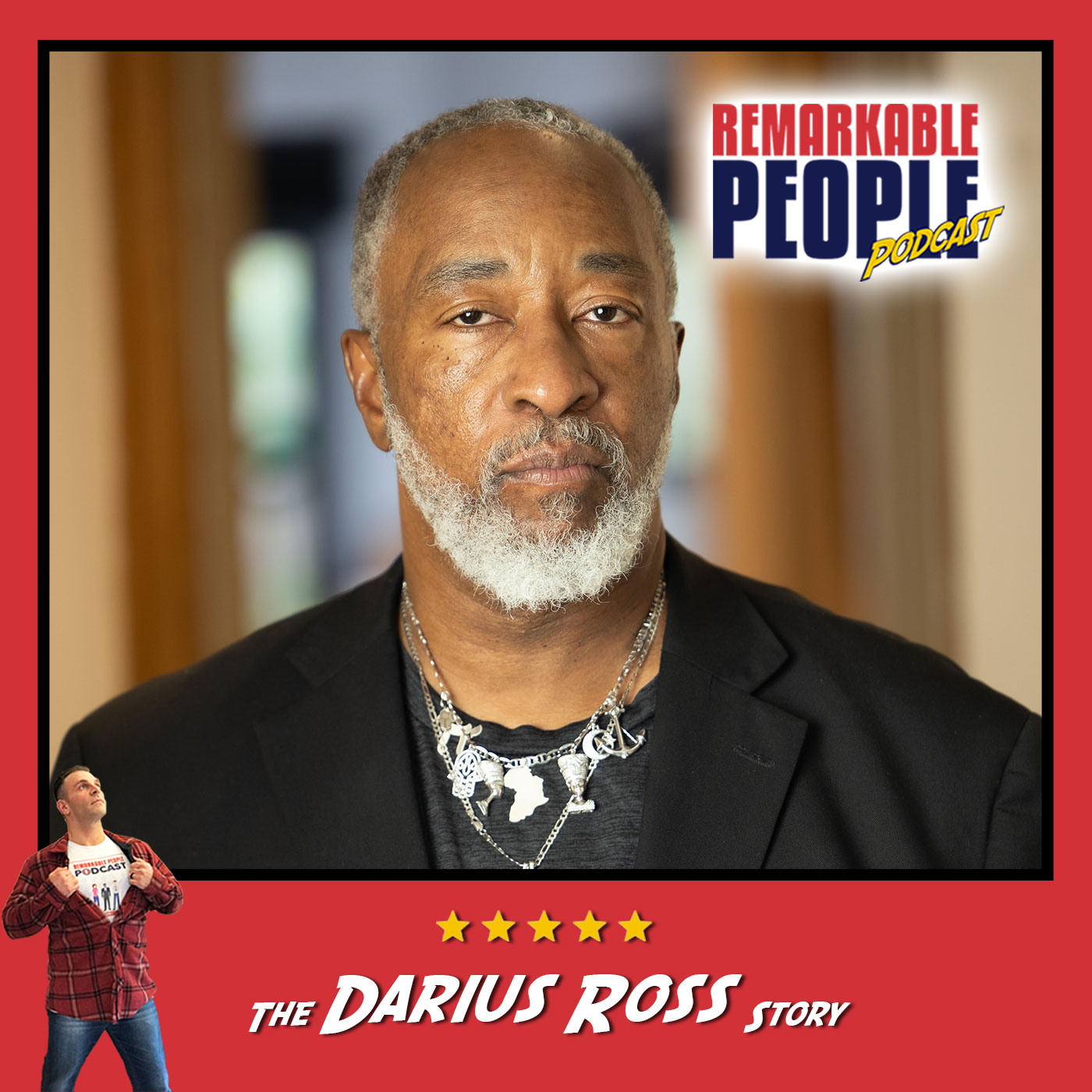
Meet Our Guest:
Guest Contact Info:
- Website: http://dariusaross.com/
Linkedin: https://www.linkedin.com/in/darius-ross-0316626
Guest Bio:
Darius is an entrepreneur and motivational speaker who has recently authored the upcoming book “Mastering the TPS Blueprint – Transforming Trauma into Triumph”. Darius has an impressive portfolio in real estate, with operations that run into the billions, and he has advised top-ranking corporate leaders on deals worth $100B+. But Darius’ journey to success has been far from easy, going all the way back to the struggles he experienced growing up on the south side of Chicago during the 1980s – a time marked by gang violence and adversity. Losing dozens of friends to violence had a profound impact on his understanding of resilience and equipped him to help others overcome the struggles of drugs, violence, trauma, mental health, and social instability. His past difficulties have been instrumental in shaping his enterprising spirit, which he puts to good use as a philanthropist today to uplift people who need help, including startups, women-led businesses, and young people seeking guidance.