“Structure, systems, and people. If you get those three dialed in, you have a straight line to where you want to go.”
~ Bryan Kramer
WATCH THE PODCAST
Click the play button ▶️ above 👆 to watch now!
Please Note: You can skip any ads after 5-seconds by clicking, "Skip Ad" in the bottom-right corner of the video window. These are not ads we control, or necessarily endorse. They are delivered by the video hosting company, YouTube or Rumble. Thank you for understanding.
LISTEN TO THE PODCAST
Episode Proudly Sponsored by:

Save 30% to 80% on EVERYTHING you order at MyPillow.com, PLUS Free Shipping with the best MyPillow promo code, “REMARKABLE” now!
Want to watch some MyPillow product review videos first? No problem! Click here to learn more and find over 2 dozen review videos now!
Connect Humanity to Business: Bryan Kramer on Breaking Mental Loops
In a digital age where we are more “connected” yet more isolated than ever, Bryan Kramer has pioneered a movement that brings humanity back to the forefront. As the creator of the Human-to-Human (H2H) framework, Bryan helps individuals and companies move past digital “highlight reels” to achieve genuine, connective relationships.
The “H2H” Framework: Putting People First
Bryan’s career has thrived on the thread of connection, starting from his early days in Silicon Valley during the advent of the internet. He explains that transformation isn’t just about technology; it’s about alignment between structure, systems, and people.
-
Digital vs. Social: Why our digital connections are often “fake” and how to bridge the gap to real relationship.
-
The Power of Alignment: How getting into agreement with others creates a shared sense of purpose and faster success.
Breaking the Obsessive Mental Loops
A major roadblock to true connection is what Bryan calls “obsessive loops” in the mind. To become a “connective tissue” in your relationships, you must first clear out the mental “trash” holding you back. Bryan shares how his own journey as the “black sheep” of a medical family led him to discover his superpowers through entrepreneurship and human-centric thinking.
KEY TIMESTAMPS & MOMENTS OF GOLD
- 00:00 Welcome to The Remarkable People Podcast
- 00:42 Introducing Bryan Kramer
- 03:13 Bryan’s Journey and Early Life
- 04:23 Transformation and Change
- 10:08 Overcoming Mental Loops and Fear
- 13:50 Practical Tips for Mental Clarity
- 17:21 Bryan’s Personal Struggles and Advice
- 20:48 Recognizing the Signs of Stress
- 22:20 The Power of Box Breathing
- 25:42 Clearing the Mental Clutter
- 27:20 Life Changes and Moving to Lisbon
- 31:30 The Benefits of Living in Lisbon
- 34:08 Connecting with Bryan Kramer
- 35:24 Final Thoughts and Encouragement
- 37:45 Closing Remarks and Call to Action
Episode / Guest Frequently Asked Questions… and Answers!
Q1: What is the Human-to-Human (H2H) movement?
A1: H2H is a framework developed by Bryan Kramer that emphasizes the importance of human connection in business, arguing that businesses don’t have emotions, but people do.
Q2: How do mental loops prevent connection?
A2: Obsessive mental loops act as “trash” that keeps us stuck in our own heads, preventing us from being present and acting as “connective tissue” in our relationships.
Q3: Why is alignment important for company success?
A3: Alignment creates a shared sense of direction that serves both the individual and the company, making growth faster and easier.
REMARKABLE SPECIAL OFFER(S):
 REMARKABLE OFFER 1: Save 30% to 80% on EVERYTHING you order at MyPillow.com with Free Promo Code, “REMARKABLE“. Yes, that’s right! Use the best My Pillow promo code out there to save a TON of money on all 200+ quality, comfortable, cozy home goods at MyPillow.com/Remarkable, or by calling 1-800-644-6612. From sheets, to blankets, to pillows, to mattress toppers, be ready to sleep better and live more comfortably than you ever have before!
- REMARKABLE OFFER 2: Your Exclusive Offer: Save Big on Your Console Vault In-Vehicle Safe. With our exclusive promo code, “REMARKABLE“, you will Save 10% or more on all Console Vault anti-theft vehicle safes you order. And sometimes, you’ll receive Free Shipping too! Just make sure to use the free Console Vault discount code, “REMARKABLE” at checkout.
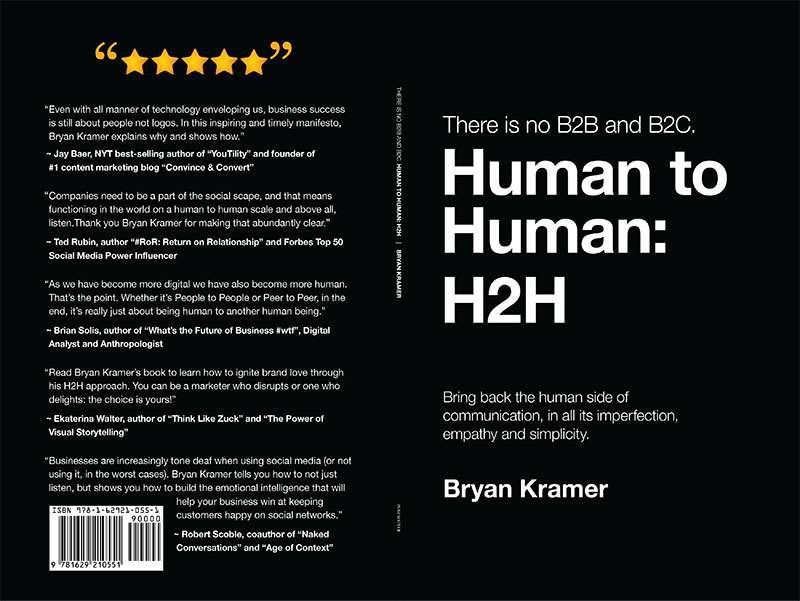
- REMARKABLE OFFER 3: First 3 people to email me, I’ll send a digital copy of my Human-to-Human book here: private@bryankramer.com
Full Episode Transcript
Human-to-Human: Breaking Mental Loops and Achieving True Connection with Bryan Kramer
David Pasqualone: Hello, friend. Welcome to this week’s episode of The Remarkable People Podcast. Whether you are a first time listener or a lifelong friend of ours, we are so thankful you’re here. We hope you not only get content that you can grow with, apply to your life practically, and just enjoy more success, joy, and peace. But we also hope you can share it with your friends and they can experience that too. Like our slogan says, don’t just listen to these great episodes. But do the good. You know, you need to form a habit, repeat it each day so you can have an amazing life, a Remarkable life in this world, but most importantly, in eternity to come.
So today we have with us Bryan Kramer. You’re going to hear Bryan’s story. You’re going to see how he started several companies. He’s a keynote speaker. He’s wrote award-winning books. He’s an author on several international blogs. He [00:01:00] has started a human to human company and book, and this is where he connects humanity to business.
And it shows how important it is for us to break the obsessive loops in our mind for us to really get out the trash that’s holding us back and how to really put people first, starting with ourselves and then expanding out to the world. So at this time, unless you’re driving or running, get a pen and paper out.
Get your favorite beverage. Be ready to take notes and listen to this amazing, Remarkable interview with our friend Bryan Kramer now.
Welcome to the Remarkable People Podcast: The Remarkable People Podcast, check it out,
the Remarkable People Podcast. Listen, [00:02:00] do Repeat for Life,
the Remarkable People Podcast.
David Pasqualone: Hey Bryan, how are you today?
Bryan Kramer: I’m doing great. How are you ?
David Pasqualone: Man, i’m Remarkable. I was just telling our listeners around the world a little bit about you and what to expect in this episode, but straight from the source. If someone commits to spending the next few minutes together with us, what’s one thing you guarantee they’re going to be able to take, apply to their lives and be an even better human?
Bryan Kramer: I, I’d say that the one thing is how to, how can you be more of a connective tissue so that you can get closer into relationships or get closer into the areas that you feel like you’re missing out on. So what is it that you want more of? And we’re going to get you that. [00:03:00]
David Pasqualone: All right. And today people are more socially connected, right?
But it’s not social, it’s just digital. It’s fake. It’s a highlight reel, and people are less connected now, especially to family than they have been in history. So talk about your life, Bryan. What was your upbringing like? You know, what was your path to today? Because everything that happens to us, good, bad, ugly, pretty, pretty ugly.
It makes us, the men and women we are, right? Mm-hmm. Saying that, what formed you to bring you to where connection is so important?
Bryan Kramer: Hmm. Yeah. Well, connection’s been my, my if I had one thread across my life that I I believe in, that I’ve been through that I believe in that’s, that’s the thread.
It’s what my books are about. It’s what my companies have thrived on, and it’s who I am at the core. And it, it, to answer your question, it goes back to really who, who I, who I was [00:04:00] even in grade school. Like I, I, I just, I thrive always thrived on, on relationships and connecting with different I was the guy that, that hung out with.
With all the groups of people in high school, there wasn’t like an area that I kind of glommed onto. It was like, you know who, who, who was fascinating and could I talk to today? My my, my professional life really started out as a a, a all, most of my work was done in helping, in transformation.
And transformation comes in lots of different flavors, but most of the. Most of the transformation work that I did was in Silicon Valley, where I was born and raised before it was Silicon Valley. And and, and, and helping communications companies and then every kind of company out there, pretty much to help them transform from traditional to digital at the advent of the internet.
And then into social and then [00:05:00] into what we now know of all the other stuff going on with AI and, and augmented reality and bots and all that good stuff. So most of what I really focused on was change and transformation. How do we get from where we are to where we want to be or keep up with things that are going on and not just even keep up, but how do we stay ahead of it?
And, and so I’d focus there and really it came down to people. So what do we need to transform? What do we believe that we want to transform into? What is it going to going to take to get there? And then what are the roadblocks that we foresee that that’s, that’s going to hold us back from getting there?
And that’s not rocket science. That’s stuff that we already know. Like we need to zero in on those things. But the thing that mattered the most in. Every area and every business that I’d ever worked in, or the businesses that I built and ran wa or co-ran was, was really getting into an, an alignment and getting into an agreement with other people and getting a, a shared [00:06:00] sense of where do we.
All want to go that, that we can buy into that individually, it serves us and as a, as a group or as a company, it also serves the company and then, then we can get there. And so it’s not a straight path. There’s no easy line, no silver bullet. But when you get an alignment, it makes it faster. It makes it easier.
And that’s where I focused, is in structure systems and people. If you can get those three dialed in, then you’ve got to, you’ve, you’ve got a much straighter line to getting to where you wanna go.
David Pasqualone: Yeah, it’s almost a formula for success, right?
Bryan Kramer: It, it’s a, it’s a much better way of working it. It gives you a little bit more certainty, not that everything’s certain in this world, right?
But what do we want? What we crave most is certainty that we’re going to get a paycheck, or that we’re going to get a new client or we’re going to get that, that raise or, or or that we’re going to, we’re going to rise up through the ranks of whatever business that we’re in. And all of those things are.
Relate it back to those, those [00:07:00] ingredients. And so if we can start to apply what, what I think is, is involved in, in, in each of those areas, then yeah, it, it does matter a lot.
David Pasqualone: Yeah, a hundred percent. So now going back the way you thought. Is unique. I’d say the majority is society. Would you, would you say that your family, your parents, your brothers, your sisters, you didn’t really talk about if you had siblings, but was your family geared mentally like you are or were you the iniquity?
What, what was that like growing up? Were you the person that was always outside the box or was everybody wired that way and it made it easy for you?
Bryan Kramer: In a sense, I’m the black sheep, so I was not, no. I am, I’m the, I’m the anomaly in the family. ’cause they, you know, my mom was a teacher, my dad was a physician.
They both were educators. They both taught my dad was a teaching doctor for a good portion or most of his career. My mom was a grade school teacher and [00:08:00] speech pathologist. And so there, there was a lot of education in our family and growing up that was really helpful to me. ’cause I grew up with a DHD and had some I had a lot of, a lot of squirrels and shiny pennies.
And so they worked with me to not see it as a detriment, but rather a superpower and how I could get through it. My brother became a physician as well, and so he followed in the footsteps and I of, of the medical side, and I, and I went into entrepreneurship and, and quite frankly, I don’t know if my parents actually totally understood that.
Path or why I was doing it at a certain point, why I picked it. And, and grew to understand it after some time they saw exactly why I did it and how it matched who I was and what I needed to do. And they’re very proud of I and I, they’ve told me of, of the work that I did and, and, and, and doing, but but it wasn’t at the time, I don’t think it was something that, that made sense to, to [00:09:00] the family.
So, yeah, that, that was certainly an, an element that I had to work through.
David Pasqualone: Yeah, Bible talks about how a prophet’s not, you know, honored in his own home a lot of times. When you have a gift, when you’re growing up, people don’t understand you or they’re like, what are you doing? And they, you are like the black sheep, but yet when it’s used properly, you help people.
So it’s, it’s always interesting to me. That’s why we go to the childhood just to see. ’cause some people are like, oh, my mom and my dad were totally supportive of, they thought that way. So it was just second nature. But for you, you were different. Okay. So now let’s do this where you are today. You are working with people.
What’s the top challenge and obstacle you see in the way of your fellow human?
Bryan Kramer: Well, I, we could, we could talk for the next few hours on the top obstacle. ’cause there’s not just one. Yeah.
David Pasqualone: I’m saying, but ones that you commonly hear, [00:10:00] I know there’s a ton, but what’s the ones that come up regularly that, you know 80, 80%, you know, we’ll deal with.
Bryan Kramer: I think it’s getting in our own head would be one of them. And that that’s the mental loop that we all have. There isn’t a human on earth that doesn’t have a mental loop or, or goes through that. It’s the the signal that you think that you need to. Re retell yourself the, a story of sometimes the saboteur, like, I, did I do that right, or I should have done that, or I could have done that.
Sometimes it’s, it’s, it’s, that’s past tripping. Sometimes it’s future tripping. I’m not doing enough. I’m not being enough because it’s not going to yield me the thing that I want. And so I see a lot of past tripping and future tripping, which is the worst place that you can, you can be, unless it’s proactive, unless it’s something that is informing where you want to be.
But when you get into that mental loop and that, that, that cycle that we all [00:11:00] get into it, it really starts to degrade your your, your, all of our thinking into holding us back from taking action or doing something that we, we, we could be doing just even a little bit more to move the, the needle.
The, the, the other thing I’d say is that, there’s, there fear is, is like the number one thing. Fear. Fear shows up in many shades of you know, whatever that means to each person. And as you look, start to look at. Fear of even like sending an email to somebody. It could be as small as, as like, oh, I don’t wanna put myself out there to stepping on a stage in front of 10,000 people and everything in between.
You know, getting into a business and starting a business. When I hear a lot of people say. You know, I really wished I had started a business and I just worked for a company the whole time, or I still feel like I could, but that’s just like, I don’t have the resume, I don’t have the, the right pedigree to be able to go do [00:12:00] that.
There’s so many different aspects of fear that plays into you know. That conversation. And I think that that you know, there, there is a way through it. And and the only way through it is to go through it. It’s to speak it out loud to, to, to, to say it to somebody. Not just to yourself. To say it to someone who, who can listen without without holding whatever it is that you have to say.
To you and holding up a mirror and, and, and really starting to get your, your, your, your, your mind going into what’s, what are those, those blind spots? And then now, now what do we do with them? Because when you say stuff out loud to, to another human being, and it’s the stuff you haven’t said before. And I’m not just talking about like devastating stuff, but stuff that just lives in there that you just need to get out.
It’s like a mind dump. And you start to get that out, it just starts to clear away and you start to really realize like, like the cobweb is what’s holding you [00:13:00] back and getting clarity is through speaking it and being with it. And once you can be with it, man, it changes everything.
David Pasqualone: So that’s one of the big first steps is clearing it out, talking.
Oh
Bryan Kramer: yeah. It’s like imagine a filing a cabinet. Our brains are like filing cabinets. You have so much that you think you want to do or you could be doing or projects or tasks or things that you gotta get done and you’re, and each of those is a different file in the filing system that you’re holding in your brain.
And we gotta start to unpack that and pull each of the file folders out so that you can start to. Simplify what what matters the most, and getting it down to three to five folders in a big, huge filing cabinet so that you can really hone in on the things that matter the most.
David Pasqualone: Yeah, and how do you recommend, because I always use journaling, writing things down a lot to kind of capture them on paper and sort through and organize.[00:14:00]
Do you implement journaling and how you work with people, or do you strictly go verbal?
Bryan Kramer: Yes. Yep. Yes to both. It’s, it, it depends on the person, right? So for you, writing a journal might be the best way possible. For another friend of mine that I have, he would prefer to, to he, he clicks record on his his, his notes app, and every day for like.
20 to 30 minutes, he’ll start hiking around and, and he’ll just, he’ll just to just start speaking. And it sometimes makes no sense and sometimes it makes brilliant sense. And, and at the end of it, he, he mind dumps the whole thing out of whatever it is that he’s going through. So it can be a combination of two.
There’s also you know, a 1, 1, 1 of my favorite tools is the Five Minute Journal. And there’s both an app, app and a book that they, they provide and, and it really is five minutes, but it’s two and a half minutes in the morning [00:15:00] or two minutes in the morning, and another two and a half minutes at the end of the day.
And it’s very basic. It just gets you into the routine and the ritual of writing down what’s, what are three things you want to do today? Not 10, not 80, but three if you were successful. I like to focus in on three things that are one’s personal. One is for someone else and one is for work that you gotta get done that day.
If you can just do those three and focus in those three categories, you’re now fulfilling like a, a full life. ‘Cause if you do those three things and you get them done, everything else is a cherry on top. And now you’re going to be. A lot, lot more fulfilled at the end of the day, feeling like you got done what you really wanted to and everything else was that cherry.
So so I think that’s, that’s great. And then at the end of the day, just reflecting like, what, what, what it not, not what should I have done when you don’t, what should on yourself, but, but what, what could I do knowing what I now know? Differently [00:16:00] tomorrow. And if you could just come up with that, that one basic thing, at the end of the day, it’s going to make your life a little bit easier every day.
David Pasqualone: Yeah, I think those are great tips. And our slogan, Bryan, is actually Listen. Do. Repeat. For Life!. Listen to what Bryan’s saying. Do it, you know, form good habits. Repeat it each day so you can have a great life in this world, but most importantly, attorney to come. So what you’re doing and breaking down for audience is perfect.
Thank you. When people get in their heads, and sometimes it’s just years of. Their environment, you know, they were just always beat up, right? So they have this inner voice that beats them up and you talked about the loops and the cycles and somebody could fail on, have a loop, but somebody could still succeed in, have a loop.
It’s never good enough. They’re like, oh, okay. Yeah, I, it doesn’t matter if it was sports or if it was work, you know, they close a sale. [00:17:00] They’re always saying like, oh yeah, I closed the sale, but it could have been for more man. I hit a home run, but I could have got two. Or, you know, it’s, it’s always never enough.
What do you recommend for people in that kinda loop to break the cycle? And
Bryan Kramer: So I was sorry.
David Pasqualone: No, and to heal it to a healthy cycle.
Bryan Kramer: Yeah. I was that person. So first let me, let me just speak this out loud so that. You kind of know where I’m coming from. I, I, I, I did that in the most burned out kind of way.
I got myself into such a high mental loop, burned out crisis that it ended up getting me into the hospital. And it was because I pushed push, push, push, push. I was running a, a company of 30 employees. I was speaking and, and traveling 200 days a year. I had two little kids at home. I was morbidly obese.
I was, 85 pounds heavier than I am right now. I had diabetes, I had a drinking problem. I had added, [00:18:00] I had, if there was something that I should add to the list, I added it to the list and it kept compounding into a new challenge that I now needed to deal with. And and I caved. I, I just, I ended up you know, taking a look at, at my wife and all and staying uncle, that’s enough.
I can’t keep going at this. This route. And so on the outside looking in, I was living a really cool life in all these five star hotels and first class, you know, air, air flights, and, and on the inside I, I was done. I was cooked. And so the way that I had to you know, even at that level, and this works at any level, is to, is to take a step back and slow down.
That’s it. You gotta slow down. Yeah, you slow down to speed up. I know you’ve heard that before, but if you can just take some time to get some mental space and get yourself into a place where you can just. Just be be present. And, and I know, and it’s hard because you’re, you’re still running the same pattern, but [00:19:00] you’ve gotta get yourself into a place where you know you need to be, which for me was like near water.
If I could get near water, I could get the ions going, and I could start, you know, really like, really increasing my capacity to just stay present with. A moment and doing that letting go of speaking, speaking for two years, letting go of the business and exiting that and getting myself grounded and losing the weight.
All, all was a mental game. Nothing had to do with, yeah, I needed to eat less or I needed to drink less, or I needed to do all these other things, but I had to slow down first. And our, our mind says, speed up, go faster. And it, that’s, that’s quite the opposite of what. What everything is how we need to be with it.
And so that would be my biggest advice. I know that’s hard and that’s, that’s why you need somebody, I think, to help keep you accountable, whether it’s a friend, a parent, a pastor, a, a coach, a, a [00:20:00] mentor. Somebody that you can sit and talk with and you, again, you can hear yourself speak it and then go, okay, now I know, like what, what, what is on the inside and what’s on the outside, and how I can start to make sense of all of this.
That’s, that’s going to be the first critical component, I think. And then you can get yourself to slow down a little bit, even more every day. But slow down. Because really nothing is, nothing really is devastating. And, and is going to take you down faster than going too fast.
David Pasqualone: Yeah. And nothing. Can get you outta the hole if you’re sick.
I mean, you can be healthy, you can be sick, you can be rich, you can be poor, but peace you can have despite your circumstances. But if you’re just going 180 all the time, you’re going to crash and you’ll be sick. And then that list is going to get far worse, right? I mean there’s, you can’t keep up with it when you’re in a hospital bed, [00:21:00]
Bryan Kramer: right?
Yeah, it’s a wake up call. And you don’t want that wake up call. You, you, there are lots of signs and the signs point, point you to the to the, to what you need to know. And if you’re starting to feel like too many mental loops going on, that’s a, that’s a sign. That’s the sign. And, and now, now what you, what do you want to do with that?
David Pasqualone: And I think personally, I know for me, and I know for most of my friends who have the issue, but when blood pressure’s high, it’s most of the time nothing to do with your physiological like exercise helps a hundred percent, but it’s the stress inside because I know people who are morbidly obese. And they’re fricking perfect stats ’cause they’re chill, they’re not stressed.
And then you get people who are skin skinny and work out every day and fit, and they’re freaking like about to explode. You know, like the cartoon thermometer about to pop. So what do you recommend the people who can’t even sleep at night? Their minds are [00:22:00] just racing. How do you recommend they start? Like what would be something like you and me are talking and I’m like, Bryan, I can’t even sleep at night.
My mind’s racing. I got all these thoughts, you know, I’m trying to process it. What, what kind of advice, ’cause we have listeners all over the world dealing with this. Different countries, different cultures, but humans are humans. What would you recommend to do first?
Bryan Kramer: So you gotta get yourself centered, right?
The the, the biggest thing that, that that I, I, I work with is, is breath. When it comes to that, you got to breath is, is going to bring you back to where you’re at. At least in the moment it’ll get you to where you can just kind of move at a much better pace and you wanna align your, your, your thinking and your heart rate and your breath all together so that it’s, it’s all in, in unison.
And to do that, I highly recommend box breathing. Box breathing was made popular by Navy, Navy Seals. When [00:23:00] Navy Seals would get themselves into a bad situation, they’re under fire. They can’t see their way out, they don’t see the exit, and they feel like they’re, they’re trapped. Then they’ve been taught and learn how to box, breathe even, even for a short moment.
And box breathing is all equal parts. So you think of a box, it’s, you know, four, four equal lines. And so that’s the same thing as a breath. So the breath would be four equal sides. So for, let’s say you, you choose three seconds. So it’d be a three second, three seconds. You count in three seconds.
You count as you hold. Three seconds as you, you count as, as you breathe out, and then three seconds for one last hold, and then you do that three times. So every, everything is 3, 3, 3, 3, 3, 3 times, or four, or five or 10. Or, or whatever makes sense in the moment. Sometimes you’re sitting in a meeting and you’re under fire and maybe you’re there with an executive team and you, you’re, you’re [00:24:00] really feeling the pressure.
Well, you could just do 1, 1, 1, 1, 1 with your eyes open and just take just that brief four seconds and, and just have a moment. So you could do it really fast and you can do it really like at night and you can’t sleep then, then maybe go with five or seven seconds each. The idea is to just get yourself to focus in on breath.
Get yourself to get outta your head. If you can focus on breath and outta your head, you can. You can do it. If you can’t get your mind to just start slowing down, begin again and then do it again. And if you still can’t do it, then begin again. That’s what we are in life like What happens to us is we get, we get it doesn’t work the first time, so it must not work for me.
And that’s the saboteur. The saboteur says, ah, you can’t do this. You’re never going to, you’re never going to get outta this mental loop. You’re, you’re, you’re never going to sleep tonight. It’s 2:00 AM it’s 4:00 AM now you’ve been up all night. You’re, you might as well stay [00:25:00] up. You haven’t, you haven’t fallen asleep.
So that’s the saboteur talking. We gotta separate that voice and say, okay, well that’s, that’s not me speaking. And now, now we know like, okay, well if that’s not me speaking, then what would I say to myself? ’cause I was, I would never talk to myself that way. What I would say to myself is, you’re, you’re enough.
You’re being enough, you’re good in this moment. You’re safe. You’re going to make it through this. Even if you don’t sleep tonight, oh, you get some rest tomorrow. We’ll, we’re okay. So in this moment, knowing that, that we’re safe and everything’s okay, then now can we just start to breathe and begin again?
David Pasqualone: Nice.
And then you talk about cleaning out that file cabinet of our brain. So now you do the box breathing, you’re gaining control. How do you start cleaning out the cabinet?
Bryan Kramer: Well, you the, the different modalities, right? So there’s, there’s, [00:26:00] there’s there. That’s a one way there’s getting a coach, that’s another way.
It, it depends on you know, what you feel comfortable with. Starting with. Don’t put it off to next week. I’ll get myself, you know, someone that I can, I can, I can release them this information to. But that is, I think the key is, is or sit down and just go to town on a piece of paper and just write down everything you can.
Start with three things, and I guarantee you’ll have a page. By the way, if you feel like you don’t have enough for a page, just start with three things and before you know it, you’re going to have a page full of things. So just, just, just play with that and, and, and start simple. Everything has to start simple.
What’s the three things I can write down? What’s the three things I can do today? What’s the three things that I can, I can do in a relationship? Or in a in a experience to travel, everything gets [00:27:00] overwhelming. So let’s come, let’s take that, that, and compress it down to everything being three things, three things, three seconds, three, whatever you need, compress it all down to the simplest version of itself, and then let everything else expand on top of it on its own.
David Pasqualone: Good. Good. Excellent advice. So now, Bryan, between your birth and today, is there anything we missed in your life or anything you want to talk about before we transition to where you are today and where you’re heading next?
Bryan Kramer: Oh, you know, I, with, so I would just, I would just add that and we didn’t talk about this, but it might help for people to know that I ended up moving to Lisbon, Portugal two years ago from California, and it was a really hard transition.
But one of the best things I’ve, I’ve done for myself and for my wife. And for my kids who are older now, they’re in their twenties, but the, they’ve come to [00:28:00] visit and they, they get to see that, you know, you can make changes and shifts in your life that are good for, for you and, and, and then also allow, you know, when they come here, they’re like, oh my God, this is totally possible.
We can move to another country. At, in the middle of our lives or any, at any point in our lives, or we can do you know, really hard things and not be not be held back by what other people say. ’cause I was being told all the time, like, well, if you move to another country, then you know, how are you going to get back?
Or you’re not, what are you going to do if you’re, if someone gets sick or, you know, there’s lots of compelling reasons that people come up with for all the things, reasons for why you shouldn’t do something. And and we ended up selling absolutely everything down to 13 bags in a dog and moving, moving.
And that was that’s, that’s a really cathartic thing because when you, when you, when you get rid of your stuff you know, now you’re going to make decisions and decisions of should I keep it or should I not? And do I, Marie [00:29:00] Kondo this stuff or do I how do you, how do you let go? Right? Which is everything that you and I have been talking about.
Here, how do I let go? And I think that that is a really important factor. And maybe you’re not ready to move to another country, or you’re not ready to, or that’s not your thing, but but, but to, but decreasing you know, the amount of stuff that we have in the filing cabinet, the amount of stuff that we have physically in our houses or, or in our, or our belongings, that that’s, that’s where to start.
That, that’s what’s going to get you to, to, to loosen, loosen things up so that you can start to feel like everything becomes possible.
David Pasqualone: Yeah. And to our listeners, think about what Bryan’s saying a lot of times where we feel like our life’s outta control. What do we do? We clean, we move furniture, we change our environment.
We, you know, somebody goes through a life trauma, they purge their closet. There’s something truly connected between the physical [00:30:00] goods in our mind. Right, Bryan?
Bryan Kramer: Right? Yes. Yeah.
David Pasqualone: Yeah.
Bryan Kramer: And, and and then, and then we have room, room to, to breathe and room to to chill and, and relax and enjoy a, a friendship in full conversation and, and and go out to events and, and, and be a part of music.
And be a part of culture and, and see things and not be. Repelled by what’s happening in the world because there are so many things. If you just open your news app, I guarantee you you’re going to, I, I don’t know, a person on earth who isn’t stressed out by one thing, if not more, that’s going on in their news app.
And so, you know, the only way to help themselves is to feel more space so that it doesn’t feel so compounding. And so the more that you can enrich your life. The less that’s going to impact you. The, the news channels and the social channels and the, and and, and the incoming emails and all the [00:31:00] things that are coming at us, even without leaving our homes.
We’re getting more bomb bombarded now than we, than we were 50 years ago when we’d go out and see billboards and radio and newspapers, which was all there was. But at that time it felt like a lot too. So no matter where you’re at in life, it’s going to come at you. How do you want to be with it, and how do you wanna respond instead of react?
Because if you’re in response in full permission, it’s not going to touch you as much.
David Pasqualone: Yeah. And let me ask you a question. We just released an episode with a guest who moved to Lisbon, Portugal as well. I grew up my best friends to this day, their families from the mountains in Lisbon. What is it about Lisbon that drew you there?
Bryan Kramer: At some point I’d like to hear who that is and connect with them. But I I think the biggest thing is just the calm. It’s just a very calm place. Now you might hear from certain people that it’s not calm ’cause they grew up [00:32:00] in here, or their sense, their level of calm is different than, than what I’m used to.
And my level of calm is is. Is Silicon Valley where you wake up at 5:00 AM and you get home at 9:00 PM where you know, you see your kids maybe on a Sunday and you’re just working all the time and you’re, you’re, you’re pushing very hard here. It’s not the case here, it’s, it’s life first, work second.
I mean, they take all of August off no matter who almost who. No matter who you are, like, like the, the the, the people who are cleaning our clothes the, the neighborhood clothes across the street, they close all of August. It doesn’t, it is a part of their makeup, part of their culture that that’s what they deserve.
That’s what they do. And then they have more holidays than I’ve ever seen They’ve got, like you think that we have holidays in the us. I swear to God, there’s either a bank or a, a, a country holiday happening here once every two weeks for at least a day. [00:33:00] And everyone’s like, oh yeah, did you know that we’re off Friday?
And I’m like, had. Had no idea because be because I’m not used to that constant take care of yourself, first mentality coming from the culture of a country that, that there wasn’t what I was used to. And so it’s very European mentality and I think that that is the biggest shift for why we.
Wanted to move here. Why Lisbon made sense to us. It was close to the US to answer your question, so I can get back in five to six hours just, and it would take me five to six hours coming from California to New York. And so same dis, same timeframe. And the healthcare is wonderful. The people are amazing, the food.
Unbelievable. There’s 6,700 restaurants in just Lisbon alone. And I can get to anywhere in Europe for less than a hundred euro or thereabouts. And that’s just that’s just icing on the cake to be able to, you know, jump on a plane and go somewhere in Europe and be able to travel [00:34:00] and enjoy, you know, Europe.
So there I could keep going. There’s there’s a ton of benefits, but those are some of the key ones.
David Pasqualone: Very nice. Very nice. So Bryan, if somebody wants to reach out. How are they getting ahold of you? What’s the best modality to reach you?
Bryan Kramer: I’ll give you two really, really easy ways, so you can go to my website@Bryankramer.com.
That’s Bryan with a y and Kramer with a K. So Bryan kramer.com, or you can email me at private. So it’s my, my, my, my private email. So it’s private@Bryankramer.com. And both of those will come. You can, you can sign up for my newsletter on my website and I’ll reply to it in True Human to Human Fashion.
If I didn’t do that, who would I be? Right? So just sign up on the newsletter. I’ll, if you have a question, I’ll hit reply. If you need something, it’s all, it’s on the site. And and then enjoy the resources. I’ve got lots of information, resources there that you can dive into for free and, or you can just email me directly and if you want to [00:35:00] I’ll tell you what, if you, if, if anybody reaches out and they ask for a book for the first three people on your podcast that reach out, I’ll, I’ll send them a free copy of my book, human to Human.
David Pasqualone: Oh, awesome. All right, ladies and gentlemen, giddy up. This episode doesn’t release for about three weeks, but when it does, don’t be afraid. Reach out to Bryan and see where you land. All right, Bryan, it’s been a true honor and pleasure, my friend. Is there any final thoughts you wanna leave our listeners with or anything we skipped, like, Dave, I can’t believe you didn’t ask me that.
Is there anything else we need to cover before we wrap up this hour?
Bryan Kramer: You got, you got a good, good amount of stuff. Thank you, man, for get getting, inviting me on and, and doing this. I really enjoyed it. I think we covered just about everything I can think of. The only thing I’ll leave you with is that if there was ever a time to, to think about what it means to be human right now, I think, I believe that being human is everyone’s competitive.
Advantage now more than ever. With as much as there is [00:36:00] automation and, and technology going on if you wanna stand out think about the human moments of truth, those little truths, those little human moments that make a difference in your life. Think about the last time it made a difference for you.
When somebody did something that felt human. That’s the same thing that you should be doing for others, and that applies at, at a really big level, at the enterprise. Business level as an entrepreneur or even just in your day-to-day, day life, just think about what does it mean to stand out and be more human than everyone else, and you really do.
It doesn’t take much these days.
David Pasqualone: No, it, it’s, it’s awesome that it doesn’t take much, but it’s sad sometimes that it doesn’t take much. So I’m trending with you. I’m agreeing with you completely. The Bible wraps up. You know, when they ask Jesus, what’s the most important, it’s love God with all the heart, soul of mine, and love thy neighbor as thyself.
Same thing, just love each other and treat people well the way you want to be [00:37:00] treated and the way God says to you. So Bryan, it’s been a true honor, my friend. Thanks for being on The Remarkable People Podcast today.
Bryan Kramer: Thanks my friend. I really appreciate it.
David Pasqualone: Oh, always. And ladies and gentlemen, you know the drill.
Don’t just take this information, be like, oh, that’s really good. Apply what Bryan says, reach out to him, grab his book, whether it’s free or not, do it. Repeat it each day so you can have a great life in this world, and more importantly, an attorney to come. So take this episode, share it with your friends and family, not just so Bryan and I get more followers, but so we help more people and we’re just better together.
That’s it. I’m David Pasqualone. This was our Remarkable friend, Bryan, and we’ll see you in the next episode. Ciao.
David Pasqualone: Ladies and gentlemen, I sincerely hope this show has inspired you. The whole purpose of The Remarkable People Podcast is to inspire you, to motivate you into action, to help you have an even better life, [00:38:00] to overcome things you’ve not yet been able to overcome or to grow to the next level that you never thought possible.
And all of this, not just to benefit you in this world, but to have you come to a relationship with God where it grows every day stronger. And not just this world is blessed, but your eternity is blessed. And we sincerely want to do just that, and to glorify God. And we hope with this episode we accomplish that.
If we did. Please let me know. It’s great to be encouraged and to spread the word to our Remarkable guests that it helped in your life. If we didn’t, let me know. Write me an email. You can go to DavidPasqualone.com . Go to our contact us page and let me know what you think. I got tough skin. Let it rip.
Anything you can think of to make this a better podcast to help you grow and to glorify, God, I’m in. [00:39:00] So that’s it. Thank you for listening to the podcast. Thank you for sending us feedback. If we can help you in any way, let us know. And if you can spread the word about the Remarkable People Podcast, share the episode to your friends, your family on social media.
It would be a huge honor and blessing. Again, I’m not trying to be the most famous podcast in the world for my benefit, I truly want a podcast that’s the best podcast in the world to help as many people as we can to have a better life, come to know Christ, to grow in the Lord, and to have that salvation so they can be with God and peace and joy in eternity.
And right now we’re together on this earth, so let’s do everything we can to work together and help each other grow. Like the Bible says, love the Lord thy God as a first commandment. And the next command is to love thy neighbor as thyself. So let’s do it together. I’m David Pasqualone. I love you. [00:40:00] Not as much as God loves you, but if I can help you in any way, just ask.
And again, please share this with your friends and family so we can help them too. Ciao and see you in the next episode.
Meet Our Guest:

Guest Bio:
Bryan Kramer is a renowned business strategist, global keynote speaker, executive trainer and coach, investor, two-time bestselling author, and Forbes contributor. As President and co-owner of PureMatter, a Silicon Valley global marketing agency since 2001 and CEO of H2H Companies, he sparked the Human-to-Human “H2H” global movement that sets out to humanize business through simpler communication, empathy, and celebrating our imperfections.