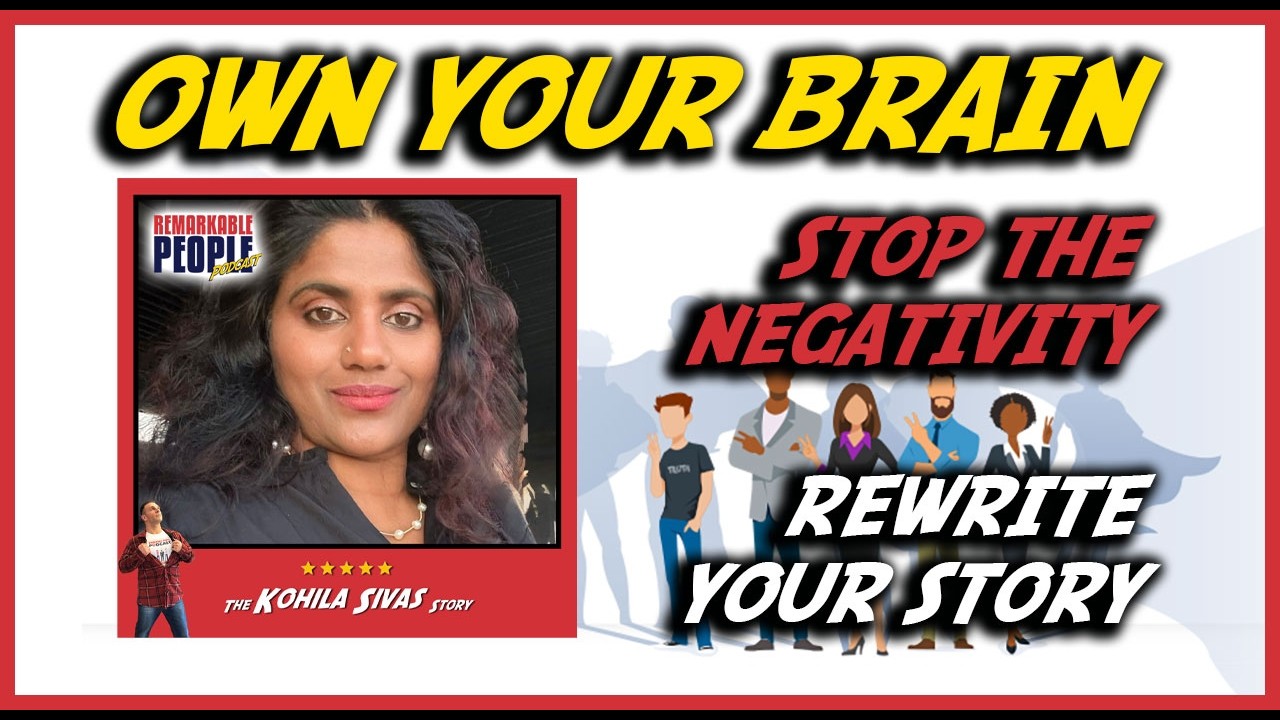
“You own your narratives, so you own your brain. It doesn’t own you.”
~ Kohila Sivas
WATCH THE PODCAST
Click the play button ▶️ above 👆 to watch now!
Please Note: You can skip any ads after 5-seconds by clicking, "Skip Ad" in the bottom-right corner of the video window. These are not ads we control, or necessarily endorse. They are delivered by the video hosting company, YouTube or Rumble. Thank you for understanding.
LISTEN TO THE PODCAST
Episode / Guest Frequently Asked Questions… and Answers!
Q1: How can I take control of my thoughts according to Kohila Sivas?
A1: Kohila suggests becoming “like a lawyer” by asking your brain tough questions and verifying its facts.
Q2: Why does Kohila emphasize "owning your narrative"?
A2: Because if you don’t own your brain, it will own you. Owning your narrative allows you to choose which influences to allow close to you.
What does Mike Lindell himself have to say about the My Pillow promo code, "Remarkable"? Watch Now!

For more information, visit https://davidpasqualone.com/partners-and-affiliates/mypillow/official-mypillow-promo-code-verified/.
The Power of Perspective: Kohila Sivas on Brain Ownership and Healing
What if your brain wasn’t your master, but your student? In this deeply moving and transformative episode of The Remarkable People Podcast, Kohila Sivas joins David Pasqualone to share her journey from a silent child struggling in a new country to a powerful advocate for mental sovereignty.
From Silence to Strength: A Journey of Survival
At just 12 years old, Kohila faced a darkness that led her to a suicide attempt. She opens up about the “seeds” planted in her mind by a difficult home life and the struggle to fit into a new culture. However, it was her survival that led to a paradigm shift: the realization that the brain can betray us with compelling lies, and that we have the power to write our own narrative.
Questioning the Narrative: How to Take Control of Your Mind
Kohila explains that we are often taught we have no control over our thoughts, but the truth is the opposite. By becoming “like a lawyer” and challenging every toxic or negative thought, we can reclaim our willpower.
KEY TIMESTAMPS & MOMENTS OF GOLD
-
00:01:11 – The Core Guarantee: Why owning your narrative is the key to life.
-
00:01:43 – The Turning Point: Surviving a suicide attempt at age 12.
-
00:03:46 – The Silent Child: Struggles with culture, language, and an alcoholic home.
-
00:05:31 – The Lawyer Method: How to challenge and question every negative thought.
-
00:06:43 – Ultimate Control: Reclaiming your willpower from toxic influences.
REMARKABLE SPECIAL OFFER(S):
 REMARKABLE OFFER 1: Save 30% to 80% on EVERYTHING you order at MyPillow.com with Free Promo Code, “REMARKABLE“. Yes, that’s right! Use the best My Pillow promo code out there to save a TON of money on all 200+ quality, comfortable, cozy home goods at MyPillow.com/Remarkable, or by calling 1-800-644-6612. From sheets, to blankets, to pillows, to mattress toppers, be ready to sleep better and live more comfortably than you ever have before!
- REMARKABLE OFFER 2: Your Exclusive Offer: Save Big on Your Console Vault In-Vehicle Safe. With our exclusive promo code, “REMARKABLE“, you will Save 10% or more on all Console Vault anti-theft vehicle safes you order. And sometimes, you’ll receive Free Shipping too! Just make sure to use the free Console Vault discount code, “REMARKABLE” at checkout.
Full Episode Transcript
Kohila Sivas: Owning Your Narrative and Taking Ultimate Control of Your Brain
Welcome to the Remarkable People Podcast!: [00:00:00] The Remarkable People Podcast, check it out, the Remarkable People Podcast. Listen, do Repeat for Life, the Remarkable People Podcast.
David Pasqualone: Hello friends. Welcome to this week’s episode of The Remarkable People Podcast. Today we have with us Kohila Sivas. Kohila. Thank you for being here today.
Kohila Sivas: Thank you. Thank you for having me.
David Pasqualone: Oh, I can’t wait for this episode. You and I have spoke a couple times, but for our listeners around the world, whether this is their first experience with the Remarkable People Podcast, or they’ve been with us all 13 seasons in eight years, when they listen to your episode today, we’re going to go through [00:01:00] your story and what you’re passionate about.
But if you guarantee them one thing that they can take and apply to their lives that they’ll learn from your story, what is that?
Kohila Sivas: It is that you are, you own your narratives, so you own your brain. It doesn’t own you.
David Pasqualone: Awesome. Let me ask you a question. In our lives, everything that happens to us, good, bad, ugly, pretty and pretty ugly, all that makes us who we are today.
So for you to come to the known decision and conscious choice that you own your life and your brain doesn’t own you. How did you get there? What happened in your life to bring you to this place?
Kohila Sivas: So at the age of 12, I decided to end my life. So the days leading to that decision to end my life I had a friend, a very good friend, that was my mind.
My brain was always been there for me. I was a very quiet child, so I moved to Canada when I was little. So not knowing the [00:02:00] language, I muted. So the only person I was talking to very deeply was my brain. We had a lot of conversations, so leading up to that when I was 12, my brain told me all the reasons why I shouldn’t live.
And it was very compelling. It was very good. All the facts lined up and that’s why I ended up doing what I did. I know when I was 12. So after surviving that and waking up the next day, the same brain. Talk to me again. But at that time, it didn’t talk the way it talked to me the day before.
It was giving me what reason why what I did was wrong. It was, it betrayed me over one day. It betrayed me over a big decision of my life, right? So that was the day I started realizing how powerful the stories can be made and the stories can be validated by your own brain and then betray you the next day and tell you the opposite of all of that.
So from then on, I said, I’m going to work with this because I can actually write what it says to me. It doesn’t have to be what, I don’t have to listen to what it tells me.
David Pasqualone: And at 12 years old, you want every [00:03:00] human on the planet to have a great life, but the reality is we all have things that happen to us, and some are terrible, but for an adult to consider suicide, that’s a permanent solution for a temporary situation.
But at 12 years old. For a child to think about suicide, that’s like things are either typically very bleak or they’ve had some kind of evil planted in their brain to make them think that way. What got you at 12 years old to be con contemplating suicide? What seeds were planted in your brain to have it deceive?
Kohila Sivas: I don’t know if it was that I just didn’t feel I wasn’t fitting into the world because as I said, I moved to Canada when I was six. So different culture, different country, different language. So I was learning that, so I decided to mute myself. So I became very silent at school, but also my dad became an alcoholic during that time as well.
So my house wasn’t that pleasant to be, so I had school that wasn’t working out for me at home. It wasn’t working out for me. So it like. [00:04:00] Two places where most kids feel safe are out of my control. I have no control over it. So basically I’m just living through things that I cannot find solutions to.
So only way I can find solution is whatever I had the discussion with my brain, and that’s what I could, it came down to that, maybe you shouldn’t be here.
David Pasqualone: Yeah. Yeah. Now what, once this happened, did anybody find out about your suicide attempt or was this still everything within you?
Kohila Sivas: No, I had counselors.
I had at school, they know my parents. I don’t know about my dad, but my mom definitely know about it. And I don’t speak about it much because after become, after surviving that my attitude toward everything shifted, actually. So I do believe that it was a gift that was given to me, and whatever work I do now revolves around everything that was given to me on that day.
David Pasqualone: Awesome, awesome. So people listening, they might be in the place where, Satan evil’s in their head trying to convince them to commit suicide and their life. [00:05:00] And that’s the worst advice possible. ’cause God loves you and if you’re here, there’s a distinct purpose for your life. All the bad comes from the evil and all the good comes from God.
So if you’re going through a hard time. There’s a reason why God’s not causing it, but why he’s allowing it. ’cause it will benefit us all ultimately. But for the people who are listening that are contemplated potentially suicide, what advice do you have for them that you learned from your experience to be encouraged by it?
And like you said, that was a paradigm shift that made you stronger.
Kohila Sivas: Yes. Just even the thoughts that are coming to you right now, I would challenge each one of them, like, why is it coming up for you that way? Why is it not the other way around? Why is it telling you that you should end your life? You should question it every angle possible, and then it will tell you like, oh, nobody cares about you.
Okay, let’s examine that. Nobody really cares about you. Who are these? Nobody. And when it comes to it, nobody’s are. Usually nobody is in your life. They’re not that significant. But your brain makes it to be so significant during this [00:06:00] time, right? So I would challenge that these nobodies, and then everybody hates me, is another statement that would come during that time.
Okay? Let’s examine all of the everyone one by one. And do they really care if you live or die? If they don’t, they shouldn’t be even part of the conversation, right? Kick them out. Put them far away from your life. ’cause we don’t know which people needs to be close to us and which are the people that needs to be further away from us.
Sometimes we crowd all of the people close to us and then we say, I don’t have room anymore. I don’t see the purpose because we allow them to be close to us. We have the ability to move them away from us. Now in my life, any toxic people are away from us. Any toxic news are away from me. I don’t want to enter.
It doesn’t enter me. It’s in my willpower to allow it to enter or not. We live in a way, and we are taught by the education system and everything that we don’t have control over our brain, but that’s not true. You have ultimate control over your brain, and you can ask question in every angle possible.
So if you are thinking that, I would challenge everything that your brain is [00:07:00] telling you. You will find so much clarity and you would go, you know what? My brain is screwing up with me. I can’t listen to you. You’ll be like a lawyer. You’ll be like, yeah. Become a lawyer and ask lots of questions and verify me.
So tell me why my he told me my mom never care, would care about it if I went lived or not. And the next day told me that your mom loves you. Why would you do such a thing like that? So how can you flip like that? First day you told me my mom would never care. The next day you’re telling me my mom is devastated.
Why didn’t you tell me that day before?
So it’s the same brain, same person, same everything. Only thing it changed was my near death experience. That was the only thing that changed in two days. So don’t listen to your brain. That’s your That’s my advice. Don’t listen to it.
David Pasqualone: Yeah. And there’s so much to this, right?
Because you have the the instincts that God puts in as you get the Holy Ghost. You got things can like. Influence you negatively. Thoughts can be put in your head. I had a good friend of mine tell me one time, he’s what are the voices telling you, [00:08:00] man? I’m like you suck. You’re no good.
You’re, whatever. And he’s okay, you. And he’s it’s not saying I am. I’m like, no, it’s saying you suck. You suck. He’s that’s somebody putting thoughts in your head. He’s it’s putting thoughts in your head, telling you who you are. Like you said, trying to program you with lies.
He’s but that’s not God. That’s not even you. That’s you something. Or someone putting thoughts in your head that aren’t true and like you said, take control of your brain. How do you recommend when you deal with people? Is this the focus of your work now or what does bring us It’s one part of point in your life to today.
Kohila Sivas: So this one, the one part is, I call it talk to your brain. That’s one of my way ways of helping people to talk to it. And we name it. I even name my brain I have so I can dissociate it from it. ’cause sometimes it takes over so much that it becomes like your identity. But if you name it, you can separate it.
So you just ask what are you doing right now? What are you telling me? So it’s almost like you’re talking to another [00:09:00] person. So the conversation bet becomes between two people. So it’s very powerful. I know it may sound silly to name your brain, but if so you start doing it, it actually is amazing how much you can, the dissociation part of it, right?
It makes a big deal. Yeah. No,
David Pasqualone: I think that’s great. I don’t see a, I think that’s very, actually. A great method. So let’s do this. We’re going to take a quick commercial break, 30 to 60 seconds, and we are going to be back with Kohila. and Kohila after the short break. Can you give us steps for us to just try this 1, 2, 3, whatever it is to start reprogramming our brains?
Kohila Sivas: Yes, absolutely. Thank
David Pasqualone: you.
Absolutely. Great. Thank you. So ladies and gentlemen, enjoy this quick brief, but a powerful and money saving affiliate offer and we’ll be right back.
MyPillow Special Offer PROMO CODE REMARKABLE: To celebrate our newest launch, rev seven, I’m bringing you an amazing introductory offer plus an exclusive Overstock [00:10:00] sale that you’re not gonna wanna miss. Rev seven is our premium energy drink that tastes great and gives you energy all day. With no jitters and no crashes. That’s ’cause there’s no sugar and no caffeine.
I’m so sure you’re gonna love Rev seven. That for a limited time you can try our three pack absolutely free or check out our per cal bedsheets. I can’t believe I’m even gonna say this. Every color, every style, every size. Only 29 88. So go to mypillow.com or call the number on your screen. Use your promo code to save 20% on our Rev seven 12 packs, or try our introductory three pack absolutely free.
And our per hill bedsheets, all sizes only 29 88. Even the Queens and Kings inventory is extremely limited. So order now.
David Pasqualone: Alright, welcome back. So Kohila talk to us. We are having repeat thoughts. I’m 49. There’s [00:11:00] thoughts I’ve struggled with my whole life.
Our listeners have struggles. What are some of the steps that work for you, that work for the people you deal with that you recommend our listeners try?
Kohila Sivas: The first step is to come home to yourself so that home is here. Not your real home, like your home that you live in. The physical environment, the home is here, right here, and a lot of the time in this body, we’re not here anymore.
We have come out of this body and we’re always listening to others, other things. The chaos of the world. We are so consumed by it that we forget this body. So how do you come home to yourself? That starts with first, simplest thing that we’ve been granted is the breath. We forgot how to breathe.
I know we all breathe, but we are not breathing deep enough. You need to slow down and you need to breathe. You need to breathe so that you can reach the deepest part of your soul, and that is so important. Then when you’re breathing, you can bring yourself to now and here I always talk [00:12:00] about, because we’re so consumed, what we do is we think about our past and be ourselves about the past, or we think about our future, but not allowing it to be beautiful, but we project our past and then think about our future.
So pretty much we’re recreating. Our future with all the crap that we got from the past, right? So then what happens is we’re so busy all over the place. We’re not here and now, so you need to be here and now. So that’s a conscious work. It is not just unconsciously you can do it. So the breathing allows you to bring yourself as well, but then your thoughts, you have to, okay, why am I visiting this old crap story again and again?
What am I doing by revisiting this again and again? I makes me feel very bad and I feel shit afterward, but I keep going to it. Why? So that is a challenge. You have to ask your brain, why do you want me to replay this story again and again? What are you trying to teach me? That this is very hard, but if you start doing that, you’ll know, you know what, it’s not [00:13:00] that bad.
My brain just being in a loop. I need to cut this loop out. Okay. What are some of the lessons I can take from it? Okay. For example, you may think that relationship you ended is so bad, but then you go back to it every time thinking about it. Why did I end this? I should have done this.
I should have said this. I shouldn’t have done that. Should have, could have, would’ve all of these things. We do it right all the time. Instead, what is one or two lessons I can take from it? Can I cut that loop of that story out from myself? Can I cut it? Yes, you can. It absolutely is in your hand.
Your brain doesn’t own that loop. You own it. You are allowing it to it. So consciously. Can you cut it out by taking the lesson and just let that go? And this will have happen consciously as many times as possible until you can just say, you know what I, I’m done with you. Don’t even take me back to that story.
We’re not going there. And you talk to it like sometimes you have to be compassionate with your brain. Sometimes you have to be very strict with your brain and say, we’re done with that story. [00:14:00] Do not remind me of it. That’s it. And then we are also busy with the future, right? So if you are creating the future, do you want to replay the future with the past crap, or do you want a new future?
Only way to allow the future to come to you is set intention and release it. You cannot hold onto it and say, I’m going to produce my future. You don’t have control over future. We, none of us do. Only person who created have the control of your future. Otherwise, we’ll all be so smart. Even the AI don’t have it.
They can just predict it. We can all predict it, but we don’t have any control over it. So this so why don’t we just bless it and release it. It’s available to you. So those two things allows you to be here and now. And that when you’re able to do that’s the state called flow. So in flow you can focus.
In focus, you can create anything, and that includes your life. That includes people who are bothering you, things who are annoying you, things that are pissing you off. You have the ability to move them further and further [00:15:00] away from your life. I call that sacred circle. So when you form a sacred circle, you put yourself in the middle and you draw a boundary.
In that boundary, nobody comes. Nobody can enter that. Not even your kids, not even your wife or daughter or anybody cannot enter it. Only person that’s allowed is the God if you believe in it, or universe, whoever you believe they can come outside of that, you draw more circles. Each of those circles, you put the people that can be close to you and you move people who are not supposed to be close to you away as further as possible.
So if there’s somebody’s toxic, you’re not going to let them sit here because that toxic is going to drive you to do whatever you need to do, including. Thinking I should end my life, right? But if you’re able to move those people further away, then they don’t have any control over you. And you might think they have control over me.
No, they don’t. Nobody does. We are the only one who are con in control of everything. We think somebody else is doing things to us. No, they’re not. [00:16:00] The only way they’re doing something to you is you allowed them to,
David Pasqualone: yeah, that’s super wise and again, people have different worldviews, but it doesn’t matter what your worldview is.
Gravity’s gravity, facts are facts and what you’re describing, the Bible has many verses on the top, but it says, commit the works unto the Lord and thy thought shall be established. And you’re saying you’re taking these intentional actions, the works. To reprogram and rewire your brain healthy.
So I, I really appreciate that and agree with it because it lines up with the scripture it seems.
Kohila Sivas: Yes. Beautiful. Yes. And again, you can even do the physical movement, like if you’re here so many times, if you’re here so many times, think about your lifewise and not moving forward. You’re caught up so much in the past, in the future, except only place we can create anything is here.
How many of your hours are spent in the now and here state versus in the past? In the future, [00:17:00] which are both not in our hands, they’re not anything we can do about it, but we spend quite a bit of, and our brain is so wired for that, and it loves to create all sorts of stories, right? And feed us with it.
David Pasqualone: Yes.
Kohila Sivas: So don’t allow it. Bring it here and now and say, let’s go to work. Let’s learn. Let’s live. Let’s lead ourselves and others. Then that consciousness will always keep moving you forward. So that’s why I always say learning and living and leading can only happen in now and here, and if we’re not now and here, where are you?
That’s the question.
David Pasqualone: Yeah. And when it comes to all of this. Where do you normally start with someone? Because some people, they’re so programmed with the negativity, they don’t even realize it’s there and other people are exhausted ’cause they’re being beat up all day and they hear it, but they don’t know how to stop it.
So [00:18:00] we talked about, the coming home to your heart and breathing and being the here and now. What do you recommend is the most powerful first step?
Kohila Sivas: Before that. Before all of that, there is, I have a five a journey that I take all of my coaching clients through. It doesn’t matter what age, what label they carry or where they are at their stage of life, it doesn’t matter.
This five A is universal for all human beings. So those five a’s are first days awareness. Without awareness, you will not be able to do any of the work that I just talked about. Awareness is what awareness is about. Awareness is about yourself. So just for weeks. Weeks and weeks. Just notice, don’t change anything about yourself.
The minute we start changing it too quickly, we become what we will most of the time. Deny that it’s even there or start fighting it. Our bodies our brain is wired that way we’ll start fighting it. No, I’m not like that. No, I don’t do that. So we don’t wanna get into that match at all. So what we [00:19:00] wanna do is simply notice what are the loops that are keep playing in my life?
What am I keep thinking about? I know it sounds so simple, but just try it for a week and see how many things you notice about yourself. Because what we are trained also is to notice about other people. We know what other people are doing, if we ask me, I know what my son is doing, what my husband’s doing, what I know, everything I’ve, I’m watching everyone’s move.
But how many times do we take the time to watch? What am I doing? What is the pattern? Do I play out in this? What loop am I creating day after day for me? So the noticing is the first step. Second step is alignment. Second, A in that process is alignment. That is where we start coaching people to bring alignment.
I have 12 systems that I go through in our body because we are a biological, biologically living system. So that means so many variables are affecting us. We cannot just say, I’m going to start performing, I’m going to start living, I’m going to start leading until all of those systems are in alignment. We talk [00:20:00] about nervous system, emotional system, but there are more than that.
So we’re going to look at all of those systems and then get into alignment. Then we have to activate them. That’s where some of these things that I just talked about will come in. The breathing, the being here and now talking to your brain, your sacred circle. Who are you keeping so close to you?
Do you even have a circle sa, sacred circle that nobody enters? You have to create that before we can move on. So when all of that is created, we enter the stage now or phase, which is acceleration. This is where you’re going to see results in your life. You’re going to start seeing results. This is when we then add all the strategies, all the tools, all the skills that you wanna learn comes at acceleration.
So when all of these ACE comes together, you will achieve anything you want in life. And this is how I’ve been working with kids and all parents and all ages for the past 25 years. So when all of that comes, the byproduct is output that you desire when it all comes together. So that’s how we get into flow [00:21:00] as well.
In acceleration, you are in flow and focus. Until you get into acceleration, you’re not in flow and focus. And when somebody tries to perform. Or get good grades or any of that things, it means that you’re not in flow and you’re trying hard, and when you try hard is why it becomes so, so hard to continue.
We give up. Because we’re doing it not in the state of flow. Flow is the state that is required for all things to happen. So how do we get to flow is the question. Next question, right? How you have to ask.
David Pasqualone: Yeah. Actually, let’s do this. So many people define flow and the concept’s pretty similar.
Kohila Sivas: Yeah.
David Pasqualone: But there are differences I’ve noticed when I’m talking to people.
So how do you define the state of flow?
Kohila Sivas: Peace. There’s nothing that bothers you. Nothing. So when people come around me and people who have coached, they say, I found this peace. And [00:22:00] they, if you try to ask them to explain it, just peace. Nothing is going to change your world at all because you know your sacred circle, you know where to put that information at, how far the distance has to be.
So you just put it there and it just becomes another variable that entered your life. It’s not going to make or break your life. It doesn’t change anything. So there’s a harmony to it. There’s a rhythm to it. And then you start looking at the world from a different lens. So flow is a place where peace is met, and then when peace is there, things start making sense in a different ways, right?
’cause when peace is not there is when we are actually in chaos, everything starts making us feel unsettled.
David Pasqualone: Now, let me ask you another question. I don’t want to get off topic, but I believe this is right on. So you have the consciousness where we’re awake, we’re having thoughts, we’re talking about taking control and reprogramming ourselves, and we want to achieve [00:23:00] that state of flow.
We want to achieve that peace, but then there’s that in-between when we’re sleeping. And a lot of people such as myself, w we wanna call ’em bad dreams. Nightmares. It’s almost like tormenting. Yes. How do you interpret that? Is that, again, our mind attacking us, is that outside influences? Is that unresolved behavior?
How do you interpret? ’cause I would love to go to sleep and have sweet dreams and peace and wake up refreshed. But many times I know our listeners and myself, we have tormenting dreams. So how do you one define those? Like where do you think they stem from? And two, how do you attack those? ’cause you’re unconscious, right?
Kohila Sivas: Yes. I think dreams come from thoughts that have not been resolved within us, right? And sometimes it also could come from things that are, we’re consuming. Like last night, like two days ago, I had a dream that my [00:24:00] son is being kidnapped, right? But a day before I watched a video, how some people park their car so close to another car, and then you try to get your key out of your handbag as a woman, and then their car is so parked closed.
So then you try to waste a little bit of time finding the key, and then before you know it, they open the door and they grab you into their car and they kidnap you. So I watched that video. And then I went to bed the next few days after my brain is processing with that, and then I had a dream that my son was kidnapped.
David Pasqualone: And that makes sense. ’cause the Bible talks about how the dream coming through a multitude of business, like the things we do during the day and it comes, you can have a dream.
Kohila Sivas: Yeah. So there it’s that unfinished thought. I think I had in mind also probably I was thinking, oh yeah, next time I should never park like that.
I should park away as a woman myself. Thinking that maybe I was deciding that. Then I called my son and I said, I had this dream. It was weird. And he said, what happened? Did you find me? I said, no, I didn’t end up finishing it. I woke up. In [00:25:00] such a tear. Like I was like panicking I woke up.
Because some dreams, like you say, wake you up in such a bad state, right? So I think for me a lot of people interpret dreams, right? There are people who have such a profound systems where they say, if you dream about snake, it’s this way. If you dream about this, it’s that, right? I don’t have any of that.
I think most importantly, when you wake up. You are having those dreams. You haven’t completely went to bed properly, so I would exercise that breathing technique that I was talking about before going to bed so that you find peace before you go to bed. Not getting the dreams at all. So usually I don’t get dreams like that.
Like I’m pretty good sleeper, right? But I do wake up at 3:00 AM That’s been my schedule for the last maybe 15, 60 years. I love to wake up at 3:00 AM That’s my time to focus.
David Pasqualone: Just so if you’re working with a client and you’re saying, they’re saying, yeah, I just keep having these nightmares over and over again, then you’re going to.
Identify the root cause and [00:26:00] address it, but to avoid it, you’re saying get into that sleep, that peaceful. Place before you go to sleep to clear the cache of the mind.
Kohila Sivas: Exactly. Yes. Yes. Lots. Talk to your mind too at that point too. Why is this happening again and again? And then you will see a big difference.
I know the breathing technique that I’ve just talked about. Inhaling for four. I didn’t share it, but you can change it up anytime, any way you want. But inhaling for up. Inhale for four, hold for four. Then exhale for eight that releases all the stress longer, and then hold it at the bottom without breathing for another four.
And if you do four of those or five of those rounds, you will sleep like a baby.
David Pasqualone: Yeah, I think they call it the Navy Seals. I think
Kohila Sivas: there’s
David Pasqualone: so many, I dunno if they created it. It’s been around for years. But they popularize it box breathing, right? Is that what you’re
Kohila Sivas: Yeah, there’s box breathing. No, I changed it a slightly different, but yeah, it is eight.
Eight is eight. I don’t think it’s four. 4, 4 4 is usually,
David Pasqualone: yeah. And you did eight on the exhale, which, yeah, I I like that. ’cause [00:27:00] exhaling, you can always seem to do more.
Kohila Sivas: But that’s where I’m releasing everything. I’m usually telling my body, okay, let go of that shit. The stuff you’ve been thinking about.
Let’s go of those shoulders that you’ve been carrying up into your years. Let go. Everything. Like I always tell people when I’m leading them, you gotta let go everything and find it. Sometimes we keep it in our shoulders. Sometimes it’s in the lower back, let’s release all the stress and.
Tension that you’ve been carrying it all day. So can we release that? So then it’s exhale through the mouth, right? For eight. So the longer you do it and remember to talk about all of those things to yourself, that makes a big difference. We’re not just ex excelling, we’re thinking, where can I release?
Like my knee hurts. Okay, I need to release the tension I’ve been putting on into my knees. Like that.
David Pasqualone: Okay. Awesome. So now. We’ve been jumping around because of me, so thank you for your patience. No problem. So now you’re working with someone, you’re helping them to identify where does it go from there?
Because we got through to the step four acceleration. What was the step five
Kohila Sivas: [00:28:00] achievement? They’re achieving, they’re in their achievement. They’re enjoying they’re, that’s the output they’re going to have. It’s a beautiful way of watching. But one of the things that in my program I do not push is that we don’t allow, I don’t allow, I don’t.
Allow myself to become their awareness. They have to be aware, like they have to notice. So basically what I do is I hold space. I know almost what’s going on, but I won’t even say it because you know how when you say to somebody, they’ll be like, no, that’s not my problem. No, I don’t think so. You don’t want to be that coach who says something and someone says, that’s not what I’m thinking about.
You have to let them. Come to that conclusion themselves. And then you just have to make conversations with them enough to get them to recognize, oh, I do play this. I am this way. They have to have that revolution, the revelation like themselves. So a lot of coaches, what they do is they tell you, here’s what’s going on with you.
So in our process, I never tell anybody what’s going on. They [00:29:00] are completely coming to awareness by themselves. That’s the power of it.
David Pasqualone: Yeah. And then there’s people on the flip side that have been told their whole life how to think, and they’re like, what do I think they need to learn to think on themselves.
So yeah, I can totally see that.
Kohila Sivas: So there’s a lot of holding space with the with with respect. When I hold space, there’s a lot of respect and a lot of compassion. So it’s not like we shouldn’t be thinking like that, why would you end your life? It’s not like that. It’s compassion for even them.
Thinking that way, right? It’s compassion for that and care and compassion wins all the time.
David Pasqualone: Yeah, every single human I know that at some point commit suicide or tried to commit, tried to commit suicide.
Kohila Sivas: Think about it. Yeah.
David Pasqualone: Yeah. They’re so much happier now. Like it seems like at that point, oh, life’s over.
It’s just painful. It’s terrible, and yet that’s just saying, messing with our heads, trying to fill us with lies. Every single person I know. Who’s come through the other side, they have a better, more fruitful life than ever, and they’re happy they didn’t [00:30:00] make that dumb mistake. You know that same trick in ’em, and I can see we can all be tricked and deceived.
That’s, I’m not putting someone down for having the thoughts, but what I am urging you is don’t believe the lies. There’s so much life and goodness that God has for you.
Kohila Sivas: Yeah. Yeah. Just challenge it. Just challenge it. Just notice it and challenge it. Why is that thought coming for you? Because of what somebody else did.
Something to you. Something is happening that’s not in your control. Most of the time, we think to end our life is when things are not in our control. So then look at why is it not in your control? Who are you allowing that to be, not in your control, or somebody’s taking that control. Now, if you say somebody’s taking it, I would challenge that because only way somebody can take your control is if you’re allowing it.
Nobody can take your control unless you don’t allow it, right? So that’s the empowerment part behind all of this, is knowing that you ultimately have anyone taking anything from you, right? You ultimately have the key, not anyone else. So when [00:31:00] that comes to your hand, when that empowerment is in your hand, you can then think about the thoughts that are coming to you.
David Pasqualone: Yeah. So ladies and gentlemen, we are here today with Kahili Sivas, and between your birth and today, is there anything we missed? You’ve given us so much great information. A new way to look at some things. We might have been, just. Running with society that’s not helping us. Just keeping us in the same loop.
But Kohe, is there anything that we missed through your life before we transition to where you are today and where you’re heading next?
Kohila Sivas: I think I wanna talk about school and the training of the school, how it has trained all of us. So the school was built on the assumption that we would all come into the school, this sit in the classroom, and we will be all ready to learn, which mean in the state of flow.
Learning is a state that we have to get into. We don’t have a switch that we just turn it on and say, okay, I’m ready to learn. [00:32:00] So when we were thought when we were going through that system, which assumed that all human beings will come and act as a, basically an robot to be in the state to let’s go.
So we never prepared ourselves in that readiness. So I call it my system now is called Readiness Os. So there is a phase before. Being demanded to produce or perform because in school we perform, right? So that readiness phase was skipped. It was assumed that we would come ready for it. But we’re a biological system, living system.
We, we need to just like anything else, right? If you want to, fly a plane, you have to get it ready. If you wanna drive a car, it has to be ready, right? With whatever it needs. So this is also a machine. This is a living machine. My body is a living machine. Have I got everything ready to learn because you are asking me to output, but that part was missed.
So that is what we carry into our later life as adults. And then when we come out of school, we then feel like all [00:33:00] these pressure, because we never learned how to be ready. We never give us that space to get ready. There’s no grace in our life for that. We just want to produce. We want to produce. And then we have followed by the education system.
We have personal development, they’ve got hold of all sorts of stuff, and then they tell us, try this hack be this way. Do this way. All generic information thrown at us. And then what it, what all of that does is makes big confusion. And then I feel like a big failure. Because everything else works for everyone except me.
That’s what we get into. So that is a big part of a lot of this conversation that comes upon and why you might even think to end your life or I’m a loser or my life is, my life sucks. All of those things comes because we were set up, we were set up That way. To think performance just comes on demand.
No it doesn’t. Performance needs readiness. Then you perform because you gave yourself time to get ready. [00:34:00]
David Pasqualone: And the word you use confusion is perfect because when people aren’t thinking clearly, they’re confused. And the Bible and experience shows that Satan is the author of Confusion. It says in the Bible, old Testament new.
And it’s true. Satan wants to confuse and get people where they don’t know what’s right and then he wants to exploit you. So I think you’re once again, Kohila, right? Spot on. Thank you where are you today and where are you heading next? You’ve helped us as a community, how can we help you? And if our listeners wanna reach out to you, learn more about your programs, what’s the best way for them to connect?
Kohila Sivas: As you said from the starting, I love what you said was that, whatever we go through it, it’s going to make us right. So if you are going through a hard time, just take all of those hard times into something that makes it a purposeful life. And that’s what I built. So I became a teacher at the end of all of that, and I was a very much, very successful in math and I wanted to help others [00:35:00] in math, but I entered the school system.
I didn’t find myself being that. As helpful. I was just trading my time for paycheck. I thought, that’s not the path I’m here for. So I started my tutoring business and then there two people wanted to buy marks. Again, it didn’t sit with well with me. I wanted to create lifelong learners. I want to get them ready to learn, not just come to me for marks.
So I started switching into,
David Pasqualone: I just wanna make sure we’re clear on that. When you say by marks, they were just trying to pay you to take a grade, like gimme a name.
Kohila Sivas: No. Not to pay me to take the grade. They’re just coming to get their grades increased. So basically their Gotcha. Their outcome is, my grades not, can I become an independent learner.
David Pasqualone: They’re not learning, they’re just going through the system trying to get a high performance. Gotcha.
Kohila Sivas: So I was the person who was going to get them there, but at the end of it, I felt like, did I really help them or did I just buy the marks for them? Basically, I helped them buy the marks. That’s not what I wanted to be in business for.
So that’s how I shifted over to coaching this type of coaching. And then my students never struggled with math. Sometimes we think [00:36:00] we struggle with the skill. That’s not true. You don’t struggle with the skill because if you are learning something, that means you haven’t learned it before. So that means that you’re, you need to give that time to get to learn those skills, right?
In any parts of our life, what really we struggle with is the readiness part. We are just not ready to learn the skill. So skill looks like what we’re struggling with. It’s not. It’s the readiness piece. So over and over again for the past 25 years, I proved that with thousands of people. It is not the skill.
It is not because you’re stupid. It is not because you’re not intelligent. It is not because you’re not born with the smart genes or anything like that. It’s because you don’t know how to get into the state of readiness. So when I get them into the readiness, results become byproduct. So when I could get them into acceleration, they can learn anything in life.
Every human can learn anything in their life. If they know how to get into acceleration, which is the state of flow and focus. So that’s what I work was working with lots of families with all labels. Now we [00:37:00] have so much, our culture has become everything. If we suffer with something, there’s a label to it, right?
Labels are great because it puts us in a category. But what happens after the label, you still have to figure out how does your. System work. How do you work? How do you learn? How do you produce? So again I actually don’t look at any humans through labels. They’re great to have, but it doesn’t do anything still.
You have to go back to the soul print here. You have to understand who’s behind all those labels. So I’ve been doing that for 25 years, but for the past five and a half years, I started training other people because I had a demand for what I was doing. I can’t clone myself at that time. So now we can clone.
But at that time, five years ago, it wasn’t possible. So I started helping other educators, other coaches to start their own business. So now I have over 300 plus educators and coaches who are trained and under this methodology. So they help more than thousands of people that I could have helped. So we are actually growing company.
This is what I do. So [00:38:00] I serve parents, I serve anybody who’s blocked. We call it blocks to flow. So if you feel like you’re blocked. We help you enter flow. Flow is where you can perform and produce and get results. And that is how you achieve life in life, right? So that’s one part. And the other part is I train others to become that.
So if you wanna start a business, that’s how I can help you as well. And then together, all of this, what it leads to me is my purpose. My purpose. That day I gave, I was given the ability to think about my thoughts. It wasn’t given to me by. It wasn’t just given to me because I was smart. It was because God gave me that day.
When I woke up, God gave me a realization that your brain is in, in your hands. It’s a powerful tool that you get to use the way you want it, so don’t let it screw you. So that’s how I started moving forward. So now that I created a movement, I wanna serve 1.5 billion humans by 2035, and I want to end [00:39:00] the human suffering because we’re not here to suffer.
We are made to suffer and it can end the minute you learn how to get in from blocks to flow. Life is yours now.
David Pasqualone: Oh, sorry. Say that last part again.
Kohila Sivas: No, I said life is yours to enjoy.
David Pasqualone: Yes. Not
Kohila Sivas: someone else to play with right
David Pasqualone: now. If somebody wanted to go to your website or learn more, what’s the best modality to reach out to you?
Facebook, LinkedIn, your website, everywhere.
Kohila Sivas: Everywhere. I’m now a Google’s global figure, public figure, but besides that, I’m on all social medias. But besides that, holistic Success codes with the w Holistic success codes.com is my website.
David Pasqualone: Awesome. It has been a great interview and thank you for spending time with us today.
Now, between your birth and today, is there something we didn’t cover that you want to cover in this interview, or is there any final words of encouragement you want to leave with our Remarkable [00:40:00] community?
Kohila Sivas: Yeah. Do you have a sacred circle? My question to you is, do you have a sacred circle where you have a circle that you only live inside, no one can visit except God or universe or whoever you believe they’re allowed.
Do you have a sacred circle? Are you able to put toxic things in people away from you? Can you separate them? Because just that if you start doing you you’ll, you’ll see big changes because we allow things to happen to us and then we say, it’s happening to me. They’re doing it to me. No, no one is allowed to do anything.
If you have a sacred circle, if you don’t have it, draw one today and put yourself in the middle and at all costs, keep everybody out.
David Pasqualone: Yeah, no, I think that’s great. Jesus, his model, he was with the Lord. And then he had the apostle, there was 12, but there were some apostles they call the inner circle and then they had the other apostles and then everyone else in the world.
So I think [00:41:00] again what Kohila is describing has biblical premise. Yes. So Kohila, thank you so much for being with us today. Thank you. It’s been enjoyable. I’ve learned a lot. And ladies and gentlemen, in the show notes, you can reach out. You can visit her website, you can look for more information, continue the conversation.
And like Kla said, she doesn’t just have herself, but she has a whole team of teachers around the globe ready to help. KLA, thank you so much for being with us today.
Kohila Sivas: Yes, thank you. Thank you for having me.
David Pasqualone: It’s been an honor, and ladies and gentlemen, like our slogan says, don’t just listen to great information, but do it.
Be consistent. Form positive habits. Repeat the doing each day so you can have a great life in this world, but more importantly in eternity to come. So I’m David Pasqualone. This was our Remarkable guest, Kohila, and we look forward to seeing you in the next [00:42:00] episode. Thank you. Ciao.
David Pasqualone: Ladies and gentlemen, I sincerely hope this show has inspired you. The whole purpose of The Remarkable People Podcast is to inspire you, to motivate you into action, to help you have an even better life, to overcome things you’ve not yet been able to overcome or to grow to the next level that you never thought possible.
And all of this, not just to benefit you in this world, but to have you come to a relationship with God where it grows every day stronger. And not just this world is blessed, but your eternity is blessed. And we sincerely want to do just that, and to glorify God. And we hope with this episode we accomplish that.
If we did. Please let me know. It’s great to be encouraged and to spread the word to our Remarkable guests that it helped in your life. If we didn’t, [00:43:00] let me know. Write me an email. You can go to DavidPasqualone.com . Go to our contact us page and let me know what you think. I got tough skin. Let it rip.
Anything you can think of to make this a better podcast to help you grow and to glorify, God, I’m in. So that’s it. Thank you for listening to the podcast. Thank you for sending us feedback. If we can help you in any way, let us know. And if you can spread the word about the Remarkable People Podcast, share the episode to your friends, your family on social media.
It would be a huge honor and blessing. Again, I’m not trying to be the most famous podcast in the world for my benefit, I truly want a podcast that’s the best podcast in the world to help as many people as we can to have a better life, come to know Christ, to grow in the Lord, and to have that salvation so they can be with God and peace and joy in [00:44:00] eternity.
And right now we’re together on this earth, so let’s do everything we can to work together and help each other grow. Like the Bible says, love the Lord thy God as a first commandment. And the next command is to love thy neighbor as thyself. So let’s do it together. I’m David Pasqualone. I love you. Not as much as God loves you, but if I can help you in any way, just ask.
And again, please share this with your friends and family so we can help them too. Ciao and see you in the next episode.
Welcome to the Remarkable People Podcast!: The Remarkable People Podcast, check it out,
the Remarkable People Podcast. Listen, do Repeat for Life,
the Remarkable People [00:45:00] Podcast.
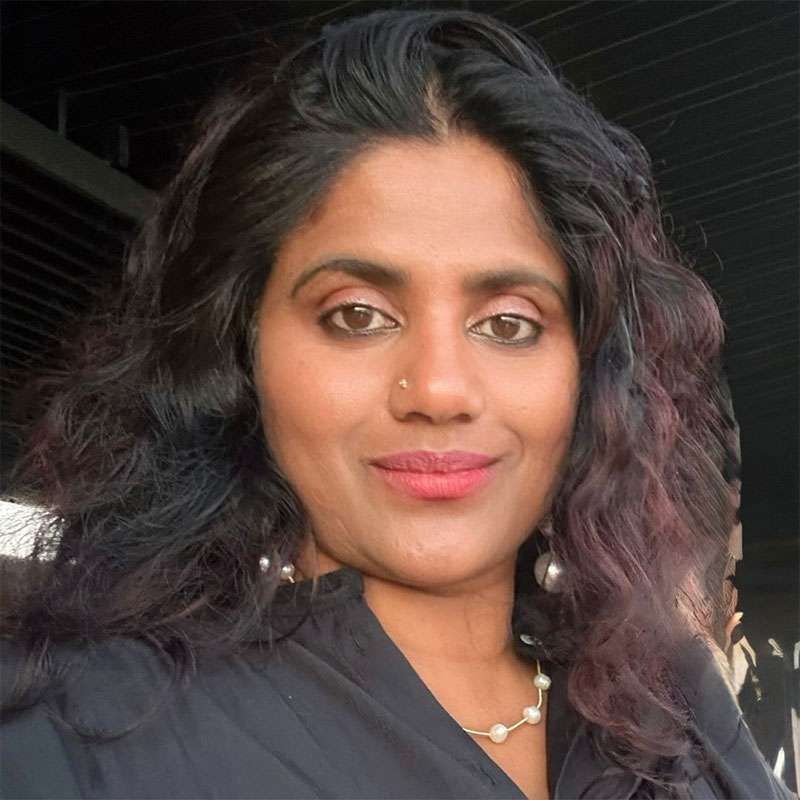
Meet Our Guest:
Guest Contact Info:
Guest Bio:
Kohila Sivas is a suicide survivor turned visionary educator on a mission to transform education, mental health, and human potential. At 12, she nearly ended her life; today, she’s helping thousands of students, parents, and educators find hope and success where the system has failed them. This isn’t just a new method; it’s a rebirth of education itself. Kohila’s Wholistic NeuroGrowth Learning Success Coaching addresses the root of why students struggle: disconnection from self, stress-laden systems, and a lack of inner alignment. Her mission is to restore what’s been lost and redefine what it means to truly learn. Kohila has trained over 300 educators to become Wholistic NeuroGrowth Learning Success Coaches, reclaiming their purpose and stepping into a new role: not as tutors, but as transformational guides. She’s not just questioning tutoring; she’s exposing the deeper truth.