

“In public education, we have created an environment where the adults are getting wealthy and the students are staying illiterate. We are literally funding failure.”
~ Chris Papst
WATCH THE PODCAST
Click the play button ▶️ above 👆 to watch now!
Please Note: You may need to click twice depending on your browser. 😉
LISTEN TO THE PODCAST
What does Mike Lindell himself have to say about the My Pillow promo code, "Remarkable"? Watch Now!

For more information, visit https://davidpasqualone.com/partners-and-affiliates/mypillow/official-mypillow-promo-code-verified/.
Episode / Guest Frequently Asked Questions… and Answers!
Q: Why is the American public education system failing?
A: The system often fails because it prioritizes enrollment-based funding over academic achievement. This creates a “Failure Factory” where schools receive more money even when students fail to reach proficiency, removing the incentive for improvement.
Q: What is the "September 30th Rule" in school funding?
A: It is a policy where a school’s budget for the entire year is determined by the number of students enrolled on a single day—September 30th. This incentivizes schools to prioritize one-day attendance over long-term educational outcomes.
Q: How can parents and citizens hold school boards accountable?
A: Parents can hold boards accountable by showing up to meetings, scrutinizing local policy (like grading standards), and using their vote to ensure that proficiency and student success are the primary metrics for success.
We are currently stuck in a cycle where we pay more for education and get worse results. Investigative journalist Chris Papst reveals the systemic “Failure Factory” that is depriving students of their future.
The Myth of More Funding
Chris explains that every budget cycle, politicians promise that more money will fix our schools. However, data shows that even with record-high funding, proficiency rates in cities like Baltimore have hit 0%.
The Enrollment Incentive Trap
Discover the “September 30th” rule, where school funding is locked in based on one day of enrollment, regardless of whether those students actually show up for the rest of the year.
Why Local School Boards Matter
The most impactful decisions in your community aren’t made in D.C., but by your local school board. Chris breaks down the policies you need to watch to protect your child’s education.
Key Timestamps & Moments of Gold
- 00:01:39 The key to overcoming hatred and staying on mission.
- 00:03:54 Chris Papst’s Origin Story: From a wood shop to investigative journalism.
- 00:07:14 The birth of Project Baltimore and the “Failure Factory”.
- 00:10:10 The grind: Making $19,000 a year with a Master’s degree.
- 00:15:39 The Great Misunderstanding: Why you don’t actually know how schools work.
- 00:20:00 The Mechanic Analogy: Why more money often leads to worse results.
- 00:24:47 The Enrollment Trap: Why September 30th is the most important day for school budgets.
- 00:30:58 The Data: Adults are getting rich while students are academically declining.
- 00:36:37 School Board Policy: The most important vote you aren’t paying attention to.
- 00:38:10 The “50% Rule”: How schools are incentivizing failure.
REMARKABLE SPECIAL OFFER(S):
- REMARKABLE OFFER 1: Save 30% to 80% on EVERYTHING you order at MyPillow.com with Free Promo Code, “REMARKABLE“. Yes, that’s right! Use the best My Pillow promo code out there to save a TON of money on all 200+ quality, comfortable, cozy home goods at MyPillow.com/Remarkable, or by calling 1-800-644-6612. From sheets, to blankets, to pillows, to mattress toppers, be ready to sleep better and live more comfortably than you ever have before!
- REMARKABLE OFFER 2: Your Exclusive Offer: Save Big on Your Console Vault In-Vehicle Safe. With our exclusive promo code, “REMARKABLE“, you will Save 10% or more on all Console Vault anti-theft vehicle safes you order. And sometimes, you’ll receive Free Shipping too! Just make sure to use the free Console Vault discount code, “REMARKABLE” at checkout.
- 😋REMARKABLE OFFER 3: Taste the most delicious, nutritious, and highest quality protein popcorn on the planet at https://www.omahaproteinpopcorn.com! Not only will you, your children, friends, and loved ones enjoy this healthy snack immensely, but you’ll all benefit from the 32-40g of the highest quality protein in the world PER SERVING. Use the Omaha Protein Popcorn promo code, “REMARKABLE” at checkout to save 10-20% off of your entire order, and Free Shipping too! 💪
- REMARKABLE OFFER 4: Are you a coffee lover? Tired of spending ridiculous amounts of money for adequate coffee that supports infamously liberal organizations? If so, you need to try Hunter’s Blend Coffee. Hunter’s Blend buys only the top 6% of specialty coffee beans, roasts them with precision in small batches, and then ships their locally roasted coffee fresh to your door! They support organizations and causes that are near and dear to the hearts of many freedom-loving Americans, such as: Pro-life, youth shooting sports, veterans, hunting & conservation, Patriot and anti-sex trafficking. This is quite possibly the best coffee David’s ever tasted. And with the Hunter’s Blend Coffee promo code, “Remarkable“, you’ll save 10% on every order, and enjoy Free Shipping too! 😃 Order yours now by clicking here. You will not be disappointed! ☕
Full Episode Transcript
Fixing America’s Failing Public Education: Chris Papst Exposes the ‘Failure Factory’
Welcome to the Remarkable People Podcast: [00:00:00] The Remarkable People Podcast. Check it out.
The Remarkable People Podcast. Listen. Do. Repeat. For Life!
The Remarkable People Podcast.
David Pasqualone: Hello, friends. Welcome to this week’s episode of The Remarkable People Podcast. Whether you are here for the first time or whether you’ve been a community member for the last nine years, we are so thankful to have you here.
Like all of our shows, these are evergreen. The information that our guest is going to bring you today is hopefully not only inspiring, but we’re going to reverse engineer the steps of the achievement or the overcoming of an obstacle in his life, or many, [00:01:00] and we’re going to break it down to practical steps so not only our guest can be on a podcast, but hopefully you can too someday soon.
So at this time, we have our remarkable friend with us, Chris Papst. Chris, thanks for being here today, brother.
Chris Papst: Yeah, I appreciate it. Thank you for having me on.
David Pasqualone: Oh, it’s an honor to have you. And Chris, our listeners are about to hear your story and what you’re passionate about, what you’re up to, and how it’s going to help them to impact the world greater. But out of your own mouth, they’re going to learn a lot today, but if they stick with this episode, what’s at least one thing you guarantee they’re going to get out of the episode that makes it worth their time?
Chris Papst: I think one of the things that, I’ve learned over my career, and especially over the past 10 years or so, is that it can be a pretty ugly world out there, and there’s, there can be a lot of, there can be a lot of hatred and there can be a lot of people that are always out to get other people.
But I, if you… I think what they’re going to learn is that if you really believe in what you’re [00:02:00] doing, and you know that what you’re doing is the right thing, that you can overcome that stuff.
David Pasqualone: Awesome. I can’t agree more. I absolutely agree, believe in that, that when you have the vision, you keep working towards it until you succeed or you die.
So ladies and gentlemen, Chris is going to talk about his life, how this became so important to him about no matter what’s going on in the world, you just keep pressing forward and never quit. We’re going to take a quick affiliate break, and we’ll be right back with our remarkable guest, Chris Papst.
David Pasqualone: If you haven’t heard me speak about MyPillow, now is the time. Sheets, pillows, mattress toppers, mattresses, blankets. I use MyPillow products every day, and they are truly the best I’ve ever used. If I was not an affiliate with MyPillow, I would still be a dedicated customer using their products every day, and you should too.
Call 1-800-644-6612 [00:03:00] to get all your questions answered by a real American. They will let you talk, ask questions, give you suggestions, and then use promo code REMARKABLE. And when you use promo code REMARKABLE, you’re going to get 30 to 80% off your entire order every time and free shipping. So call 1-800-644-6612, and I promise you, you will love your MyPillow products and sleep even better than ever.
Now let’s get back to this remarkable episode now .
David Pasqualone: and we’re back. So Chris, no more of me. All about you and our listeners. Where did you begin? What’s your origin story? ‘Cause everything that happens to us, good, bad, ugly, pretty ugly, it makes us the men we are today. So where did your life begin, my friend?
Chris Papst: So my life began in southeastern Pennsylvania.
I was I grew up in this little tiny town, the kind of town where there’s more cows than [00:04:00] people. I… My country’s my my life is like a country song. So you know, like I grew up in this town that there- we didn’t have a stoplight when I was growing up, and now the fields that I used to drive my Jeep in are housing developments and a Walmart and a Lowe’s.
Like that type of life is the one that I grew up with where, that my, my hometown isn’t my hometown anymore. We now have a casino. We have a Walmart. We have a bunch of lights, and it’s really developing. And my my dad was a teacher. He was a a wood shop teacher for 35 years, so I grew up in a wood shop.
And I was like lived the life that any kid in that area would live. I drove Jeeps, and I fished, and I played sports. Played football, baseball. I wrestled my whole life, and I ended up playing baseball for the University of Pittsburgh, and I played there for four years, and I started writing for a newspaper while I was there, and I really enjoyed it.
And when I got out, I started writing for a newspaper professionally, and this is [00:05:00] 2002. And that was about the time where a lot of newspapers were going out of business, and the internet was coming on, and advertising was getting fractured. And I thought to myself that I love journalism, and I wasn’t going to end up being a baseball player.
I ended up getting hurt. I hurt my throwing shoulder, and I wasn’t too attractive to professional scouts at that point. So I started getting into journalism, and it was something that I really appreciated. I felt like it was something that was meaningful where I could devote my life to trying to educate people on the issues that are going on in their local communities to try to make, to try to improve those local communities and let people have a better understanding of what’s happening and how they vote and where to live and the type of jobs that they pursue.
And I thought that journalism was a really noble profession, especially local journalism as a member who lives in the society that you’re reporting on as opposed to the national journalistic model is, something happens, you fly somewhere, you cover it for a while, and then you leave. And what I love about [00:06:00] local journalism is that the people that I meet every day, I also live near them.
They’re my neighbors. And so in 2002 I thought that, okay print journalism might not be the best 30 or 40-year career. So I went to Temple University, and I got a master’s degree in broadcasting, and then I started my broadcasting career. And I started in Casper, Wyoming. If you ever saw like- Howard Stern’s Private Parts movie.
You start your broadcasting career, whether it’s radio or TV, in a really tiny market somewhere, and you make your mistakes. And for me, that was Casper, Wyoming. And then I went to Madison, Wisconsin. And then I went to Harrisburg, Pennsylvania, which is where I really started to get into investigative reporting, and I wrote my first book there, Capital Murder, on the the city collapsing from the financial collapse of the city.
And then I got my big professional break. I went from Harrisburg to the ABC News affiliate in Washington, DC. And then I got my next big professional break, which was in January of [00:07:00] 2017. I came to Baltimore, and I started on a team called Project Baltimore, which is where I am now. So I’m the lead investigative journalist for a team called Project Baltimore for Fox 45 News, which after nine years is, why I’m talking to you here, because I wrote this book called Failure Factory about public education.
David Pasqualone: Yeah. And through all this, it was all, just rainbows and chewing gum, right? Super easy journey, right?
Chris Papst: Ah, it’s tough, man. Journalism is a it’s a beast in and of itself. Like I, I had a master’s degree from Temple University, a bachelor’s degree from Pitt, and I had to move 2,000 miles west to a tiny little town in the middle of Wyoming making $19,000 a year, and ba- barely above minimum wage.
And when you get into the arts, which is what media and journalism is, it’s a, it’s part of the arts it’s one of these things where what drives you is knowing that you can have an [00:08:00] impact, and what drives you are the people that are at the top that are doing really well. But like professional sports, for every person at the top, there’s thousands of people who tried to get to the top that didn’t make it.
And that’s really what the journalism landscape is anymore. And, for me, I just stuck with it, and I tried really hard, and I believed in what I was doing, and I loved it, and I had a passion for it, and I still do to this day. I’m the type of person where, you know, like on a Sunday afternoon, I start thinking about work.
And, not that I want to leave my family or leave my home, but I love my job, and then stories that I was working on Friday that I didn’t quite get done, I look forward to Monday, going back to work to finish that story. And, that’s the job that I always had and how I always loved doing it from the very beginning.
And there’s a lot of people in journalism, they start to get picked off by communication- departments. Like all the people from my freshman class of Casper, Wyoming in 2005, I’m the only one left in journalism, ’cause they [00:09:00] slowly started to go to communications for local police departments, or a couple of my friends worked for politicians in their marketing departments.
You start getting picked off by other places that value, what you’re able to do in local television news. But I stuck with it, and I’m really happy that I did.
David Pasqualone: Yes. And I think listening to you, and over time, I’m 49, it seems like anyone who loves what they do ultimately succeeds, and the money always comes.
But would you agree that it was the passion was the key for success, but at the same time, there’s also a lot of aspects of diligence and not quitting? What were some of the things that even you, being talented, you’re talented. Being passionate, you’re passionate. But there was still that consistent effort and work ethic and diligence.
What were some of the things you had to remind yourself along the way to [00:10:00] keep going?
Chris Papst: I never did this for the money, and it takes a long time in journalism to get to a point where you’re making decent money. As I mentioned, I was 25 years old with a master’s degree, and I was making $19,000 a year living in Casper, Wyoming.
And this is a time where a lot of my friends that I grew up with, they went to school for finance, they went to school for, accounting or whatever it may be. A- and these guys are buying really nice homes, and they’re buying nice cars. And and I’m watching YouTube videos how to fix a thermostat on my car because I can’t pay someone to do it.
But I would wake up every morning and go to work, and I didn’t even feel like I was working. I felt like I was the luckiest person in the world because I felt like, “My God, people are paying me to do this work that I do.” And I had the type of job that for many people is a hobby.
And we’ve even seen in, over the past 10 or 15 years that for many people their hobby became the [00:11:00] job. They … Kinda like a lot of people, they, they were doing something. Let’s say they were teaching, and they started a podcast on the side, because that was their passion.
And then slowly the podcast starts making money, and eventually it gets to the point where it can replace your teacher salary, and now your job is podcasting. And for me, that was how I looked at journalism. I looked at it like this was my hobby. Writing and investigating and digging up stories, digging up news, trying to get leads.
And that was something that to me was just always really fun, and somebody was paying me to do it. And I, it, as the people that I got into journalism with started dropping out because the local police department could double their salary, because the governor … I’ve, I had people that I worked with went and worked for the governor in their comms department in different states, Pennsylvania or Wisconsin, because, you can go there and make more money, have a nice pension, not have to work holidays or not have to work in the morning shift or the evening f- [00:12:00] shift.
And those people started getting picked off, and they started going and I stuck to it. And I’m really happy that I did because a lot of those people, they’re not in those jobs anymore. They’ve moved on. But I always had a longer term vision of where I wanted to be at a certain age and later in my professional career, and just waking up every day and working as hard as I could and keeping focused on that is, is how I got there.
David Pasqualone: And now during this time, you married, single, dating? What was your personal structure?
Chris Papst: So my wife and I have been married since 2005. So we got married soon after college, and she went with me to Casper, Wyoming. She went with me to Madison, Wisconsin, Harrisburg, Pennsylvania, Washington, DC and now Baltimore.
So she’s been here the whole time. And what always helped was that I did have her, and she was working as well. But she had a long-term vision, too and her vision was that she wanted to have babies and be a stay-at-home mom. So while she was working with me as, [00:13:00] following my career around the country, her end game was, I wanna have babies, and I wanna be with them every day.”
So sh- we were able to do that for her. We have two young kids, and she’s home with them. And I go to work, and I get to pursue my passion, and she’s with her passion, which are our kids.
David Pasqualone: That’s beautiful, man. So you guys had the plan. You worked the plan. You achieved the plan.
Chris Papst: Yeah.
David Pasqualone: So now talk to us about today. I know time, the most valuable resource we have is time, and you and I and our audience right now have a limited window together. What’s going on in your world today, Chris?
Chris Papst: I spent … So I mentioned I came to Baltimore in December of 2017, and I came here to work on a journalistic endeavor which was called Project Baltimore, and it was really the brainchild of the company that owned the ABC News affiliate where I lived in Washington, DC, and Fox 45, which is a company called Sinclair Broadcast Group.
And, we mentioned that, 20, 25 years ago that, media was going [00:14:00] through a lot of changes. And when I first started writing for a newspaper in 2002, 2003, I didn’t know if this was going to be really a long-term career that, that someone could be in for 30 or 40 years because we could see that things were changing.
And one of the things that changed was a lot of local news organizations got away from the beat reporter And what that is, is that’s somebody who’s on one beat every single day of their life and they get to really be an expert on that. And what Project Baltimore is that we’re a team of five, five investigators, two photographer editors, two producers, and myself as the journalist, and we’re focused on one topic.
And in January of 2017, we chose public education. So for the last nine years and four months I have devoted every day of my professional life to investigating public schools and how they function and why they function the way that they do, and why it seems like, not even [00:15:00] like, why it is that taxpayers continue to put more money into public schools, but we’re not seeing the academic outcomes of students improve.
If anything, we’re seeing them get worse. And that was our mission in January of 2017, the hows and the whys. Why can you have a school system like Baltimore that is one of the most funded large school systems in America, but every year it’s one of the lowest performing? And for, the past nine years and four months, we’ve been working on those answers, and I think that we finally got those answers, wh- which is why I started writing books on it because I want people to understand what is happening in public education because I really don’t think that people understand how public education works.
And I’ll say it from this perspective. I mentioned that my dad was a public school teacher for 35 years. I went to public schools K through 12, so did my brother. And really what’s in my [00:16:00] book Failure Factory is what I didn’t know when I started in January of 2017 covering public education, I didn’t realize that I didn’t understand how public schools really work.
So that has been my professional focus for the past nine years, and I think that I have the answers and that’s what I want to share with people because we need to improve the quality of public education in America.
David Pasqualone: Yeah, we can cut this episode short, just cut to the chase. Money’s the answer, right?
Just give the public schools more money and everything’s fixed.
Chris Papst: It’s really stunning the degree to which that is what politicians say. Say.
David Pasqualone: You, oh, just so you know- That’s what- … for our listeners around the world, that was heavy sarcasm. I am not- I picked up on that. No, Chris did. I’m just saying we have listeners-
in, actively in over 100 countries, but I was being completely sarcastic. I do not believe that money’s the answer. It’s what Chris is going to talk about. So Chris- Yeah … I didn’t mean to cut you off. It’s just that is, that’s what politicians push. [00:17:00] That’s what this- That’s what
Chris Papst: politicians say. Whenever you see a governor, whenever you see a mayor, every budget cycle every year, what do they say about public education?
They, it’s every- it’s like they all have the same scriptwriter. They all say that, “I am, we are funding education at record levels. We are putting record amounts of money into public education.” What do they not say? They don’t say, “We are giving our students the best education they’ve ever had.
We are having higher test scores than we’ve ever had. We’re having higher SAT scores than we’ve ever had. Attendance is at record levels.” That’s what you don’t hear. All that you hear, “We are funding public education at record levels.” And in states like Maryland and in places like Baltimore, that is always the refrain.
And what we have seen and what we know is that more money getting put into the public education system does not improve outcomes for students. It [00:18:00] improves the outcomes for the adults who work in the school system, because the school systems then hire more adults who are making more money, and they have better benefits and better pensions, but the money does not correlate to better educational outcomes.
And as I mentioned before, I’ve been doing this now for over nine years and what Failure Factory is Failure Factory is showing you that. And I really think what makes this book unique is that this is a long-term study. The kids that were in third grade are now graduating when I got here, and it’s a long-term study on what is happening in the public education system.
And we really started this in Baltimore, and the book is focused on Baltimore, but it also spreads out a little bit into the communities around Baltimore. But what’s happening here is happening all around the country. The mindset that is, that has really taken root in Baltimore when it comes to public education is the same mindset that has taken root in many [00:19:00] places, if not all around the country in all 50 states, and that is really what I’m trying to do, is educate people on that mindset so that we don’t have more Baltimore City public schools, which is incredibly well-funded, but extremely low performing as far as academics.
David Pasqualone: Yeah, and let me say one more thing. You correct me if I’m wrong when I’m done, but if you’re listening to this episode, ladies and gentlemen, and you’re like, “I, what, how does this benefit me? I don’t have kids in school. I’m never going to have kids in school. My kids already graduated.” Whatever you think your situation is, this greatly impacts you.
Yeah. Because if you’re working, you’re probably paying taxes. If you’re paying taxes, you’re funding this monster, and if we’re funding the monster, and everybody loves their country, hopefully, right? We want our country to be as big and strong as possible, but it starts in our own homes and our communities.
So if our kids are being put through a system and the system is broken, it’s… [00:20:00] Think of it like you brought your car to the mechanic, and you give him or her $5,000, and you get the car back and it runs worse. So then you bring it back and they’re like, “Oh yeah. I need more money. Give me 10,000 this time.”
And you, this just goes on and on, not for days, but for years, and you’re paying $150 million for this car, and you’re getting worse results. That’s like a no-brainer, simplified, probably crappy illustration, but what we’re doing is we’re throwing money into the school system. And Chris, what I’d love for you to do is, number one, address it.
Is that right or am I way off base? And two, they can pick up your book and they can read all the core content, but what are, like, three or four of the top failures that you’re seeing in the system?
Chris Papst: I think your analysis is fair. And in tw- in January of 2017, when we formed Project Baltimore, we had to pick a topic, and the top, the one topic that we were going to [00:21:00] focus on, for a long time.
And we chose public education because whether you have kids or not, the quality of your local public education is impacting your life in every way possible. It’s impacting your home value, ’cause people wanna be in good schools. It’s impacting your tax rates. It’s impacting your local economy. If your public education system isn’t graduating kids who are ready to enter the workforce, you’re not going to be able to grow your economy, and that’s what we’re seeing in places like Baltimore.
It impacts your crime and incarceration rates. We know most people in jail did not graduate from high school. We know most people who are in jail are not reading and writing at the levels they need to be reading and writing at. So the quality of your public education system affects everything. It doesn’t matter if you have kids, it, or if you have kids and you send them to private school or Catholic school or parochial school.
It’s that public education system that is [00:22:00] so valuable. 90% of the kids in America go to public schools. That means 90% of future voters and 90% of future taxpayers are going to public schools. So we have to make sure that we do all that we can improve them, and it’s not really that hard to improve them.
So in Failure Factory, I take people to a lot of schools in Baltimore that get the same funding, and they get the same… they’re pulling kids from the same neighborhoods as any other school, but they’re showing remarkable success, and we can see the examples that are there. But part of the problem is that so much money has now been put into public schools.
Baltimore City Schools’ budget is $1.9 billion. 12% of the kids in that school system are proficient in math. 88% of the kids in Baltimore are not proficient in math, and taxpayers are giving that school system nearly $2 [00:23:00] billion a year. And there are schools that are showing great success, but they’re not copied, and why are they not copied?
There’s a very simple answer to that, and what we had mentioned before is that a lot of what is in Failure Factory, a lot of what is in my book are things that I didn’t know when I started this job nine years ago. And here’s one of the main things that when I first heard it I didn’t necessarily believe it, and it took me a while before I actually came around to understand that, yes, this is true.
And it’s this: a lot of people think that public schools get money to educate kids, and they get more or less money for certain graduation rates or attendance or standardized test scores that the teacher salaries and the principals and the money that they make is tied to that type of stuff, and one of the things I’ve learned is that’s not true at all.
And schools, [00:24:00] public schools in Maryland and throughout most of the country, they do not get money. They do not get funding to educate students. They get funding to enroll students. 100% of the school’s funding in Maryland is based on enrollment, not education. So if you’re a principal, if you’re a teacher, and let’s say that you have 100 kids.
If all 100 of those kids are proficient in English or none of them are proficient in English, the way the laws are set up is that the school gets the same amount of money It doesn’t matter if the students learn. And in Failure Factory, I talk to a lot of teachers who say that the incentive structure that has been created in public education is not one to educate kids.
The incentive is to enroll the student. As soon as that student is enrolled, the [00:25:00] school gets the money. And that has led to a mindset where schools are not focused on learning, they’re focused on passing. So how do you get 12% of the kids in a school system that are proficient in math when a graduation rate like it is in Baltimore is 71%?
How does that happen? How can you graduate 71% of your kids, but 12% of them are proficient in math? Those are the numbers in Baltimore. That happens because the schools are focused on passing. They’re not focused on learning. So why are they focused on passing? Because that’s how they make their money.
If you’re a student and you see a light at the end of the tunnel, and that light is called a high school diploma, you are more likely to stay enrolled in school. So every year you will come back and you will be marked as enrolled and the school will get the money for you. If students [00:26:00] fail, if the schools make it hard for students, they challenge students, that student is more likely to drop out.
And then what happens? The school doesn’t get the money anymore. And the way Maryland law works and the way that laws in a lot of states work is enrollment is taken one day a year. In Maryland, enrollment’s taken one day a year. And that day is September 30th. If you are enrolled as a student or if you’re a principal and you can enroll a student on September 30th, that student by law does not have to come to school again for the rest of the year.
And that school will get 100% of the funding for that student. No education has to occur at all. And the school will get 100% of the funding allocated for that child. That is how the laws are set up in Maryland. That’s how the [00:27:00] laws are set up through many places in the country. And when we talk about the importance of public education, that’s what we’re talking about.
It’s not incentivized to educate kids. It’s incentivized to enroll kids. And that is how you are graduating 71% of the students in Baltimore City, but only 12% of them are proficient in math. And that was really one of the main things that I learned that convinced me to write Failure Factory, is that the incentive structure is simply not there for our kids to learn.
Now, it’s not to say that some kids don’t learn. They certainly do. But when you have 88% of your kids are not proficient in math, with a nearly $2 billion budget, you have to start asking yourself the question, how is that possible? And it’s possible because of what I just explained.
David Pasqualone: Yeah, a couple quick questions before we go on.
Sure. Number one, are all states on the same enrollment type of incentive? [00:28:00] ‘Cause I remember there being schools caught feeding the students, they taught for the test. Yeah. So are there different incentives, or was that’s past life and in today’s society it’s all based on enrollment?
Chris Papst: In many states, in most states, it’s based on enrollment.
Now, some states count enrollment twice a year. Some states may count enrollment more than that. There are some states that do it on a rolling attendance. Funding is based on rolling attendance. I am not aware of any state that base funding on education. It’s not to say that there isn’t one out there that does.
I’m not an expert on all 50 states. I’m just not aware of any. What I am an expert on is Maryland, and Maryland does not give money to schools to educate the kids. Now, they used to, and this is really interesting, 20 years ago, Education Week, the publication, listed Maryland as having the best [00:29:00] schools in America.
The best schools. Maryland was number one. Now it’s somewhere in the middle of the pack, 25, 30, somewhere in there. But 20 years ago, we had a state superintendent, her name was Nancy Grasmick. She instituted a bonus program where if schools hit certain growth metrics with student academics, that school could get a bonus.
She had created an incentive structure that would lead schools to educate kids better because the schools would get more money. Maryland did away with that. Maryland doesn’t have that anymore. And now our schools are just in the middle of the pack even though our schools are really highly funded.
David Pasqualone: Got you.
And then I always grew up being taught, and I believe it to this day, that if you see a crime or a problem and you don’t step in to help, you’re m- honestly more at fault than the people involved. So I don’t [00:30:00] care if you see someone getting mugged, you gotta step in and help or at least call the police.
Do something. But if you just watch and film it on your camera you’re a bigger part of the problem. So with the school system, I have very strong words against the politicians and the lawmakers and even the educators, superintendents. The people, they know the game, they know the system, they know it’s broken, but they just keep playing the game and feeding it for their own benefit.
Is there any recourse that’s, that you see happening to these people?
Chris Papst: We are. We are seeing that around the country. So what you’re talking about is that there is so much money that is now available in public education, and there’s so many people making so much of that money that they don’t wanna disrupt the status quo because the status quo is very profitable for them.
So they don’t want change in the public education system. They wanna keep it the way it is because they’re making a lot of money. Now, the students aren’t benefiting. We can see that in the data. [00:31:00] The students are not academically improving, but the adults in the school system are making more money, and there’s more of those adults because the money that is being funded through the public education system they’re using to hire more adults, which, by the way, is growing the political power and influence of the public education system.
So we can see that happening. But we are seeing a movement throughout America where I think a l- a lot of voters are saying, “Thi- this isn’t right. This public education system we have is just basically the same model that we had 70 years ago. What are we doing?” What in America do we still do today that we did 70 years ago as far as how we live our daily day-to-day lives and the institutions that we have?
The public education system is one of them. The whole idea of summers off and being zoned to certain schools, and if this is where you live, this is the school that you have to attend, and the only people who have a say in [00:32:00] that are people who have enough money to either move to a better school or to go to a Catholic or a private school.
And what that does is it concentrates poverty And we’re seeing that. Because if people can’t get out of a bad school, if they don’t have the ability to take their kids and put them into a better school, cycles of generational poverty. That is what’s leading to it. In Failure Factory, I talk to the parents.
I talk to the parents that are stuck in these schools and have been for generations because their kids are now being under-educated by the same school system that the parents attended. And the parents can’t read well. The parents don’t have the proficiencies in writing or math to be able to get a good job to leave the school system they’re in to provide something better for their kids.
This is not a theory. This is real life. I talk to the people in Failure Factory. You can read their words. But throughout the country, what we’re seeing is that there is a shift. Three years ago, [00:33:00] Arizona passed a universal school choice model. Florida has something similar. The states that are growing in population, the states that people wanna go to the states that people are moving to, they’re adopting a different approach to public education.
Because the approach that we have been doing for so many years, we can see academically that the students are not thriving under that system. So there is hope. It can happen. And really, what I hope with Failure Factory, what I hope with my book, is that it will provide that level of understanding for people to really look at the system and decide for themselves if it really needs to be changed in their local communities.
David Pasqualone: Yeah, I agree with everything you’re saying, Chris, and the structural, the way that you attend school is the same as 70 years ago. But I don’t see it the same in what they’re teaching the kids. Because I know that, my kids were in school, and I put them through private school. Because when I [00:34:00] looked at the public schools, it was just the…
You talk about a low standard. Yeah. What we were learning in third grade, they’re graduating maybe knowing. So that’s the only thing, my question, what did you find out in all your research of the actual content? ‘Cause I’m thinking communication skills is important. It’s not being taught.
Budgeting’s important. It’s not being taught. More than anything, math. Two plus two is four is seriously at some schools not being taught. They have this Common Core math and all these crazy lies. So what did you find in your research with actually is being delivered to our children?
Chris Papst: One of the main things that we’re seeing and that we document heavily in the book is that there’s a lowering of the academic standards.
And why would you lower academic standards? Money. For the same reason we talked about. Because the focus is on passing. The focus is not on learning. Again, because when you pass, they stay enrolled, and you keep the [00:35:00] money coming in. And these are the things that, that it took me a while to really understand, that I’m trying to relay that information because it all goes back to the basics.
It goes back to, okay how are schools set up? Schools are set up because they receive their funding based on enrollment. So the decisions that a school makes is based on enrollment and money, not on education. And I, whenever I… i’m going on my book tour and I’m doing conversations like this, and I’m talking to people, and I always have to repeat that because it’s so valuable.
And whenever you think about what a school is doing, when you think about how they’re making decisions, they’re making decisions based on money, and the money is based on the enrollment. So when we’re talking about the lowering of academic standards, what is that intended to do? They’re intended to pass more students.
I have an entire chapter in this book that I think is so important, one of the most important chapters in the book, where what [00:36:00] I do is I show readers how to do my job. ‘Cause people that are listening to us right now or watching us, they’re working 40, 50 hours a week. They don’t have time to go through reams of school data and try to decipher it and analyze it.
So I do it for you, and I show you where to look and how to look and what to look for and how to analyze it in the very basic ways. And a lot of the things that you can look for are things in school board policy, which is probably the least interesting topic you could pop- … possibly talk about is school board policy.
But it is so incredibly important. And what I do in the book is I show you the policies to look for, and I show you where to find them. And if you see these policies in your local school system, it is a significant indicator that the school’s academics are getting worse, and the school is trying to pass more kids without educating them.
And I’ll give you just one example of many. One example is [00:37:00] what is called the 50% rule, and Baltimore City has the 50% rule. And what this says is, if a student doesn’t do anything in a class, never shows up, never takes any homework assignments, or maybe they do a couple homework assignments, takes a couple quizzes, don’t put in much effort, the lowest possible grade a student can get for a semester or marking period is a 50, is half credit.
Now, in Baltimore City, the lowest possible grade is a 60. They start every student not at zero, but at 50. They start them at a 50. So all a student has to do is earn 10 points out of 100-point scale, and they’ll pass a class. That’s it. That’s the bar that has been set in Baltimore City Public Schools. So why did Baltimore City Schools pass the 50% rule?
They passed it because they [00:38:00] wanted more students to have an opportunity to pass. They didn’t want to fail as many students. And you can read in Failure Factory why Baltimore City Schools, their own arguments for why they have the 50% rule. And their arguments are, let’s say that you’re a student, and you decide that you don’t want to come to school the first 40 days of the school year.
There’s 180 days in a school year, and you just decide that you don’t want to come to school for 40 days. And on the 41st day, you decide you’re going to come to school. If you start at a zero after 40 days, mathematically, you’re not going to be able to get to a 60 to pass a course. But if you come in on that 41st day and you have a 50, you can pass the course.
That is how low the bar has gotten in many of our public education systems. Now, if you’re, if when you get out of school, if you go to work and you decide that you don’t want to go to work for 40 days, and you show up on the 41st day are you going to get half pay? No, [00:39:00] you’re going to lose your job.
But the message that we’re sending in many of our schools, like Baltimore City, is that you don’t have to go to school. You don’t have to do the work. You don’t have to study for tests. You’re going to get half credit. As a minimum, you’re going to get half credit. And if you have the 50% rule in your local school system, look it up.
I sh- get a copy of my book, I’ll show you exactly where you can find it. Look it up, and if you have that is a major indicator that your school system is going down the wrong path.
David Pasqualone: Yes, and ladies and gentlemen, just to respect your time and Chris’s time, this is… Chris, am I exaggerating to say the couple points that we talked about is only scratching the surface?
Chris Papst: What we’ve talked about right now is 20 pages of a 250-page book.
David Pasqualone: Exactly. Yeah. And there was probably honestly 100 things more you could have wrote about. So what I want to do with the remaining time in [00:40:00] the show is this: as, it doesn’t matter if we’re an American, a Canadian, an Australian, if we’re from, Switzerland, but as an American, and knowing our system best, for our listeners all over the world, but specifically Americans, pick up your book.
We get a better idea what to look for, but what else in these closing minutes do you recommend that we can do to change the system? Whether we don’t have kids, whether we have kids graduated, whether they’re in the middle of it now. What can we do to make a positive difference?
Chris Papst: One of the main things that, that I see is that a lot of people get very excited for presidential elections, and we always see the highest turnout in presidential elections.
And one of the arguments that I make in Failure Factory is that your local school board, unless you’re in the military, probably has more of an impact on your local life than the President of the United States because of the things that we [00:41:00] talked about earlier, because of your, the quality of your local public education system impacting your home values, your taxes, your crime rates your economic development.
Your local school board is phenomenally important, but there’s so many people that they don’t even think about who they’re going to vote for their local school boards, and then they don’t even go out or bother to vote or research the candidates. And I think to answer your question, one of the main things that you can do is be involved in local politics.
I’m not saying that you gotta go out and canvas for people. What I’m saying is just do your research. Doesn’t take that whole– a whole bunch of time. Take an hour on a Saturday, find out who’s running for local school board, and pick the person who’s going to be the best person. Now, by best, the person who’s going to hold the local school system accountable, the person who’s going to take your hard-earned money, your tax dollars, give it to a public education system, and then hold the school system accountable and say, “If you’re not giving our kids a proper education, [00:42:00] you’re going to lose your job, superintendent.
You’re going to lose your job, principal, assistant principal, teacher, and we’re going to bring people in who are going to properly educate our students, who are going to raise academic standards, expect more from our kids.” Those are the things that we’re not seeing in places like Baltimore or Cleveland or Milwaukee, these places that have historically really poor-performing public education systems.
A lot of it is because, and I would argue an overwhelming majority of it is because, the public officials in those areas are not holding the school systems accountable for the quality of education they’re delivering to the kids, and it starts with the voters. Pay attention to your local politics, your local House of Representatives, your local senators state senators, local State House of Representatives, local school boards, local county commissioners.
These are extremely valuable positions and important positions to your everyday life. That is where it starts. [00:43:00] And, we’re seeing throughout the country, we’re seeing groups like Moms for Liberty. Whatever your opinion is of Moms for Liberty, what they’re largely focused on is school boards.
They’re trying to get people that align with their beliefs to y- run for school board. They’re seeing the value of local elected officials and the impact that they can have on your everyday life. That is where I would say you start. Find out who’s on your school board, find out what their beliefs are, and then adjust from there.
David Pasqualone: Excellent. Thank you for your time today, Chris. Now, if somebody wants to pick up a copy of your book, where’s the best place to get it? And if they wanna continue the conversation, hire you for a speaking engagement- Sure … whatever it is, what’s the best way to reach you?
Chris Papst: Thank you. The book is called Failure Factory: How Baltimore City Public Schools Deprive Taxpayers and Students of a Future.
It’s available anywhere books are sold, Amazon, Barnes & Noble, Goodreads. Your local bookstore, if they’re not [00:44:00] carrying it actively, they can certainly order it. And, I really wanna continue the conversation. I wrote this book, as we mentioned, because I’m I wanna educate people, no pun intended, on what’s really happening in the public education system.
And pick up a copy of the book. I’m the easiest person to get ahold of. My social media accounts are all Chris Papst, C-H-R-I-S P-A-P-S-T, chrispapst.com. Reach out to me, let me know what you think. Let’s continue the conversation. If you have questions if you are interested in booking speaking engagements, talking about what we’re talking about right now, you can do that on my website, chrispapst.com.
And thank you for having me on your show. I really appreciate your time and taking an interest in our work.
David Pasqualone: Oh, it’s an honor, Chris, and thank you for being here. And ladies and gentlemen, like our slogan says, Listen. Do. Repeat. For Life! Don’t just listen to the discussion Chris and I had, but do what he’s recommending.
Pick up the book. Start making phone calls. Start [00:45:00] seeing, what is my local school board doing or not doing, and are they part of this problem? Because all of us, it is absolutely… It’s not even a butterfly effect. It is just cause and effect. What’s going on in these public schools, think about the most ludicrous thing that you’re experienced today that you see on TV or maybe in your own town, or people you work with.
They’re out of their mind. That started 20 years ago in a public school, typically. Chris said, 90% or 92% of our Americans still go to public school. They’re being fed these lies, and this is a concept that’s been around since the beginning of time. But if you really wanna be honest, Hitler, the communists, all the people in office today that want control, they want dumbed-down, mindless citizens that are being fed and told what to do.
Barack Obama said that from a stage in a live mic many times. He thinks the population’s dumb, and men like him need to [00:46:00] tell them how to live. It’s horrible, it’s wrong, it’s evil. So pick up Chris’s book, do something with it, repeat it, those good habits each day so you can have a better life in this world, but most importantly, in eternity to come, ’cause it all trickles to what we believe and why.
So Chris, thank you again for being here today, my friend.
Chris Papst: Thank you. I appreciate it.
David Pasqualone: All right. Ladies and gentlemen, we love you. We’ll see you in the next episode. Share this with your friends and family on social media, ’cause it really is that important. Ciao!
Speaker: Ladies and gentlemen, I sincerely hope this show has inspired you. The whole purpose of the Remarkable People Podcast is to inspire you, to motivate you into action, to help you have an even better life, to overcome things you’ve not yet been able to overcome, or to grow to the next level that you never thought possible.
And all of this, not just to benefit you in this world- … but to have you come [00:47:00] to a relationship with God where it grows every day stronger, and not just this world is blessed, but your eternity is blessed. And we sincerely wanna do just that and to glorify God, and we hope with this episode we accomplish that.
If we did, please let me know. It’s great to be encouraged and to spread the word to our remarkable guests that it helped in your life. If we didn’t, let me know. Write me an email. You can go to davidpasqualone.com, go to our Contact Us page and let me know what you think. I got tough skin. Let it rip.
Anything you can think of to make this a better podcast to help you grow and to glorify God, I’m in. So that’s it. Thank you for listening to the podcast. Thank you for sending us feedback. If we can help you in any way, let us know, and if you can spread the word about the Remarkable People Podcast, [00:48:00] share the episode to your friends, your family on social media, it would be a huge honor and blessing.
Again, I’m not trying to be the most famous podcast in the world for my benefit. I truly want a podcast that’s the best podcast in the world to help as many people as we can to have a better life, come to know Christ, to grow in the Lord, and to have that salvation so they can be with God in peace and joy and eternity.
And right now we’re together on this earth, so let’s do everything we can to work together and help each other grow. Like the Bible says, “Love the Lord thy God” is the first commandment, and the next commandment said, “Love thy neighbor as thyself.” So let’s do it together. I’m David Pasqualone. I love you, not as much as God loves you, but if I can help you in any way, just ask.
And again, please share this with your friends and family so we can help them too. Ciao and see you in the next episode.
Welcome to the Remarkable People Podcast: [00:49:00] The Remarkable People Podcast. Check it out.
The Remarkable People Podcast. Listen. Do. Repeat. For Life!
The Remarkable People Podcast.
Meet Our Guest:
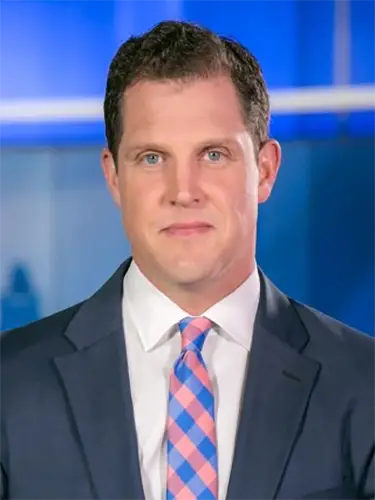
Guest Bio:
Chris Papst is the lead investigative reporter for Project Baltimore, Fox45’s ongoing investigation into Maryland’s public education system. He is a national Emmy award-winning reporter and #1 best-selling author. As an investigative reporter, Chris’ work has led to the passing of state laws, criminal convictions and court rulings that have set legal precedent throughout Maryland. As an author, his books, Failure Factory and Capital Murder, were both Amazon bestsellers in multiple categories. He is also the author of the novel, Devolution – released in 2016.
Guest Contact Info:
- Website: https://www.chrispapst.com/
- Facebook: https://www.facebook.com/chris.papst.7
- X: https://x.com/chrispapst
- Buy a Copy of Chris’s New Book, Failure Factory: How Baltimore City Public Schools Deprive Taxpayers and Students of a Future: https://amzn.to/4wptRW4