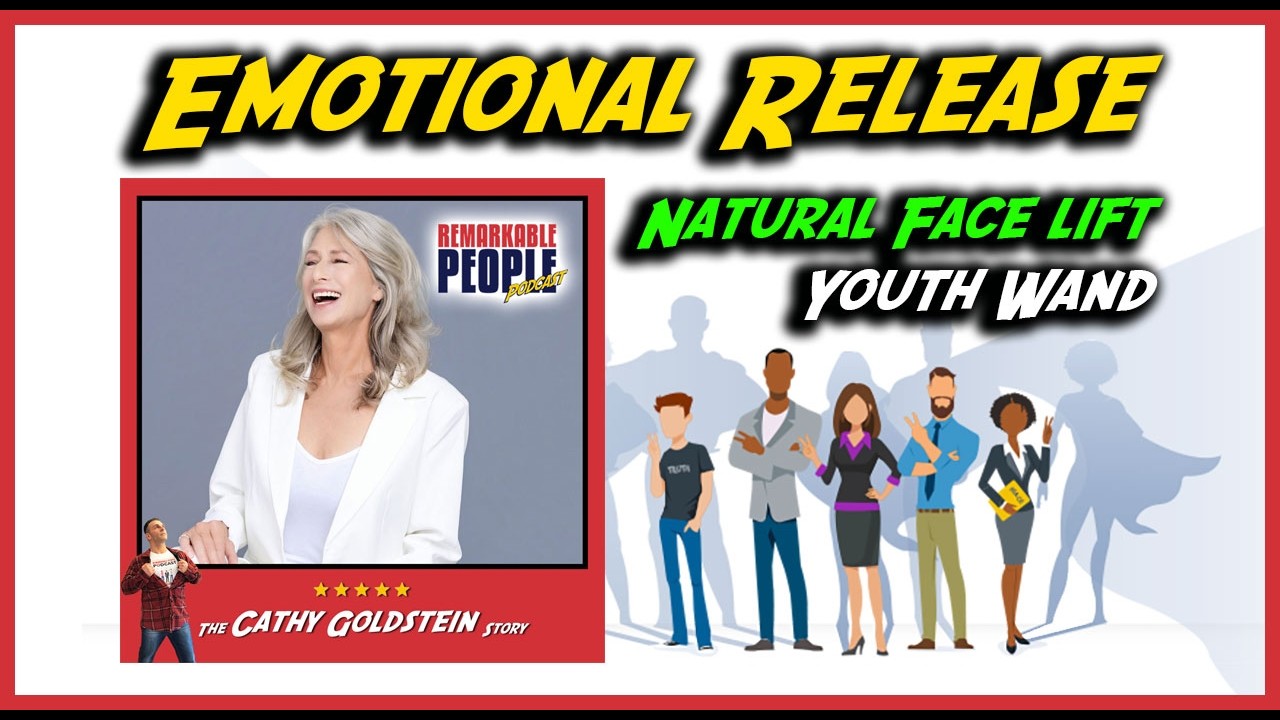
“The ‘issues’ are in the tissues.”
~ Cathy Goldstein
WATCH THE PODCAST
Click the play button ▶️ above 👆 to watch now!
Please Note: You can skip any ads after 5-seconds by clicking, "Skip Ad" in the bottom-right corner of the video window. These are not ads we control, or necessarily endorse. They are delivered by the video hosting company, YouTube or Rumble. Thank you for understanding.
LISTEN TO THE PODCAST
Episode / Guest Frequently Asked Questions… and Answers!
Q1: What is the Neuro Emotional Technique (NET)?
A1: NET is a technique that uses muscle testing to identify and release physiological stressors related to emotional triggers. Cathy explains that it helps the body “unlearn” negative information stored in the nervous system.
Q2: How does frequency medicine work in skincare?
A2: Frequency medicine in skincare involves using specific energetic frequencies to communicate with the nervous system and facial muscles. This helps release contracted muscles that create wrinkles, providing a natural “facelift” effect.
Q3: Why is resilience tied to conviction?
A3: Cathy believes resilience shows up through a constant reminder of one’s purpose: “Am I serving? Is this helping?”. It is the conviction in your mission that drives you to continue your pathway despite obstacles.
What does Mike Lindell himself have to say about the My Pillow promo code, "Remarkable"? Watch Now!

For more information, visit https://davidpasqualone.com/partners-and-affiliates/mypillow/official-mypillow-promo-code-verified/.
Tuning Into Power: Cathy Goldstein on Resilience and the Science of Energy Medicine
What if your biggest struggles—from learning disabilities to a compromised immune system—were actually the catalyst for your greatest contribution to the world? Today, Cathy Goldstein joins David Pasqualone to share her remarkable journey. Born as the “blonde-haired anomaly” in her family, Cathy learned early that being different wasn’t just okay; it was her superpower.
The Sledgehammer Moment: From 95 Pounds to a Medical Pioneer
Cathy’s path was nearly cut short during her research years when her health collapsed. Hospitalized at only 95 pounds with a failing immune system, she faced a “sledgehammer” realization that traditional medicine wasn’t providing the answers she needed. This crisis led her to explore the Neuro Emotional Technique (NET) and the profound impact of energy medicine on the human nervous system.
TruEnergy: The Intersection of Health and Beauty
Cathy explains that health isn’t just physical; it’s a triad of physical, emotional, and spiritual alignment. We dive into:
-
The Triad of Health: Why you can’t fix the body without addressing the mind.
-
Frequency Medicine: How TruEnergy Skincare uses specific frequencies to provide a natural facelift without invasive surgery.
-
The Power of Conviction: Why resilience is about serving others even when you’re struggling yourself.
KEY TIMESTAMPS & MOMENTS OF GOLD
-
[00:01:57] – Defining Resilience: Why it’s about conviction, not just horrific stories.
-
[00:05:09] – The “Head Shop” Story: Developing early resilience as the family anomaly.
-
[00:09:51] – The Power of Confidence: How alternative education changed the trajectory of her life.
-
[00:16:13] – The Sledgehammer: Falling ill and the emergency room wake-up call.
-
[00:24:48] – Neuro Emotional Technique (NET): Muscle testing and emotional stressors.
-
[00:33:19] – The Turning Point: Why Cathy did everything “backwards” to find her joy.
-
[00:43:01] – Explaining Acupuncture Meridians: The language of energy in the body.
-
[01:00:01] – TruEnergy Skincare: Releasing contracted muscles naturally.
REMARKABLE SPECIAL OFFER(S):
 REMARKABLE OFFER 1: Save 30% to 80% on EVERYTHING you order at MyPillow.com with Free Promo Code, “REMARKABLE“. Yes, that’s right! Use the best My Pillow promo code out there to save a TON of money on all 200+ quality, comfortable, cozy home goods at MyPillow.com/Remarkable, or by calling 1-800-644-6612. From sheets, to blankets, to pillows, to mattress toppers, be ready to sleep better and live more comfortably than you ever have before!
- REMARKABLE OFFER 2: Your Exclusive Offer: Save Big on Your Console Vault In-Vehicle Safe. With our exclusive promo code, “REMARKABLE“, you will Save 10% or more on all Console Vault anti-theft vehicle safes you order. And sometimes, you’ll receive Free Shipping too! Just make sure to use the free Console Vault discount code, “REMARKABLE” at checkout.
- REMARKABLE OFFER 3: RPP listeners save an additional 15% off at checkout with the free Tru Energy Skincare Coupon Code, “REMARKABLE“. Shop now at https://truenergyskincare.com/you?AFFID=697043. Enjoy!
Full Episode Transcript
The Frequency of Resilience: Cathy Goldstein on Overcoming Chronic Illness and the Science of Energy Medicine
Thanks for Watching the Remarkable People Podcast!
David Pasqualone: Ladies and gentlemen, welcome to this week’s episode of The Remarkable People Podcast.
Today we have with us Cathy Goldstein . Cathy, welcome to the show.
Cathy Goldstein: Great. Thank you. Thank you for having me. I’m very excited to explore where we end up going today, right?
David Pasqualone: Yeah, absolutely. So we have listeners from around the world. We’ve been doing this for eight years, and as they know, we’re going to talk, you and I, and share your story.
We’ll go through from [00:01:00] birth through today, and we will not just talk about what you had to achieve or overcome, but we’ll reverse engineer your successes. So our listeners can hopefully too, or at least have a catalyst to start, and then we’ll transition to, where are you today, Cathy, and where are you headed next?
So after you helped us, we can help you too. Sound good?
Cathy Goldstein: Sounds fantastic.
David Pasqualone: All right, then I always start the show off with this. We have men and women listening around the world from 130 plus countries. They are here for a reason to grow. If they stick with your show today, what’s one thing You’ll probably give ’em 20 gold nuggets, but what’s one main message, the point that you know that you’ll be able to communicate and help them with if they join us for the next 30 to 60 minutes?
Cathy Goldstein: Yeah, I think I would say that. It’s like the package that resilience shows up [00:02:00] in. So for example, a lot of times people feel like to be able to really be great or to deliver, or to, have an innovative product or concept or be big so to speak. A lot of times people think that you have to have a really horrific story that motivated us to, get there.
And I feel the package isn’t always the same and resilience and for sticktoitiveness it really is more about conviction. And that constant reminder for me was, am I on point? Am I serving? Is this help in any way? And so is that constant reminder for me that.
I’m getting the yes. And that’s what really motivated me to just continue on my pathway. That’s my authentic self and a message that I feel like is important. And I feel like everybody’s story is important, and I think [00:03:00] it’s our conviction that really can drive us.
David Pasqualone: Alright, ladies and gentlemen, you heard, Cathy, you got a premise for what the show’s about.
We’re going to take a quick affiliate break, then come back with Cathy Goldstein and we’re going to hear her story and how she became so passionate about this cause and so much more right after this.
MyPillow Promo Code “Remarkable”: To celebrate our newest launch, rev seven, I’m bringing you an amazing introductory offer plus an exclusive Overstock sale that you’re not going to wanna miss. Rev seven is our premium energy drink that tastes great and gives you energy all day. With no jitters and no crashes. That’s ’cause there’s no sugar and no caffeine.
I’m so sure you’re going to love Rev seven. That for a limited time you can try our three pack absolutely free or check out our per cal bedsheets. I can’t believe I’m even going to say this. Every color, every style, every size. Only [00:04:00] 29 88. So go to mypillow.com or call the number on your screen. Use your promo code to save 20% on our Rev seven 12 packs, or try our introductory three pack absolutely free.
And our per hill bedsheets, all sizes only 29 88. Even the Queens and Kings inventory is extremely limited. So order now.
David Pasqualone: Alright, Cathy and ladies and gentlemen, welcome back to the show.
Cathy, who we are is made up of everything that’s happened to us. Good, bad, ugly. Pretty ugly. Pretty ugly. Anything that’s happened makes us who we are. So talk to us. Where did your life begin? Did you have brothers and sisters? Were you born an orphanage? Were you have American Dream family? What was your origin story?
Cathy Goldstein: I was born in the south. I have two older sisters. A little bit divisive older sisters. So I actually, developed a lot of resilience just even as [00:05:00] a child because I was the one who looked different in our family. I was the one who was, blonde hair, green eyes as opposed to dark hair and dark eyes, or even blue eyes.
And so my sisters used to tell me that I was born without a head, and that they actually had to go to the head shop and buy a head for me be, but the only thing they had was blonde hair and green eyes. So they had to go with it. I started my resilience pretty early in saying, okay, I’m different.
I don’t fit in, so that’s okay. How am I going to do this life? And so that’s actually how I started my life. And then I had learning disabilities to add on to it, right? And so I didn’t know, and my parents didn’t know that learning disabilities were only meant you think differently, you process differently.
And my brain definitely processed very different than other people. I, my brain was always like, how do these pieces fit together? How do, how does this work? Where, why doesn’t that thing, why doesn’t the picture feel whole to me? So [00:06:00] I’m like that person who needs to visualize a in the future, how things will roll out.
That really didn’t serve me when I had to learn, the dates of a, an event and numbers were so randomly. Obscure to me that I really struggled through school and I ended up in, in an alternative school for junior high and high school, where I actually used to call it an alternative to education, but that was really more of a joke.
It actually did give me the freedom to think in different ways. It gave me the opportunity to gain my confidence and not feel like I was just stupid. So that was a really helpful process through that time.
David Pasqualone: Yeah. When we were growing up, it was just coming out of, even if you were left-handed, you had force to be using your right.
There was no real understanding or any kind of. Emotional [00:07:00] intelligence wasn’t a thing. It’s here’s your iq. You’re either smart or stupid. School is what it’s all about. It was a different mindset than today. So when you were under this and you were learning and growing and feeling like less than, at what point you said at this high school or junior high, is where you started learning, oh, I do have value.
No. Or at what point did you start seeing? It’s just a different type of learning and intelligence.
Cathy Goldstein: Yeah you brought up iq and it actually reminded me of something that kind of just would sit in my head on the background, which is that my father was in graduate school for psychology when I was little, from two to six or whatever the age was.
And when they started doing IQ tests, he took the three of us in so that they could give us all IQ tests. And I scored really high on the IQ test because at that age, it wasn’t about [00:08:00] Scholastic, it was about application, so it was right in my wheelhouse, and my parents kept reminding me of that so that I at least had this little pearl somewhere in the back of my brain that said, I know I’m not stupid, but why am I struggling?
Why am I struggling? And you’re right, the school that I went to enabled me to interact with my teachers because the school was very small and the classes were small. So that helped for that one-on-one interaction because I was much more, I was much more functioning, if you will, as verbal, kinesthetic, auditory.
So I think that’s when I started thinking, oh, okay, I have an affinity to biology. Like I loved the science of the body. And I had a teacher who actually let me co-teach with her as a student teacher, which was like phenomenal opportunity for me to [00:09:00] actually not only understand that I maybe wasn’t stupid, but that I actually could help somebody and help the process of somebody’s learning.
And that was a huge leap for me. Yeah, and I think that was. A huge part of why I also by the time I was a senior in school, we had the opportunity to take classes or not take classes. Like we had to fulfill our, requirements. But I had I don’t know, 12 English credits that I needed to get.
’cause that was my weakest spot. So in my senior year, that’s all I took was history and English. But what I ended up doing was I ended up going to the temple University and taking a anatomy and physiology class because I knew that was a direction for me.
David Pasqualone: Yeah. And when that teacher or that leader saw something in you different and trusted you that, how did that make you feel?
Did that give you [00:10:00] confidence in yourself where maybe everybody was saying other things and that teacher was backing you? Or did you have a kind of a support group behind there?
Cathy Goldstein: That’s a great question because there was a lot of like internal conflict and external conflict. And the conflict was, is that I was still really struggling in my classes that had more to do with history.
And then yet when it came to biology, I wasn’t struggling and I had an interest. So there was a definite dichotomy on that. And those two teachers would communicate. And the teacher who saw what she saw in me was really good about saying to the other teachers in like their, in their meetings like, Hey, this is Cathy’s potential.
This is how she learns. We need to support her, not put her under pressure, and I feel like she was like having a, someone in your corner that was really amazing how much I [00:11:00] became attached to her. And, it was like this amazing affinity with this person who really got me, who really understood me.
I hadn’t had experience before.
David Pasqualone: Yeah. And what grade was that? Do you remember?
Cathy Goldstein: Yeah, so that was probably ninth grade.
David Pasqualone: Yeah. And that’s such a crucial time. I remember in my eighth grade I was, I thought, I honestly thought I was like mentally just dumb. I thought there was something wrong with me. And I had a teacher named Mrs.
Toti and she did, she was hard and busted our chops and she was like. Brutal on me, but it’s because she saw something in me and pulled out the best and she became my best cheerleader as well. And it sounds like that’s what you had when there’s actually teachers that acting like peers and students, that would make fun of me and you and our listeners.
It’s great to have that person that’s your advocate and [00:12:00] fighting for you and even if they’re hard on you, they’re encouraging you. Is that how she was for you?
Cathy Goldstein: Yeah, so interestingly enough, she wasn’t hard on me in the sense of like being a really difficult teacher. What she did was she had conversations with me, like she, she was teacher who was, who would like, pique your interest and then communicate. Like my math teacher was very different. He was constantly challenging and constantly challenging it, challenging in, in a debate kind of way. Like my math teacher was actually a debate teacher, and I, that’s the guy who I went thank.
God for this guy, because what I learned is I learned how to listen. I learned how to listen to other people and know whether we were navigating down the same path. Because what he used to do is we’d be debating about something and as soon as it wasn’t going in his direction, he would change his direction and [00:13:00] how he was going.
And I kept thinking to myself, how did we get here? How did I lose that debate? What, what’s going on? It took me a while to go, oh, there it is. Now he’s diverting, and I could bring it back. So with that person really helped me with bringing in a focus and intention and outcome.
David Pasqualone: Yeah. Divert, deflect, distract, welcome to politics and the scumbags trying to ruin the nation.
I’m not, I don’t care if you’re. What side of the aisle you’re on. There’s a lot of bad politicians in America right now. And they are divert, deflect, distract to ruin the country. Exactly. A bunch of communists. All right, let’s do this now. So now you’re in a class, you have a teacher who’s challenging you, you have a teacher who’s encouraging you.
Where does your life go from there?
Cathy Goldstein: So I interestingly enough, I wanted to go to college, but I did not [00:14:00] even apply to colleges because I didn’t feel like I would get in. I still had that doubt. I still had that kind of underlying I’m just going to, and I just moved to Vermont and I just started taking courses non matriculating because I didn’t have the confidence to go, I can do this college degree thing.
So I ended up. Moving to Vermont, taking classes non matriculating and doing and taking jobs in research and doing research in physio psych, like physiological psychology. So how the brain actually works and why we respond to things differently based on our environment. I was initially working on like more like actually a DD and why amphetamines help children who are a DD.
We were doing studies in that and I thought there’s, that’s right up my alley.
David Pasqualone: Yeah. So then now you’re doing research. Are you [00:15:00] enjoying what you’re doing or are you still not did you know at this point this is what I want to do? This is a direction, or were you still what do I want to be when I grow up?
Cathy Goldstein: Yeah. I actually did feel like I was getting. In the direction that I wanted to go, like from high school. It was definitely, anatomy, physiology, the body absolutely fascinated me. The idea that it could, that it actually was like, it healed itself and it had this amazing working systems constantly without us having to do anything.
And I think going into that direction with the, with the research validated that, and I actually thought more about psychology and physiology when I ended up in the, in that, in research in college where I got very much interested in this, in, in psychology, like that physiological psychology.
And but then I also had, I still had other interests, but I also ended up in from [00:16:00] there getting a job in Boston. So I never finished college. And I ended up getting a job in Boston in doing research, and at that point I got really sick and ended up in the emergency room and in the hospital, and that was definitely a moment in time that changed my life and my direction.
David Pasqualone: Now, did the illness come from pressure? Did it come from depression or was it just, I don’t wanna say random ’cause there’s no coincidences. Was it just what God had in your life to help you get to the right place?
Cathy Goldstein: Yeah, I had some warnings at 16 and I had some, warnings at 18. And really it was being, like being in college and being off track.
I worked in the restaurant business to, make my income and support, and support myself. So I absolutely being in the restaurant business was [00:17:00] drinking alcohol. Definitely had some directions that were not healthy for me. And those actually when I look back, gave me a lot of warning signs that this is not good for my body.
My body doesn’t deal well with alcohol. It doesn’t deal well with, like party food, if you will or junk food. When I was 26 and I ended up in the emergency room, I actually had been taking some courses in Boston for prerequisites for orthopedic pod not podiatry.
For me, like medical school, osteopathic school, like I knew I, I thought I wanted to go in that direction of, osteopathic school because of my interest in, physiology and psychology and things like that. And that illness was was what I call the sledgehammer. We all much prefer the feather, but we don’t listen to the feather.
It’s the sledgehammer that kind of nails you that go that, we have the opportunity for not only realization, but shift [00:18:00] and sometimes when we come out of that illness, it’s hard to hold onto our shift. But that was a shift that I could not deny.
David Pasqualone: So if you don’t mind me asking, what was the illness and was it just the high speed lifestyle and like you said, not eating right, drinking, or was it something else that it just, the drinking pushed it over the edge.
Cathy Goldstein: Yeah. It was definitely lifestyle and also that I think there was a, there was a genetic predisposition.
Genetic predisposition is about, our genetic how we actually express things. So the lifestyle was, I was living was not conducive to expressing the genetic predisposition any other way. But to get very sick with Crohn’s disease and Crohn’s disease is, can be fatal. It definitely is a at that time, especially, I was 26, [00:19:00] I’m 65, so long time ago.
And I also found that as I. This is more introspective from what I’ve learned in the future is that I also learned that I had emotional baggage. I also learned that I had food allergies that were making things worse. In hindsight, I was really able to through my journey, be able to heal the things that put me in that position in the first place.
David Pasqualone: And that’s a great point. That’s something to talk about for all of our listeners, for myself, for you. There’s not just a perfect vacuum of a world and one thing happens, cause effects, we fix it, everything’s perfect, right? You had Crohn’s disease, didn’t really know you had alcohol, you had food allergies, you had pressure.
Everything works together, good or bad. And then you have to un. Like you said, the emotional [00:20:00] baggage, that’s the heaviest part. ’cause that, the Bible says a merry heart do with good like a medicine, the sadness and the pain dries the bones. So this is something that you’ve obviously, like you said, hindsight’s 2020, but first real talking point for our listeners, and especially what you’re doing today, what do you recommend for people to say, Hey, okay, I have this symptom, but what’s the root cause and how do I fix it?
Cathy Goldstein: Yeah. I love this topic. This is definitely one of my favorite conversations in that there is, which is the, what I say in my clinic is issues are in the tissues. And so if you’re having issues in your tissues, be it. Chronic illness, autoimmune disease, knee pain, arthritis, headaches.
No matter what it is, no one goes unscathed in this life. The issues that we carry from childhood are in and the stressors that [00:21:00] we currently have, they all put this subconscious, constant pressure on our nervous system that creates inflammation and stress is actually one of the most acidic things that we can do to our body.
Is, to have this constant stress. So with the issues in the tissues it’s like you said, what do you do about that? What do you do about that? And it’s an interesting, an interesting topic in my practice, I do a technique called neuro emotional technique. Neuro emotional technique utilizes the philosophy of Chinese medicine and the principles of psychology and the understanding of the nervous system.
And what it does is it is, it identifies events and our recall of those events that no longer serve us, [00:22:00] but helped us survive as a child. And it breaks that loop. It breaks that unfinished loop of infinite circuitry that happens in our emotional subconscious brain because we take in information all the time, but we can only process tiny bit of information on any given moment, second fraction of a second.
But our nervous system, our brain, our emotional brain is constantly processing things unbeknownst to our conscious brain.
David Pasqualone: Yeah. And my, I know so many massage therapists I know will tell me that when they’re massaging people, that it just releases emotions and they could start crying. They start talking for stuff that happens in their childhood, or years ago.
So when you said, you know the issues in the tissue, I’ve heard that. I believe it. How would you recommend, people who are dealing with this remo [00:23:00] emotional baggage release? What are ways you found that works for you?
Cathy Goldstein: Yeah absolutely. The neuro emotional technique I always recommend that I highly recommend finding a practitioner that does the neuro emotional technique because it’s 10 years of therapy in hour.
It really goes to the point and releases it because the viewpoint is that emotions are biochemical, not. Not what we think of as generally emotions, because if you were to see someone let’s just say you’re a teenager and you’re at your locker and you see your heart throb come down the hallway and your heart starts, your palms get a little sweaty, your throat gets a little dry.
Because you’re hoping for the opportunity to talk to him or her. But yet, if you were in a grocery store and you started having those exact same symptoms of sweaty palms, palpitations in a dry throat and you didn’t know what it was related to, you would be thinking to yourself, am I having an anxiety attack?
Am I having a heart attack? [00:24:00] What is going on? Because the biochemistry of emotions is neuropeptides information, substances hormone release, but how we identify it is how we consciously perceive of our event that puts a story to why we feel that way. Does that make sense?
David Pasqualone: It makes total sense. It makes total sense.
And I know a lot of people talk about tricking the mind. And again, to me, tricking the mind is like treating a symptom, not dealing with the root cause. And again, temporarily, that’s great, but how do you recommend getting to those roots and healing them? Yeah. Removing them and healing them,
Cathy Goldstein: right. So yeah, I’ll give you some other ideas, but I would still go back to the neuro emotional technique because the neuro emotional technique actually uses muscle testing to tell us whether we’re hot on the trail of that emotional stressor, not based on [00:25:00] our thinking brain, which is.
Not very smart, our thinking brain, but our emotional brain is really where, where the juice is. And then we actually can use muscle testing to go back to the, that original event that triggered that pathway of of events throughout our whole life that we either repeat over and over again or we’ll do anything to avoid or we try to fix it.
So those are our patterns on why it is that we repeat things that even though we know that the outcome’s not going to give us what we want, it’s like the person who’s in an abusive relationship. Why do they keep going to other abusive relationships? They’re either trying to heal it or they’re trying or it’s that repetitive familiarity that.
Unfortunately makes them feel in control even though they’re not in control. So that is always the case when we’re talking about even patterns why do I feel [00:26:00] like I’m self-sabotaging, right? When I get to the point of being successful, why is it that I don’t know when to navigate through a conversation.
But I keep going back to like old stories. You know how sometimes your mind just plays out something over and over again. That’s unfinished business. Those are triggers to old stuff that doesn’t serve us anymore.
David Pasqualone: And what do you recommend so we talked about the neuro. I forget, a neuro emotional release massages technique.
What are other things you recommend to do? Yes. What are things that you’ve seen work for you and your clients?
Cathy Goldstein: So the neuro emotional technique is actually a technique that physicians use. Be it acupuncturist chiropractors therapists. But and then in addition, the things that I really like to also do and recommend is I, when I think about the energy of the body, I think about different nervous systems.
There’s the slow nervous [00:27:00] system, like you put your hand on a stove and you pull your hand away. That’s the slowest nervous system, even though it’s super fast. The next nervous system, I think of is more like a a a. The liquid nervous system, hormones, neurotransmitters, information, substances, things that are moving the blood and the lymph.
And, in the visceral the next one is more the biophoton frequencies or subtle energy fields, right? This is the energy that integrates throughout our entire system as well as our outside world as well. It’s why I feel like prayer works. I feel like the, that prayer is tapping in to that subtle energy field of positivity and of assuredness and connectivity.
Acupuncture connects into that world of subtle energy fields, even like the like different types of therapy that I use in my practice. We have a room that’s called an integration room, [00:28:00] and it has all of different frequencies, sound frequency, light frequency, crystal frequency. It’s about igniting the part of our nervous system of our brain that’s about healing and constantly reinforcing positive information so our body can learn something different.
David Pasqualone: All right? And then see all the things that happened to you happen. So you can get to this point of helping others, right? Yes. So let’s go back to your story. So now you’re finding out you have Crohn’s disease, you have emotional baggage. Where you are today isn’t where you were then. So let’s bring our listeners and myself through the story from then to now, but then also how you learn to heal yourself and release that emotional baggage.
Cathy Goldstein: Okay I ended up in the hospital at, on my birthday, my 26th birthday, and and ended up in emergency surgery [00:29:00] and over the next. Two that, and that actually that I was in the hospital for three months just trying to save my life. It was, and
David Pasqualone: that was in Boston?
Cathy Goldstein: That was in Boston.
David Pasqualone: Hey, you’re the best doctors in the world, at least, right?
Cathy Goldstein: Actually, I was in a really good hospital and I learned a lot about being in the hospital too, because after three months I was still very sick. And when I realized at that point was like. It saved my life, but I need to get the heck outta here. There’s no healing system in the medical field.
It’s emergency surgery and drugs and, cut this out and replace this. But there’s no actual healing system. So after three months, I was still very, I was 95 pounds. My immune system was very compromised. I was very weak. But that’s as far as western medicine could take me. So I, was like, how do I get outta here?
So I got out of the hospital and I started rehabbing myself, right? And rehabbing myself. It [00:30:00] first of all, I think that one of the most interesting observations that I had was I never went into victim mode. I never went into, why is this happening to me? Why is it that I’m this sick? Why is it that no one’s, no one’s making me better?
For whatever reason, I never went into that victim mode. I always held the the strength, if you will, the tenacity to say this isn’t going to beat me. This isn’t going to define me. I am not going to be defined by this illness. And so it just kept giving me the strength to repair my body on a physical level, because at 95 pounds laying in a hospital bed for three months, I was weak.
And so that was my determination. And that’s hard to do. Like when you’re that broken, it’s the first step of healing is really hard. We don’t have the physical energy for it. Like even just getting up and walking the [00:31:00] hallways, and it ended, I think after two years and seven surgeries later that my last surgery, I was like, I, again, I was in the hospital going up and down the steps thinking to myself, I’m not going to re, I’m not going to go through that slow rehab again.
I’ve got this, I’ve got this, I’ve got this. So it was that determination that really kept driving me over those two year period, over that two year period.
David Pasqualone: Yeah. And I wanna actually talk about that until you go through it. You can’t fully understand anything. And what you were talking about, Cathy, is if I’ve been what was considered obese, right?
By the medical profession, and I’ve been critically ill like you, where I had no weight on me. I dropped down to 135 pounds. When you have extra weight, [00:32:00] that’s just reserve fuel. It’s hard to move and get going and get through it, but you have fuel, ladies and gentlemen, when you’re in Cathy’s situation, maybe you’re in that situation now.
You have no energy to get up. You physically have a hard time getting off the couch. You just don’t have the reserves to pull the energy. You don’t have gas for the vehicle. So how were you keeping weight on or putting weight on, or how did you finally get over that hump? Because when you’re too skinny and you’re have no fuel in the tank, your body doesn’t even have the resources to repair a lot of times.
So how did you let’s focus on that. How did you actually put on weight to move forward?
Cathy Goldstein: Yeah. That’s there’s a couple of things that you said that are real markers for me and one of them is that you said unless you go through it. You never really understand it. And I think that’s an excellent point because what happens is we run into it and we run into it, and we [00:33:00] run into it.
And it’s not until you actually go through it that it changes who you are. And there’s a word called perturbation. And perturbation is the process of making a diamond. But if a diamond goes to the pressure without completing it, it’s just a piece of coal. It never becomes a diamond. So that, that concept is exactly what happens for us as human beings is that we run up against our barriers.
And sometimes you can run through ’em, sometimes you can scale ’em, sometimes you can go around them. But there, there’s an in there there’s intervention that happens. And I think that is what really. Is being able to figure that out and to do that and to find, not the hard way, but the way that works for you, the way that makes you feel like you are on your right path is the way that you become that beautiful diamond.
So for me to answer the question on what did I do to, [00:34:00] put on weight, what did I do to, to go through that is, is that there was just something about laying in a bed or laying in a bed and watching TV that. Gave me restlessness that even though I knew I didn’t have the energy and my mom was also really great, I had a great relationship with my mom.
My mom was very encouraging in a very gentle way. First of all, she fed me a lot of butter and toast. Lots of butter, lots of olive oil, lots of really good fats. Because even at that time, I was already aware of how I was eating and knowing that I wanted to, I’m, I, you can’t gain wa you can’t gain weight from food that has no energy.
The only way you can gain weight and energy is through food that has energy, right? So it might be a little bit slower, but it’s those high fats, olive oil, avocados, butter, [00:35:00] and all of the things that I knew were like great fats. To be able to feed my. Energy of my body. And, my mom was really good about let’s go for a walk.
Do you feel like do you feel up to it right now? And I think that was important for me too, because it’s that support person that you know it’s not just about accountability. I didn’t wanna let her down. She showed up for me for three months in the hospital. She stayed with me, along with my sisters, and they rotated through in making sure that I had someone with me all the time for three months.
And so there was a certain amount of gratitude, there was a certain amount of wanting to do my part right, do my part in showing up and knowing that I was, this is not my, this is not my end goal. This is not defining me. I’m not staying in this bed weak and just deteriorating. So I think that it’s that.
It’s it [00:36:00] has to start in your mind. It has to start in your head and then move into your physiology. And then it’s constantly reinforcing it too because pain pulls us back, but pain also can feed us as well. So it was that pushing through part.
David Pasqualone: Yes. And to our listeners, ladies and gentlemen, I hope you understand what Cathy’s saying.
God loves you and he’s not a vindictive God. He’s not the one causing any pain. That’s all saan. But if God’s allowing it to happen, it’s because it will benefit you and me and Ka once we get through it to the other side. Like she said, don’t run into it, but go through it. And one of the keys that Cathy just mentioned is just.
Pushing on perseverance, knowing you’re going to get through it. ’cause the option is you’re either going to survive and, and beat it, or you’re going to die. Those are the realities, right? You’re going to get better or worse. There’s no staying the same. So the mindset that I [00:37:00] can do this, the mindset that I can beat this, the mindset that I will get better, that’s huge.
And in the medical world, that’s sadly how many times the doctors tell you to get your affairs in order. You’re going to die. Oh, you have stage four cancer, you’re not going to live. If you accept those lies, normally it overtakes you. But what Cathy did, what I did and what so many people I know noticing, no, I’m just, I’m going to find a way to get better and I’m going to do my best and God’s going to heal me.
Is that how you see it, Cathy? Or am I off there? Because that’s what I believe.
Cathy Goldstein: Yeah. No you’re not off at all. There’s, divine intervention. If we’re, I feel like we’d be fooling ourselves to go, oh, I did it. I healed my body. I did it myself.
Yeah. There’s a much, much greater power than our, tenacity and our perseverance. But it’s, it has to, it’s the guide. It’s what is our guide, and what is our why? And who, how are we still serving, right?
David Pasqualone: Yeah. Yeah. And there’s times [00:38:00] where if you were to visualize, like moving forward, you’re climbing a mountain, you’re trying to get to the summit.
Let’s say summit is the health, and right now you’re sick, but you gotta go up. There’s times where you’re literally laying on the ground in the steep hill, you’re holding a rock. And maybe the whole progress is just lifting yourself from your arms above your head to your arms or at your chest. You just made six inches and now you gotta sit there and rest for a while.
But the thing is, you still made six inches. It just never quit. Keep moving forward. Like Cathy’s saying, that determination, that grit, that perseverance again. ’cause God loves you and has a plan for you, and he’s not allowing you to go through that to be mean or vindictive. He’s allowing it. ’cause it has a purpose.
It will bless you. So bring us through your story now, Cathy. You got your mom helping you. You don’t want to quit. You’re moving forward. Bring us from there to today.
Cathy Goldstein: One of the, there’s actually a really interesting research that I wanted to bring up at this moment, which is that there was a research [00:39:00] study that was done for two groups of people and.
They were given a challenge and they, both groups failed. The challenge one group was allowed to, grieve that loss, com go into that mode of pulling in and then was able to bring themself out of it. I think that one of the things that you and I are talking about is the per perseverance to push on, but don’t feel like you don’t have to be empathetic to yourself as well, and to have some compassion for yourself as well.
It’s not easy, right? And to recognize, you know what, this isn’t easy. I don’t, I’m, I don’t feel good about this right now. I feel really sad. I feel really hurt. And just give me a minute, right? Give me a minute. And, be able allow me to just the space to step into my own power.
Instead of beating yourself up, give yourself a moment to step into that power. So for, so in that [00:40:00] perseverance, in that space of moving on and not wanting that illness to define me, it also played a really big role in what is my purpose? What am I learning from this? And I think that I mentioned it and I didn’t know I was going in this direction, but one of the things that I realized is that the western medicine, allopathic medicine doesn’t have a healing system.
And it was the quest to find the healing system. And so I ended up in acupuncture school and that was. Amazing for me because everything about it spoke a language that totally resonated with my personality, with my, understanding and also hugely developed a deeper dive into energy medicine.
David Pasqualone: Yeah. Now explain just if you don’t mind taking another sidebar real quick. When I was sick and [00:41:00] dying in my thirties from bad dental work, I had trigeminal neuralgia, I had infection. All this stuff was going on totally separate than what happened when I was in my teens, the Mayo Clinic. Thank God they actually sent me to their acupuncturist.
And then when I got back to Pensacola, they hooked me up with an acupuncturist who was qualified and did, like any practice you could have good and bad they hooked me up with someone who is very well credentialed and had an experience, a history of experience of success, I didn’t know or understand it, but I know it worked. And my basic understanding, and I could be totally wrong, but it basically said you in a level eight or nine pain every day from your tooth or from this nerve damage. So what acupuncture’s going to do is lift your pain tolerance. So the pain, even though it’s an eight, your brain’s going to register it as much lower.
That’s how I understand it. And I’ve always felt like, [00:42:00] do you, is that correct? Or am I wrong? What does acupuncture actually do? Because right now, for the rest, for years I might, depending on how it is, I might have a zero pain level. It might get, inflamed a little a two, maybe a three on a bad day.
But overall, ever since I did the acupuncture and had the tooth pulled, God, just the pain’s gone. I’m not on any drugs like they told me I’d be on the rest of my life. So what did acupuncture actually do for me? And it wasn’t like you’re going every week for the rest of your life. I think I did six sessions and it made a life changing shift.
So how does that work from your side?
Cathy Goldstein: I’m a fundamentalist, and so on a fundamental level, I looked at Chinese medicine as how does it work in nature? And especially when I first started, I wasn’t definitely was not taking a deep dive into the nervous system, if you will.
So the way I always, and pain is a [00:43:00] great example, but the way I always explain that to my patients is that we have acupuncture meridians. We have pathways that run throughout our entire body, 14 acupuncture meridians, head to toe fingers, to everything every place on your body. And there’s hundreds of acupuncture points along all those acupuncture meridians.
And each one of those acupuncture points has an action and an effect. So how I look at, how I look at the pain is that, and how I explain it is that pain is like someone’s standing on a hose. The hose is your meridian, right? So they’re standing on the hose and it’s creating a blockage, and it’s creating pain in an area that the energy is not moving.
What acupuncture does is it takes the ho, it takes the, foot off the hose and allows energy to flow through that channel. And so that’s like the fundamental principle of what. Acupuncture does when we’re talking about pain [00:44:00] is that it opens and moves the obstructed channels. Now there’s a much deeper dive into that.
Like for example, what meridian what pathway is that pain and what else? And how else is it affecting the body? Because the body is looked at as a whole, not parts and pieces with Chinese medicine. For example, when you talk about potential residual pain that you might have, if you’re having a bad day, what does that mean?
So let’s just say that the pain is on the small intestine meridian, which is along this long right here. And you happen to have inflammation in your digestive system because of eating something that you are sensitive or that was not on your normal diet, and that small intestine being inflamed could inflame the entire meridian, right?
So there’s that aspect as well as looking at the body as a whole and how it affects the entire body.
David Pasqualone: Yeah, that makes total sense. Yeah, no, that makes complete sense and very interesting. So it’s like when you have a physical [00:45:00] injury, the better blood flow you have to that area, the blood heals it, and when you have the energies being blocked, acupuncture releases that hose, you have more energy flowing, which gives more healing.
Cathy Goldstein: And when you do have an injury, let’s say you had surgery on your knee or you did have an injury on your shoulder, it’s not just the lymph, the fascia, the blood the muscles, the ligaments, the tendons, it’s the acupuncture meridians as well. So many people go through surgeries and have residual pain.
They’re dealing with everything except for the underlying issue, which is potentially the fascia that’s twisted. And the acupuncture meridian, that’s, that, that’s the energy is not flowing.
David Pasqualone: Gotcha. All right. So let’s continue in your story and your journey.
Cathy Goldstein: Okay now I, so I have a practice and I am of course attracting all of the, things that I tended to deal with myself personally.
A lot of digestive issues, [00:46:00] Crohn’s, irritable bowel, a lot of autoimmune diseases. And I’ve got a really big busy practice and I’m doing a lot of the neuro emotional technique, a lot of the energy medicine, a lot of the functional medicine and the acupuncture. And and then at. 49. At 49, I was visiting a friend in California and I went to stand up to meet him down the hallway of his clinic.
And I inadvertently caught myself in the mirror as I was standing up. And I went what am I looking at? What is that what I saw? My face did not match how I felt. I felt, my vitality was good. I was eating well, I was exercising, I was meditating, I was, all of the things that were working for me.
And on a physical and emotional and its psychological level, I felt really good. But when I saw my face, I was really shocked that it wasn’t representing the rest of my body. And so what I really [00:47:00] realized is that. The muscles of the body are the heavy lifters, the muscles of the face represent our emotions and all of that baggage, all of those, all of that trauma, all of the, things that I had gone through that were painful, stressful, hurtful, were still showing up on my face.
I was still wearing all of that trauma. So it led me in a different direction at that point where I went into the idea. ’cause at that time I, at 49, I thought to myself we’re talking about smooth equals beauty and attractiveness and being present, but I thought to myself.
I don’t live in that culture. I don’t live in the, in that trend of wanting to freeze the muscles in my face so I could look younger. So what I really
David Pasqualone: don’t, you don’t want to inject botulism in your face. Are you serious?
Cathy Goldstein: So that’s what happened, right?
David Pasqualone: Ladies, if you don’t know what I meant by that, [00:48:00] Botox is botulism.
Like you’re literally injecting botulism in your face to freeze your nerves. So you can think, you look younger to me, it makes no sense anybody doing it. I’m not judging you. I’m just using two plus two equals for reasoning. Botulism is bad. Hurting your nerves is bad. And doing that, I can’t imagine that would equal good.
That’s my opinion. If you’re, if you don’t agree with me, Cathy, you can call me out publicly across the world. But that’s how I feel about it.
Cathy Goldstein: Yeah. I, first of all I agree with you and I’m going to give you another reason why. And I also am very empathetic. At 49 I thought to myself what do I do?
What do I do? It was almost like fear that I was going to become invisible, right? That I was aging into into like where I don’t matter. And so when you talk about the effects of botulism or Botox on the [00:49:00] nerves and that we do now know that Botox does run along the nerves and the nerves do, especially on the forehead, do go, directly to our nervous system.
And so one of the things that I also realize because I do a lot of the neuro emotional science is that the muscles or the of the face are actually. Have a purpose. And that purpose is our connectivity with others. It’s how we determine safety. It’s how we connect with others. It’s how we empathize.
It’s how we understand how someone else is feeling. So if you’re having a conversation with someone and they’re sharing with you something, that they’re, that’s heartfelt for them, we actually micro mirror their mo their expressions on their face so that our brain can understand how they feel.
So those, the ability to make those microexpressions not only can save our life if we’re in danger, but they also create that [00:50:00] connectivity that we have and we crave with other people. Imagine if you’re back in the dating world, 45, 55, 65, and you’re back in the dating world and that person can’t.
Read your emotions or your expressions, because 70% of our communication is nonverbal. So how would you know? How would they know whether you’re interested? How would they know that you wanna take the relationship further? They’re not going to understand and they’re going to, it creates distance.
And then, that feeling of being alone.
David Pasqualone: Yeah. There’s so much more to it. Okay. I don’t disagree with you at all, but let’s go back. I didn’t mean to derail there. Go back. So between your birth and today, before we transition to where you are today and where you’re heading next, what else did we miss?
Or what else do you wanna point out in your journey?
Cathy Goldstein: Yeah. Really, I it’s a good question. I would [00:51:00] say that one of the things. Interestingly enough, one of the things in this journey of my own self, self-discovery, that the muscles in my face were not really, were representing all of that emotional baggage.
Being able to consciously release those instead of raising them to actually release those, allowed me to release a lot of baggage as well. And so I would say that my, my seg segue from being working in holistic medicine and treating really sick challenge, challenging cases that how I ended up in, the beauty industry and in creating this other message almost didn’t, almost felt.
Unfamiliar almost felt like a, it didn’t match what I had thought I was supposed to be doing in my life. I thought I was supposed to be, helping people who are really sick. And here I ended up, in the beauty industry. So I really had to figure out [00:52:00] what is the segue?
What is my message? Why am I here? Why am I in this moment? And what is the message that I, that I can share with that, realization.
David Pasqualone: Yeah. And like we’ve discussed through this whole episode, everything’s interconnected. So you don’t have just a physical or just an emotional or just a spiritual, it’s all entwined.
So when you talk about emotional baggage, some people have it and don’t realize it. They’ve suppressed it for years. Some people, they know they have it, but they don’t know how to get rid of it. So how do you recommend getting rid of it? Because if you have that freedom and peace in your soul of your face will reflect it, your eyes will shine with light.
So how did you find that freedom, Cathy?
Cathy Goldstein: Yeah I agree with you. I think that a lot of people don’t realize they have it. They don’t realize it’s holding them back. They, if don’t have relationships that are, what you want or are healthy relationships, if you aren’t where you wanna be in [00:53:00] life, if if you are constantly overthinking conversations that you’ve had that are in the past, all of these things are indications that we have emotional baggage other than the issues or in the tissue and how we feel physically.
But for, for me it was about also understanding not only. How to release those muscles in my face. And that actually drove me to develop, a tool and a protocol to be able to release the muscles that were, holding onto those emotional stressors. And that’s actually the segue that, that I ended up in and that, ultimately I ended up with a natural facelift system.
And I, that’s, so that’s that segue. But ultimately what was interesting is that everybody was very interested in a natural facelift system, and I was interested in health, but it’s always about, meeting people where they are. Tell ’em that what they wanna hear, give them what they need, which is that yes, it’s a natural, faceless system.
Look 10 years younger. And then what I’m going to give you [00:54:00] is I’m going to give you the ability to release these muscles that are holding onto traumas from your life.
David Pasqualone: Yeah, absolutely true. And in our society today, there’s more people that are focused on the physical than the what matters, right? But if you have a product where they come for the physical, you can be an agent God uses to help them heal on such a deeper level. So what does your product do, or how does it work in a nutshell?
Cathy Goldstein: So what it is I’ve used all of the energy medicine frequencies that I, used in my practice for, now almost 40 years. And I took that, those frequencies of balanced acupuncture meridians of, collagen production of releasing those muscles. And I took that frequency and I imprinted it into a wand, like a little wand as well as a little green bead.[00:55:00]
And what I. Use that protocol for? The protocol specifically is like a system that releases the muscles that are contracted and allows the muscles to be able to pop where they need to pop. And so it’s a very, seven minute protocol that takes you from beginning to end. And it is just super innovative.
I, I actually put it with a third party study with Dr. Bse because I wanted to make sure that if I put this in people’s hands, that they were able to do this protocol themselves and be able to release those muscles that are dragging our face around like the, what we call the puppet lines and the Marietta lines and the 11 and the tight forehead and all the things that we judge ourselves when we look in the mirror.
And I. I with Dr. Pese who has, the big muckety muck of studying skincare and tools and things like that. He actually called me after 15 days and he said, I have no idea how you’re getting these results. But these [00:56:00] women after 15 days look like they’ve actually had many facelifts. But what he didn’t recognize that I see in my before and after photos with people is the vitality.
The vitality comes back to their eyes. The vitality that you see when we release those muscles that are dragging us around, that it is just like you’re awake, you’re present, you are connected, and that vitality really shows up.
David Pasqualone: Now, is this a physical device that you go to, a practitioner to use, can you buy in and it appears at my house and I can use it in private.
How does this work?
Cathy Goldstein: Yeah, so it’s you buy it and use it in your home in privacy, right? So there’s a, it’s a wand and this is imprinted with frequencies. And then there’s a skincare that has a little beads in it. This one has a little green bead in it.
David Pasqualone: And for those of you listening on the podcast, the device that [00:57:00] Cathy held up looked like it was maybe a large pen.
It wasn’t very long, it wasn’t very thick. It had a purple handle and a silver wand part. Is that correct, Cathy?
Cathy Goldstein: That is correct. If you’re not, yes, if you’re not looking, it’s surgical stainless steel, and it looks like a large pen, if you will. That’s used for the specific protocol.
David Pasqualone: All right, and then, so now they get the device and they get, you said the cream with the beads, and then they apply it each day for seven minutes. W over? Is that how it works?
Cathy Goldstein: That’s as simple as that, right? So seven minutes a day, seven and a half minutes a day, you do the protocol. People often do it well at do the protocol at night because they say that they sleep better, feel better, wake up more refreshed because they’re actually one giving themselves a little love, right?
And if they’re, if they’re meditating, if they’re working in prayer, if they’re, consciously being very present, you get that much more out of [00:58:00] it. But yeah, for 30 days, seven and a half minutes, one time per day.
David Pasqualone: And then for this device, what is it actually doing? You said it works on frequency, is it just aligning everything so energy flows what’s actually happening?
Cathy Goldstein: Yeah. The protocol itself is phys. There’s a physical aspect of it. You’re releasing, muscles that are contracted, right? You’re releasing the muscles around the mouth where they’re contracted, but there’s also frequencies in it, and the frequencies are matching your body. They’re in they’re in what I call bio photon frequencies, meaning bio body photon light.
So it’s this light frequency of a language that speaks the same language as your body does. And so it’s the, frequency of an acupuncture meridian. It’s the vibration of a, of collagen production. It’s the frequency of self-love. These are all, have vibrational frequencies that [00:59:00] work in that subtle energy field of prayer, of acupuncture that, re reeducate your nervous system to alignment.
David Pasqualone: Is it something that you have to tinker with and adjust, or does it automatically find the right frequency? How does it work?
Cathy Goldstein: Oh, so there is a, you do turn it on and there is a small battery in it and that has a vibration to it, but the frequency itself, you don’t tune it, you don’t do have to do anything with that.
Your body picks up what it needs to so that you can go through that healing process. It’s if you were to do a magnet on an acupressure point, there’s a frequency that heals that, that meridian.
David Pasqualone: Awesome. So if someone wants to get a hold of you and continue the conversation, if they want to buy the products, what’s the best way for them to reach you and to purchase your wand?
Cathy Goldstein: Yeah my website is True Energy Skincare, which is TRU. [01:00:00] E-N-E-R-G-Y skincare.com. And I have a discount for your community as well.
David Pasqualone: Okay, great. Cathy, so our listeners can go to your website and they will use promo code Remarkable.
And you’re giving them a special discount just to be kind. Thank you so much.
Cathy Goldstein: Absolutely. And one of the things that’s really important to me, and I think, just being a healthcare practitioner for almost 40 years is that I am I’m about being present. So every month I have live webinars where I get on with anybody who wants to show up for that.
And we usually have about 500 people register for that webinar. And I just answer questions. I show the protocol. I if you have, how do I, how do I work with this? Why do I feel you know, better when I do that? It’s all about conversation and me being there to just, support and help.
David Pasqualone: That’s fantastic. So you’re out there, you’ve poured your heart into [01:01:00] this, you’re helping people each day. You probably have frequently asked questions section on your website, but just talking openly to our audience right now, are there any questions that you constantly get or anything you just really wanna share on your heart?
Hey, this can help you not just look younger, but it’ll really change your life. Are there any message or things that you hear all the time that you wanna share?
Cathy Goldstein: Yeah. Actually I would I, there’s the questions tend to be more about how do I get rid of this? How do I get rid of that? But what I wanna share is that I really am so proud of people who choose or choose to either stop doing, cosmetic surgeries or procedures and know that.
It’s never too late, right? Even if you’ve been doing Botox for years, it’s never too late. It’s never too late to reverse repair and then reconnect with people, and then I just [01:02:00] want everybody to know that our face is our signature. It’s who we are, it’s how we represent, it’s why people are attracted to each other.
It’s because of those facial expressions that make our brain go, oh, I love that person. Or I feel compassion for that person. It’s those facial expressions and that ability to move those muscles that really keep us connected as human beings. And if I know one thing as well as you do as well, David, which is that humans connecting is a necessity for our, for our survival.
We are deeply n. Connect it with other people and it’s a part of how we thrive and survive.
David Pasqualone: Yeah, 100%. So Cathy, I thank you for being on the show today. And again, I don’t want to keep saying it, but I wanna make sure again, everything for our listeners and for you. Is there anything we missed in your story?
[01:03:00] Is there anything we missed today or any final words you want to close the episode with before we move on?
Cathy Goldstein: Actually what I’d like to say is that I’m actually really appreciative of a show like yours, David, because I feel like that is a really a space where people can connect and know that life isn’t perfect and that it’s okay, and that we have the opportunity to speak and to be heard, and to listen and be heard to and know that, that there’s always hope.
It’s just a matter of. Staying solid in your beliefs and your strengths, and knowing that you have support from God, support from others, support from people like yourself.
David Pasqualone: I couldn’t agree more. And the Bible says the two main commandments are love God and love others, right? And that’s connection.
You can’t be more connected than that one with God, and then with your fellow man. So thank you Cathy, for coming on the [01:04:00] show today. I really appreciate you. And just to be clear too, what’s that website one more time for people, not only to check out your products, learn more about you, but to get that special offer for our Remarkable community.
Cathy Goldstein: Okay, so it’s True Energy Skincare and True it does not have an E. So TRU Energy, E-N-E-R-G-Y skincare.com/. You and then you can put in the code. Remarkable.
David Pasqualone: That sounds great. So ladies and gentlemen, thank you for joining Cathy and I today. But like our slogan says, Listen. Do. Repeat. For Life!. Don’t just listen to the great information Cathy shared, but do what you know you need to do. Repeat it each day, form those good habits so you can have a great life in this world. But most importantly, an attorney to come. So I’m David Pasqualone. This [01:05:00] was our Remarkable friend, Cathy Goldstein. Cathy, thank you again.
Cathy Goldstein: Thank you for having me.
David Pasqualone: Oh, always. And ladies and gentlemen, share this with your friends and family.
Apply it to your own life more than anything, and we’ll see you in the next episode. Ciao.
Ladies and gentlemen, I sincerely hope this show has inspired you. The whole purpose of The Remarkable People Podcast is to inspire you, to motivate you into action, to help you have an even better life, to overcome things you’ve not yet been able to overcome or to grow to the next level that you never thought possible.
And all of this, not just to benefit you in this world, but to have you come to a relationship with God where it grows every day stronger. And not just this world is blessed, but your eternity is blessed. And we sincerely [01:06:00] want to do just that, and to glorify God. And we hope with this episode we accomplish that.
If we did. Please let me know. It’s great to be encouraged and to spread the word to our Remarkable guests that it helped in your life. If we didn’t, let me know. Write me an email. You can go to DavidPasqualone.com . Go to our contact us page and let me know what you think. I got tough skin. Let it rip.
Anything you can think of to make this a better podcast to help you grow and to glorify, God, I’m in. So that’s it. Thank you for listening to the podcast. Thank you for sending us feedback. If we can help you in any way, let us know. And if you can spread the word about the Remarkable People Podcast, share the episode to your friends, your family on social media.
It would be a huge honor and blessing. Again, I’m not trying to be the most famous podcast in the world [01:07:00] for my benefit, I truly want a podcast that’s the best podcast in the world to help as many people as we can to have a better life, come to know Christ, to grow in the Lord, and to have that salvation so they can be with God and peace and joy in eternity.
And right now we’re together on this earth, so let’s do everything we can to work together and help each other grow. Like the Bible says, love the Lord thy God as a first commandment. And the next command is to love thy neighbor as thyself. So let’s do it together. I’m David Pasqualone. I love you. Not as much as God loves you, but if I can help you in any way, just ask.
And again, please share this with your friends and family so we can help them too. Ciao and see you in the next episode.
Thanks for Watching the Remarkable People Podcast: The Remarkable People Podcast, check it out,
the [01:08:00] Remarkable People Podcast. Listen, do Repeat for Life,
the Remarkable People Podcast.
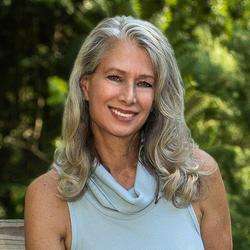
Meet Our Guest:
Guest Contact Info:
- Website: https://truenergyskincare.com/
- Instagram: https://www.instagram.com/truenergyskincare/
Guest Bio:
Cathy Goldstein didn’t plan to disrupt the beauty industry—she was just trying to heal. After surviving a near-death battle with Crohn’s disease in her 20s, she spent the next 40 years helping others recover from chronic illness through acupuncture, detox, and energy medicine. But at 49, despite doing everything “right,” Cathy no longer recognized herself. That moment sparked a breakthrough. She developed TruEnergy® — a frequency-infused, bio-adaptive facelift system that lifts and revitalizes the face by targeting what most treatments ignore: the muscles, fascia, and energy systems beneath the skin. Cathy’s work bridges beauty, brain health, and emotional expression. She’s not just helping women look younger—she’s helping them reconnect with themselves. Featured in Vogue, Philadelphia Magazine, and Jefferson Medical School, Cathy is leading a new conversation: one where aging isn’t feared—it’s redefined.